
Ensuring law and order, not snooping: Delhi Police on PIL in Delhi HC alleging surveillance of CJP protests
Abstract
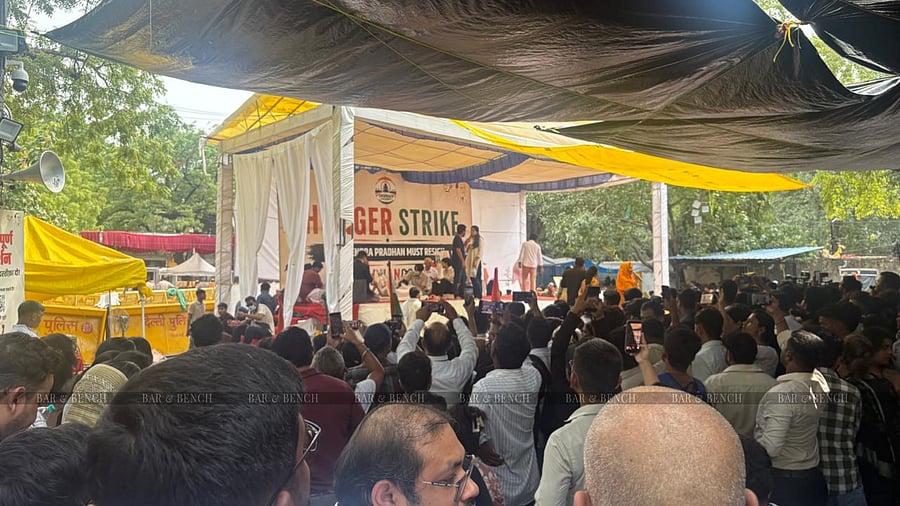
The Delhi Police has denied carrying out intrusive surveillance of protests at Jantar Mantar led by the Cockroach Janata Party (CJP), with Solicitor General Tushar Mehta stating that any recording is only done to maintain law and order. The High Court sought a response on whether standard operating protocols for handling protests and hunger strikes have been framed, referencing a 2018 Supreme Court decision.
Introduction
A public interest litigation (PIL) has been filed in the Delhi High Court alleging that the police are carrying out intrusive surveillance of protests led by the Cockroach Janata Party (CJP). The matter has sparked debate on the balance between maintaining law and order and protecting individual rights. This article examines the recent developments in this case, which highlights the need for clear guidelines on handling protests and hunger strikes.
Background
The Delhi High Court is hearing a plea filed by Aishe Ghosh, former JNU Students' Union President and CPI(M) leader, who has questioned the alleged continuous and intrusive police surveillance of the CJP protests. The matter has brought to light the need for standard operating protocols (SOPs) or guidelines for handling protests and hunger strikes. In 2018, the Supreme Court had called for such guidelines in the case of Mazdoor Kisan Shakti Sanghatan vs Union of India.
Analysis
The Delhi Police's denial of carrying out intrusive surveillance has raised questions about the nature of their recording activities. Solicitor General Tushar Mehta stated that any recording is only done to maintain law and order, but this may not be sufficient to address concerns around individual rights. The High Court's request for a response on whether SOPs or guidelines have been framed highlights the need for transparency and accountability in policing protests.
Conclusion
The recent developments in this case underscore the importance of clear guidelines on handling protests and hunger strikes. Practitioners should be aware that the Delhi High Court is seeking to address these issues, and any future cases may turn on the availability of such guidelines. As the matter continues, it will be essential for the court to balance individual rights with the need to maintain law and order.
How does this affect your business?
Get an AI analysis of this article grounded in your jurisdictions, practice areas, and any policy documents you've uploaded to Wansom.