
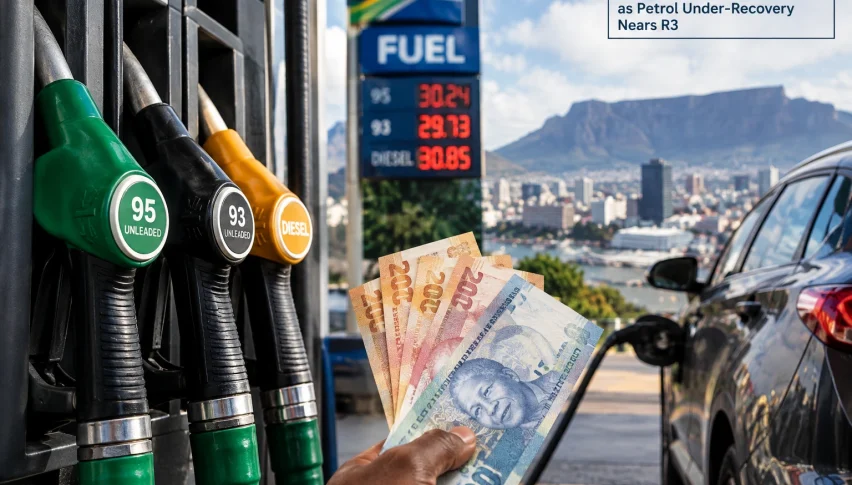
Diesel Heads for a Record R33 a Litre: What October's Fuel Price Shock Means for South African Business
Summary
Diesel 0.005% is projected to rise by about R3.10 a litre, from R30.05 to about R33.15 inland. Diesel 0.05% would rise by about R2.69 to about R31.80. Both petrol grades are tracking just below R30 a litre, also a record.
Drivers: oil rose about 20%, from roughly $88 to $107 a barrel, between late August and late September amid renewed Middle East tension. The rand weakened slightly, from R16.17 to R16.44 to the dollar.
No buffer: the temporary fuel levy relief that cushioned the first shock ended on 1 July 2026, and full levies of R4.10 (petrol) and R3.93 (diesel) are in the price.
Dearer credit: the Reserve Bank raised the repo rate by 25 basis points to 7.25% on 23 September, with prime at 10.75%, citing the intensifying fuel-price shock.
Agriculture faces rising inputs, El Niño risk and higher borrowing costs as the season begins in mid-October.
Relief is limited: the diesel refund now covers 100% of eligible litres for farming, forestry and mining, but it refunds levies, not the price increase.
The Department of Mineral and Petroleum Resources will confirm final prices ahead of Wednesday, 7 October 2026.
The October Numbers
The Central Energy Fund (CEF) tracks, every day, the gap between South Africa's regulated fuel prices and the cost of importing refined product. When that gap is negative (an under-recovery), prices rise at the next monthly adjustment by roughly that amount. Late-September data shows under-recoveries across every grade, and they deepened as the month went on.
Grade | Projected October increase | Projected price (inland) | Previous record |
|---|---|---|---|
Diesel 0.005% (wholesale) | About R3.08 to R3.10/l | About R33.10 to R33.15/l, up from R30.05 | R31.88 (May 2026) |
Diesel 0.05% (wholesale) | About R2.68 to R2.69/l | About R31.80/l | |
Petrol 95 | About R2.88 to R3.01/l | Just under R30/l (about R29.93) | R28.06 (June 2026) |
Petrol 93 | About R2.71 to R2.82/l | Just under R30/l | |
Illuminating paraffin | About R3.27/l |
Figures are CEF-based indicators from late-September snapshots, not final prices. The Department of Mineral and Petroleum Resources announces the official adjustment, which takes effect on Wednesday, 7 October 2026.
What is driving it. Two forces, one dominant:
Oil. Crude oil rose from about $88 a barrel in late August to about $107 in the final week of September, roughly 20% higher. The rise reflects renewed tension in the Middle East, including the US–Iran conflict and constraints on shipping through the Strait of Hormuz. Pressure on Russian diesel supply adds to it.
The rand. It weakened only modestly over the same period, from about R16.17 to R16.44 to the dollar. It is no longer offsetting much of the oil-driven increase.
How far prices have come. Diesel 0.005% cost about R18.60 a litre in March 2026. On current projections it will have risen by about R14.50, or close to 80%, in seven months. Petrol 95 would be up by almost half over the same period. The October move would also follow a sharp September increase, when diesel rose by almost R3 a litre.
How South Africa Sets the Price, and Why There Is No Buffer Left
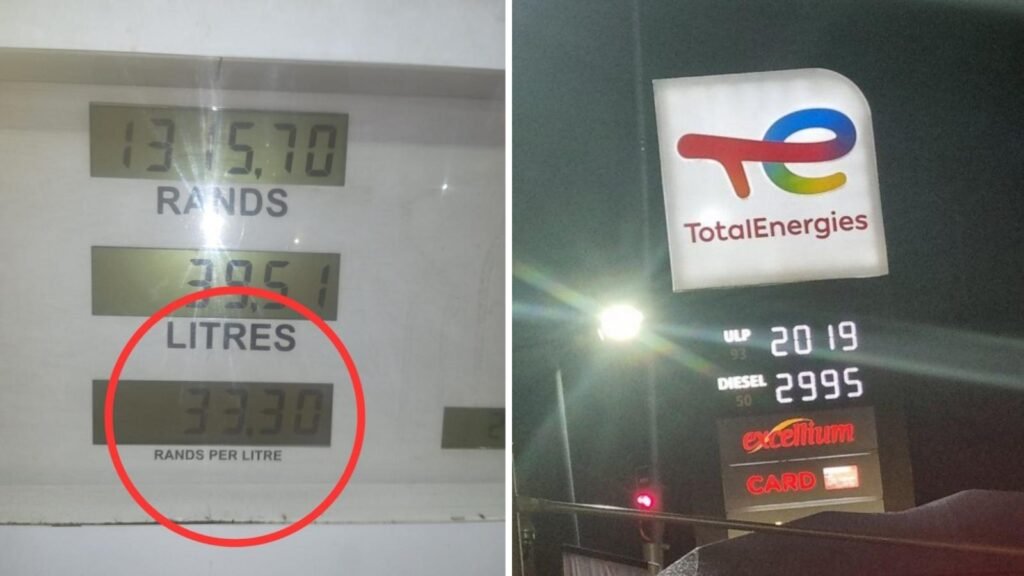
A formula, not a decision. Fuel prices are regulated under the Petroleum Products Act and adjusted monthly by the Department of Mineral and Petroleum Resources, usually on the first Wednesday of the month. The core input is the Basic Fuel Price, an import-parity measure based on international product prices and the rand-dollar exchange rate. Domestic elements are added on top: the fuel levies, the Road Accident Fund levy, transport costs and regulated margins. Petrol has a regulated pump price. Diesel is regulated at wholesale level, so retail diesel prices vary by outlet.
Because the formula is mechanical, a month-long under-recovery like September's feeds almost directly into October's price. The Department's discretion is limited to the final calculation and timing. It cannot absorb the increase without a separate fiscal decision by Treasury.
The levy cushion has already been spent. In March 2026, Treasury and the Department responded to the first Middle East oil shock with temporary cuts to the general fuel levy:
Period | Petrol general fuel levy | Diesel general fuel levy |
|---|---|---|
Full rate | R4.10/l | R3.93/l |
1 April to 5 May 2026 | R1.10/l (R3 relief) | R0.93/l (R3 relief) |
6 May to 2 June 2026 | R1.10/l | R0.00/l (levy removed) |
3 June to 30 June 2026 | R2.60/l (relief halved) | R1.97/l (relief halved) |
From 1 July 2026 | R4.10/l (full rate restored) | R3.93/l (full rate restored) |
The relief is reported to have cost about R17.2 billion in foregone revenue. It ended on 1 July, when falling oil prices allowed the full levy to return while pump prices still fell. October's increase therefore arrives with the full levy already in the price and no temporary relief in force. Any new relief would require a fresh announcement by the Minister of Finance.
Who Pays: Agriculture and Logistics in the Front Line
Diesel is the working fuel of the economy. It powers tractors, harvesters, irrigation pumps, trucks and generators, so large diesel users feel a record price first and hardest. Farming and road freight are the most exposed.
Farmers enter the season with every input rising. The October increase lands as summer-crop planting begins in mid-October. Wandile Sihlobo, chief economist of the Agricultural Business Chamber (Agbiz) and Presidential Envoy on Agriculture and Land, has warned of a difficult season on several fronts:
Inputs. With no de-escalation between the US and Iran, supply constraints in the Strait of Hormuz keep pushing up farm input costs.
Global grain. Russian attacks on export infrastructure in Ukraine continue to push up commodity prices. That worries a wheat-importing country like South Africa.
Weather. Good soil moisture should support germination and grazing early in the season. An expected El Niño, however, raises the risk of drought and damaging heat later.
Credit is now dearer too. On 23 September 2026 the Reserve Bank's Monetary Policy Committee unanimously raised the repo rate by 25 basis points to 7.25%, effective 25 September. The prime lending rate rose to 10.75%. Governor Lesetja Kganyago tied the decision directly to the intensifying fuel-price shock and upside risks to inflation, which was 4.4% in August against the Bank's 3% target. The Bank also cut its 2026 growth forecast to 1.2%. For farmers who finance production inputs on credit, a record diesel price and higher interest now arrive in the same month.
A note of resilience. Brendan Jacobs, head of agribusiness in Standard Bank's Business and Commercial Banking division, argues that collaboration across the value chain and farmers' adaptability leave the sector well placed to keep supporting food security.
Second-round effects. Higher diesel costs pass through to freight rates and then to the shelf prices of food and other goods. The Reserve Bank's decision reflects that concern: the risk is not only the fuel price itself, but its spread into inflation expectations.
What Relief Exists, and What It Does Not Cover
The Diesel Refund Scheme
For primary producers, the main statutory relief is the diesel refund under section 75(1A)(a) of the Customs and Excise Act, rebate item 670.04 and Note 6 to Part 3 of Schedule 6. It refunds the general fuel levy and Road Accident Fund levy paid on eligible diesel used in qualifying off-road activities.
Two 2026 changes matter now:
Change | Effect |
|---|---|
Refund rate for on-land farming, forestry and mining raised from 80% to 100% of eligible litres, effective 1 April 2026 | Every qualifying litre now earns the refund. SARS updated its systems on 20 April 2026, and the change first appeared on returns submitted in May 2026 |
Move to a stand-alone Diesel Refund System, replacing the VAT-return offset | Claimants and diesel sellers must register on the new platform. SARS delayed the rollout to allow further piloting, and claims will face automated checks and closer scrutiny of vehicle and usage records |
Who qualifies. The claimant must be a registered VAT vendor, registered for the diesel refund, and both the buyer and the user of the diesel. The diesel must be used in qualifying activities listed in Note 6, supported by logbooks showing which vehicle or machine used which fuel, for what, and when. The scheme works on self-assessment, so the burden of proof is on the claimant. Grain SA and AgriSA describe it as probably the only direct benefit farmers currently receive.
An important limit. The refund covers the levies, not the fuel. The levies are fixed amounts per litre, so a record diesel price does not increase the refund. The full R3.10 increase projected for October is carried by the user. Road freight operators and most other businesses outside the qualifying sectors receive no refund at all.
Fuel Levy Relief
The temporary general fuel levy relief ended on 1 July 2026. As of late September, no new relief had been announced for October. Any reintroduction would require a joint announcement by the Minister of Finance and the Minister of Mineral and Petroleum Resources, as in March. It would also cost the fiscus billions more at a time when the Reserve Bank has already cut its growth forecast.
Contractual Protection
For most businesses, the practical protection is in their contracts, not in legislation. Transport, logistics, construction and supply agreements often contain fuel escalation or surcharge clauses tied to the Department's published price. Businesses should check whether these clauses exist, which reference price and date they use, and how quickly they allow increases to be passed on.
Supply Risk: Lessons From Earlier in the Year
Price is not the only risk. Earlier record increases showed how quickly expectations of a hike can turn into local shortages.
What happened. Around the record 1 April 2026 increase, the steepest monthly rise on record, panic buying and stockpiling left some service stations dry, particularly for diesel. Government's position was consistent. There was no national shortage: dry sites reflected demand outrunning the rate at which station tanks could be refilled. Minister in the Presidency Khumbudzo Ntshavheni urged South Africans not to hoard, pointed to about eight million barrels of strategic reserves, and noted that the country's crude comes mainly from Angola and Nigeria. Only refined products are sourced from the Middle East. President Ramaphosa set up a Ministerial Task Team chaired by Minister Gwede Mantashe to coordinate the response on fuel, cost of living and food security. The same concerns returned around May's diesel record.
Why exporters care. The Citrus Growers' Association reported isolated diesel shortages as the 2026 export season began. It warned that about 95% of South Africa's citrus crop moves to port by truck, which makes the country's largest agricultural export category unusually exposed to fuel disruption. It called for coordinated contingency planning between government, fuel suppliers, logistics operators, growers and exporters.
The October risk. With a record increase again signalled in advance, the same demand spike ahead of 7 October is possible. Some retailers have so far declined to speculate on how the industry will absorb the projected increases. Businesses that depend on diesel should plan deliveries and storage well ahead of the adjustment date, not in the final days before it.
Practical Implications
Farmers, foresters and miners. Make sure your registration on SARS's new stand-alone Diesel Refund System is complete, and that your logbooks meet its stricter record-keeping requirements. At 100% of eligible litres, every properly documented litre now earns the refund, and a gap in the records costs more. Budget October input costs on the assumption that the refund covers only the levies, not the price increase.
Transport and logistics operators. Review fuel escalation clauses now. Confirm the reference price, the date it is measured and the notice required, so that a R3-a-litre increase can be passed on from 7 October rather than absorbed. Where contracts have no clause, open renegotiations early.
Businesses buying transport or goods. Expect supplier surcharges and price revisions in October and November. Check your own contracts for the right to scrutinise surcharges against the Department's published price.
Finance teams. Reforecast cash flow for three simultaneous pressures: a record fuel bill, prime at 10.75%, and inflation back above the Reserve Bank's new 3% target. Variable-rate borrowing for working capital and equipment is now dearer.
Supply planning. Avoid last-minute buying before 7 October. Where storage allows and regulations permit, schedule bulk deliveries early, and agree allocation arrangements with suppliers in advance.
Watch for policy moves. Monitor the Department's official announcement ahead of 7 October and any statement from Treasury on renewed levy relief. Also watch the next Reserve Bank decision, where the fuel-price shock will again be central.
Frequently Asked Questions
What will diesel cost in October 2026? Late-September CEF data points to an increase of about R3.08 to R3.10 a litre for 0.005% diesel. That would take the inland wholesale price from R30.05 to about R33.10 to R33.15, a record above May's R31.88. Final figures depend on the Department of Mineral and Petroleum Resources' announcement.
When do the new fuel prices take effect? On Wednesday, 7 October 2026, the first Wednesday of the month.
Why are fuel prices rising again? Mainly because oil rose from about $88 to about $107 a barrel between late August and late September amid renewed Middle East tensions. A slightly weaker rand added to it.
Is there any fuel levy relief this time? The temporary general fuel levy relief ended on 1 July 2026, when the full levy of R4.10 a litre for petrol and R3.93 for diesel returned. As of late September, no new relief had been announced.
Can farmers claim back part of the diesel price? Qualifying farming, forestry and mining users can claim a refund of the general fuel levy and Road Accident Fund levy on 100% of eligible diesel from 1 April 2026, through SARS's Diesel Refund Scheme. The refund does not cover the underlying fuel price increase.
How does the repo rate hike affect businesses? The Reserve Bank raised the repo rate to 7.25% from 25 September 2026, taking prime to 10.75%. Variable-rate borrowing is now more expensive, just as fuel costs peak.
Citations
- 1.• Steep diesel and petrol price projections for October, Moneyweb (September 2026)
- 2.• R3 per litre pain for petrol prices in October, BusinessTech (25 September 2026)
- 3.• Petrol price October 2026 nears R30, Southafriworld (September 2026)
- 4.• National Treasury on extension of short-term relief measures to address fuel price increases, gov.za
- 5.• Sarb ups repo rate to 7.25%, Moneyweb (23 September 2026)
- 6.• MPC raises repo rate to 7.25%, SAnews (23 September 2026)
- 7.• SE-DSL-02 Manage Diesel Refund Calculation – External Policy, SARS (effective 20 April 2026)
- 8.• Diesel refunds: Is there progress in 2026?, BDO South Africa
- 9.• What the new SARS diesel refund system means for farmers, EWN (September 2026)
- 10.• Minister Ntshavheni reassures South Africans about stable fuel supplies amid panic buying, Independent on Saturday (4 April 2026)
- 11.• Citrus sector flags fuel risks ahead of 2026 export season, Bizcommunity
Finish Reading the Full Story and Expert Analysis.
Get the latest legal & regulatory intelligence in South Africa
Wansom is AI and can make mistakes.