
Dangote Stops Selling Petrol to Importers: Nigeria’s Fuel Market Faces a New Test of Competition
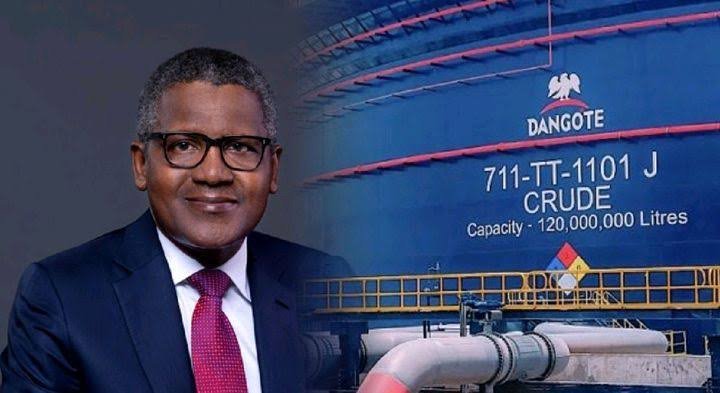
On 6 October 2026, Nigeria’s Dangote Petroleum Refinery confirmed that it had stopped selling Premium Motor Spirit (PMS), commonly known as petrol, to major petroleum marketers that import fuel into the country. The decision, reported by Punch Newspapers, marked an escalation in a dispute over the relationship between domestic refining and imported petroleum products.
According to two refinery sources quoted by Punch, the company was prioritising independent petroleum marketers and other buyers it did not identify as importers. The refinery’s stated concern was that marketers were combining its petrol with imported products of allegedly inferior quality, potentially making it difficult to distinguish its own product from fuel subsequently mixed or handled by third parties.
The affected marketers disputed the refinery’s characterisation of imported fuel, challenged it to provide evidence that imports failed to meet required standards and accused it of trying to restrict competition.
These are competing claims, not established findings. The report does not independently demonstrate that the imported petrol in question was below Nigeria’s required specifications, nor does it establish that every importing marketer was denied supply.
The development nevertheless raises a broader question: how should Nigeria balance the commercial interests of its largest domestic refinery with the role of imports, independent distributors and regulatory safeguards in maintaining a competitive and reliable fuel market?
From a proposed restriction to a reported sales policy
The decision did not emerge without warning. On 31 August, Punch reported that Dangote Petroleum Refinery was considering cutting petrol supplies to major marketers that continued to import competing products. The earlier report described a proposed measure, potentially subject to further consultations, rather than a completed policy.
The refinery’s concern, as reported at the time, was that some marketers were allegedly blending imported petrol with fuel purchased from Dangote. The company said that this could obscure the origin of the resulting product and expose its brand to reputational damage.
The 6 October report moved the story forward: refinery sources said the restriction had been implemented.
This chronology matters. The August announcement establishes that the restriction had been under consideration; the October report provides the reported confirmation of its implementation. Neither report, on its own, establishes how many marketers were affected, the volumes of petrol withheld or whether the restriction applied uniformly across all commercial arrangements.
The quality dispute: what has and has not been established
Dangote’s stated justification centres on product quality and the handling of its petrol after sale.
In the 6 October report, an unnamed refinery official alleged that importers were blending Dangote’s petrol with imported products described by the source as lower quality. A second source said the refinery preferred to supply independent marketers and other buyers not known for importing.
The refinery’s concern, as reported, is that the mixing of products could make it difficult to distinguish petrol supplied directly by Dangote from products blended or handled by third parties.
There is a legitimate analytical distinction between that concern and proof of a regulatory violation.
First, the refinery’s allegation is not independent evidence that imported petrol failed to meet Nigerian standards. The Punch report records the allegation but does not provide laboratory results, regulatory test findings, identified consignments or a published investigation establishing that the products in question were non-compliant.
Second, blending products from different suppliers does not, by itself, establish that the resulting fuel is substandard. That question depends on the products involved, their specifications, the blending process and the applicable regulatory requirements. The available reports do not provide enough evidence to determine whether any particular blending operation violated those requirements.
Third, the available reporting does not establish whether Dangote’s decision was prompted by documented cases involving specific marketers, a general concern about product traceability, a commercial disagreement or some combination of factors.
The marketers quoted by Punch challenged Dangote to substantiate its claims about imported petrol quality. Their objections are also statements by interested parties, rather than independent proof that every imported product meets the required specifications.
A conclusive assessment would require evidence beyond the public statements recorded in these reports: relevant laboratory results, product specifications, regulatory inspection findings and details of any identified non-compliant consignments.
Until such evidence is available, the sound conclusion is narrower: Dangote says the restriction is intended to address concerns about blending and product quality; the published reporting reviewed here does not independently establish the alleged quality violations.
The distribution question: who can buy from Dangote?
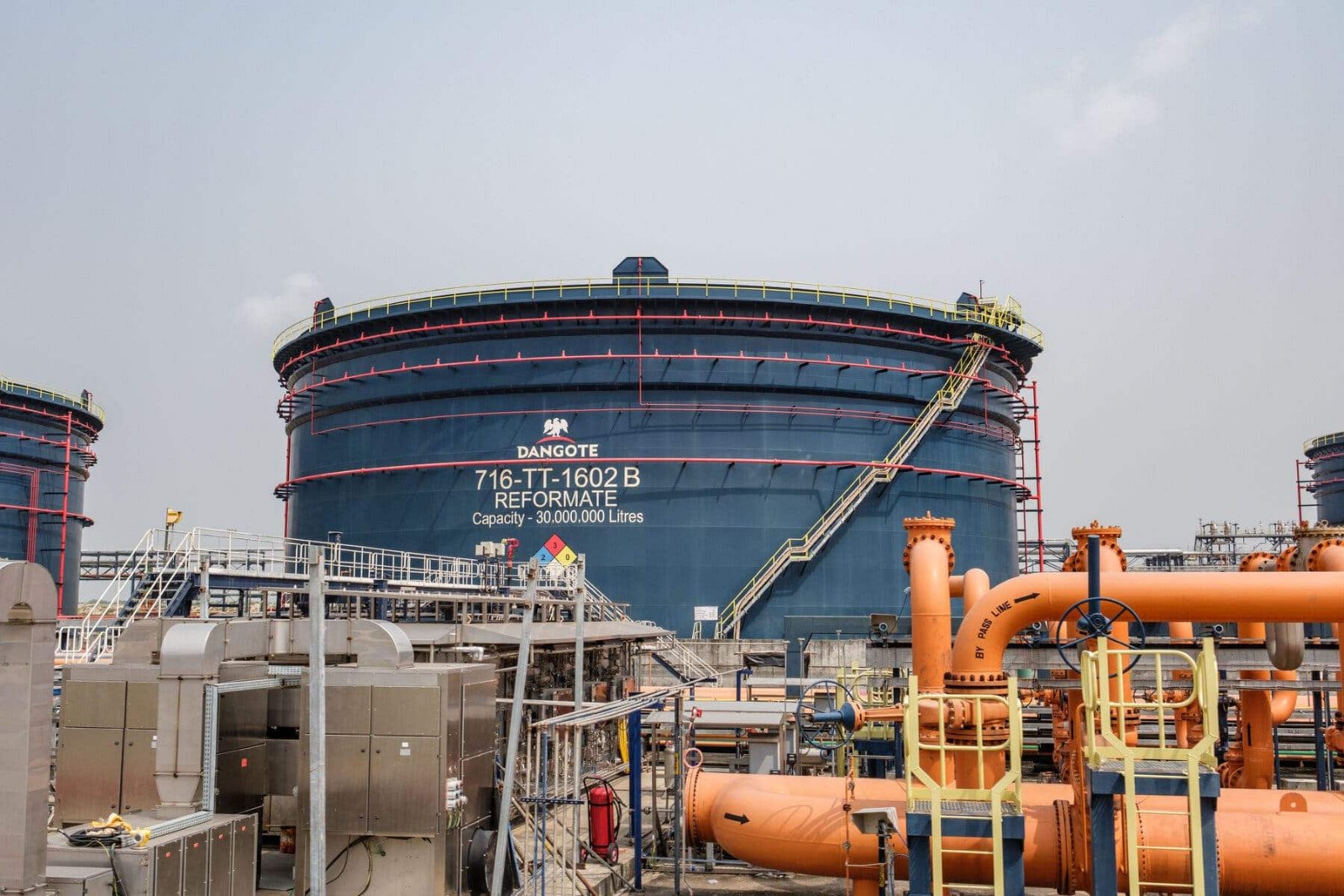
The restriction is not only a dispute over fuel quality. It also concerns access to supply from a major domestic refinery.
According to Punch, Dangote was prioritising members of the Independent Petroleum Marketers Association of Nigeria (IPMAN) and other marketers it did not identify as importers. Marketers who imported petrol expressed concern that losing access to Dangote’s supplies could leave them more dependent on their ability to obtain imports.
That concern sits at the intersection of two separate commercial relationships. A refinery decides whom it sells to, subject to applicable law and its contractual obligations. A petroleum regulator decides how the licensing framework is administered. A marketer’s access to one supplier and its legal ability to import fuel are therefore not the same thing.
A restriction on direct purchases from Dangote does not, by itself, revoke a marketer’s import licence. Equally, an import licence does not guarantee that Dangote will sell that marketer petrol.
The distinction is especially important because Nigeria’s import-licensing dispute was already before the courts.
On 28 September, Reuters reported that a Federal High Court in Abuja had ordered the Nigerian Midstream and Downstream Petroleum Regulatory Authority (NMDPRA) to continue issuing fuel import licences and related permits to three marketing companies: Matrix Energy, A.A. Rano and AYM Shafa. The ruling concerned the regulator’s handling of import licences under the Petroleum Industry Act.
That order was directed at the regulator’s licensing conduct. It should not be misrepresented as an order compelling Dangote to supply petrol to particular marketers.
A significant complication: the 20-marketer consortium
A subsequent development complicates any account that portrays the restriction as a simple divide between Dangote and all importing marketers.
On 9 October, Business Post Nigeria reported that Dangote had approved 20 petroleum marketers under a new consortium arrangement for purchasing petrol. The publication said the refinery had communicated the list on 8 October and that additional marketers were expected to be announced.
The reported members included A.A. Rano, AYM Shafa and NIPCO, alongside companies such as MRS Oil Nigeria, Techno Oil, Heyden Petroleum, 11 Plc, Conoil, Ardova, NNPC Retail, TotalEnergies and Rainoil/Eterna.
This matters because A.A. Rano, AYM Shafa and NIPCO were also among the companies identified in Premium Times’ reporting on petrol import permits approved for the fourth quarter of 2026. The two reports do not provide enough detail to establish each company’s precise status under the consortium, the scope of its import activity or the terms under which it may purchase Dangote’s petrol.
The available evidence therefore does not support a simple claim that all companies with import-related activities were permanently excluded from buying Dangote fuel. Rather, it suggests that access to the refinery’s product was being reorganised while the wider dispute over imports continued.
Nor does the consortium report establish that the earlier restriction had been fully reversed. The reports do not set out the complete terms of the arrangement, how purchasing allocations would work, whether membership carried conditions concerning imports or whether every eligible marketer could join.
The distinction between a restriction and a purchasing arrangement is important. If sales are channelled through an approved group, the central questions become who qualifies, how membership is determined, how much product each member can purchase, and whether other qualified distributors retain practical access to supply.
Those questions cannot be answered from the published membership list alone.
Imports remain part of the market, despite domestic refining
Nigeria’s continued petrol imports provide essential context for the dispute.
According to Premium Times, the NMDPRA approved import permits covering approximately 830,000 metric tonnes of petrol for several marketers ahead of the fourth quarter of 2026. The authority’s spokesperson said the approvals were intended to prevent supply gaps during the year-end period.
The permits were reportedly issued on 18 September. The publication said the individual allocations were not available at the time of reporting.
Separately, Nairametrics, reporting figures from the NMDPRA’s August 2026 factsheet, said average daily petrol imports fell by 26% to 14.6 million litres in August, from 19.7 million litres in July.
The same report said Dangote’s refinery produced an average of 41.94 million litres of petrol daily in August, while domestic receipts averaged 35.87 million litres a day and exports averaged 9.73 million litres. The figures use different measures—production, domestic receipts and exports—and should not be treated as interchangeable.
Taken together, the reports establish two relevant facts: Dangote was producing substantial volumes of petrol, and imports remained part of Nigeria’s supply picture. They do not, by themselves, establish the exact share of national demand that imports were meeting, the amount of usable stock available at every point in the distribution chain, or whether imports were necessary in every region and at every moment.
That distinction is central to the policy debate. Installed refinery capacity, actual production, domestic deliveries, inventories, distribution constraints and national consumption are different variables. A refinery’s output figure alone cannot establish that every market participant can obtain enough fuel, at the right time and location, to meet demand.
The regulatory question is consequently not just whether Nigeria has a large refinery. It is whether domestic production and distribution can consistently satisfy demand under the conditions required by law and what evidence should be used to determine when imports remain necessary.
The legal dispute is broader than the October sales decision
The October restriction emerged against the backdrop of a longer disagreement over the role of import licences in a market with growing domestic refining capacity.
Reuters reported on 22 May that Dangote had challenged fuel import licences issued or renewed by the NMDPRA to marketers and NNPC. The refinery argued that the licences undermined domestic refining and contravened provisions of the Petroleum Industry Act.
In court documents described by Reuters, NNPC opposed Dangote’s position. It argued that the law allowed imports by companies with relevant refining licences or a record of international crude and petroleum-product trading, and that the regulator had discretion to manage imports. NNPC also argued that Dangote had not provided credible, independent or verifiable evidence that its refinery could meet all of Nigeria’s fuel demand and guarantee uninterrupted nationwide supply.
These were arguments made in litigation, not a final determination of every disputed issue.
The September court order reported by Reuters added a further dimension: the Federal High Court directed the regulator to continue issuing import licences and related permits to three marketers, stating that refusal would be inconsistent with the Petroleum Industry Act.
The legal and commercial issues must remain separate. The reported court order concerned regulatory licensing. The October restriction concerned Dangote’s decision about its own sales. Neither development, taken alone, resolves the full question of how Nigeria should balance domestic refining, import competition and security of supply.
For the legal position to be described more definitively, the relevant court orders, subsequent filings and any later rulings would need to be examined directly. Media summaries of competing submissions are not a substitute for the complete court record.
What could the decision mean for competition and fuel prices?

The restriction creates questions about competition, but its effects should not be presumed.
If marketers that import petrol lose access to Dangote’s product while continuing to serve their customers, they may need to rely more heavily on other sources. Whether that would increase their costs depends on the prices and terms available from those sources, transport and handling costs, financing, exchange-rate exposure and the availability of product at the time of purchase.
Conversely, if a consortium arrangement improves the coordination of wholesale distribution, it could change how Dangote’s petrol reaches retailers. The available report on the 20-member group does not provide price, volume or distribution data sufficient to establish whether the arrangement would reduce costs, increase them or leave them unchanged.
It would therefore be premature to claim that the October restriction has already caused a rise in pump prices, created a nationwide shortage or reduced consumer choice. Establishing those outcomes would require time-series evidence on wholesale and retail prices, deliveries, stock levels, import volumes and regional availability, alongside an assessment of other factors affecting prices.
The key competition issue is also more specific than whether a company is large or small. It is whether the distribution structure allows qualified buyers to obtain fuel on commercially workable terms, and whether the market retains credible alternatives when a supplier changes its sales policy.
A meaningful assessment would need to compare the consortium’s access rules and allocations with the access available to other marketers, rather than infer market effects from the existence of the arrangement alone.
The central test: transparent rules and verifiable evidence
The Dangote–importer dispute brings three questions into focus:
First, quality claims must be verifiable. If the restriction is justified by allegations of substandard imports or problematic blending, the strongest evidence would be product testing, documented regulatory findings and clear information about the consignments and practices concerned. Neither side’s assertions should be treated as conclusive without such evidence.
Second, the rules governing access need clarity. The 20-member consortium is a concrete development, but the public reporting reviewed here does not establish its full terms. Clear information about eligibility, allocations, volumes, pricing arrangements and conditions of participation would help determine whether the arrangement is simply a distribution mechanism or materially changes access to supply.
Third, regulators and courts have distinct responsibilities. The NMDPRA’s import-licensing decisions are governed by the applicable legal framework, while Dangote’s sales decisions raise separate commercial and contractual questions. The September court order should not be stretched beyond what it addressed, and the October restriction should not be presented as a ruling on the legality of imports.
These tests are more useful than treating the episode as proof that either domestic refining or fuel imports are inherently preferable. The evidence available so far establishes a dispute over product quality, commercial access and the role of imports; it does not settle every claim being made by the parties.
Conclusion: a distribution dispute with national implications
Dangote’s reported decision to stop selling petrol to importing marketers is part of a larger debate over how Nigeria’s fuel market should operate as domestic refining expands.
The refinery has raised concerns about the handling and quality of its products. Marketers have challenged those claims and objected to a restriction they view as an attempt to block imports. Meanwhile, the regulator has approved import permits for the fourth quarter, a court has ordered continued licensing for three firms, and Dangote has reportedly established a 20-member purchasing consortium.
These developments show why the episode cannot be reduced to a simple contest between local production and imported fuel. It involves product standards, distribution arrangements, the interpretation of petroleum law and the practical question of how supply is maintained across the country.
The decisive evidence will be what the public record can establish: whether the quality allegations are substantiated, how the consortium operates, how the licensing dispute proceeds, and whether measurable changes emerge in prices, supply and market access.
Until that evidence is available, the most defensible conclusion is that Nigeria’s domestic refining transition is raising difficult questions about competition and distribution—questions that require transparent rules and verifiable data rather than assumptions about the motives or effects of any one decision.
Citations
- 1.Punch Newspapers — 6 October 2026: Dangote stops petrol sales to fuel importers
- 2.Punch Newspapers — 31 August 2026: Dangote considers cutting petrol supply to importers
- 3.The Telegraph Nigeria — 6 October 2026: Dangote refinery stops petrol sales to fuel importers
- 4.Business Post Nigeria — 9 October 2026: Dangote Refinery Approves 20 Marketers for Petrol Purchases
- 5.Premium Times — 23 September 2026: NMDPRA approves 830,000-tonne petrol imports amid Dangote legal battle
- 6.Nairametrics — 24 September 2026: Petrol imports fall 26% to 14.6 million litres daily in August — NMDPRA
- 7.Reuters — 28 September 2026: Nigerian court orders regulator to keep issuing fuel import licences to marketers
- 8.Reuters — 22 May 2026: Nigeria’s NNPC accuses Dangote refinery of seeking fuel monopoly in court filing
Finish Reading the Full Story and Expert Analysis.
Get the latest legal & regulatory intelligence in Nigeria
Wansom is AI and can make mistakes.