
Dangote’s $16 Billion Lamu Refinery: Kenya’s Energy Ambition Meets a Test of Land Rights, Financing and Transparency
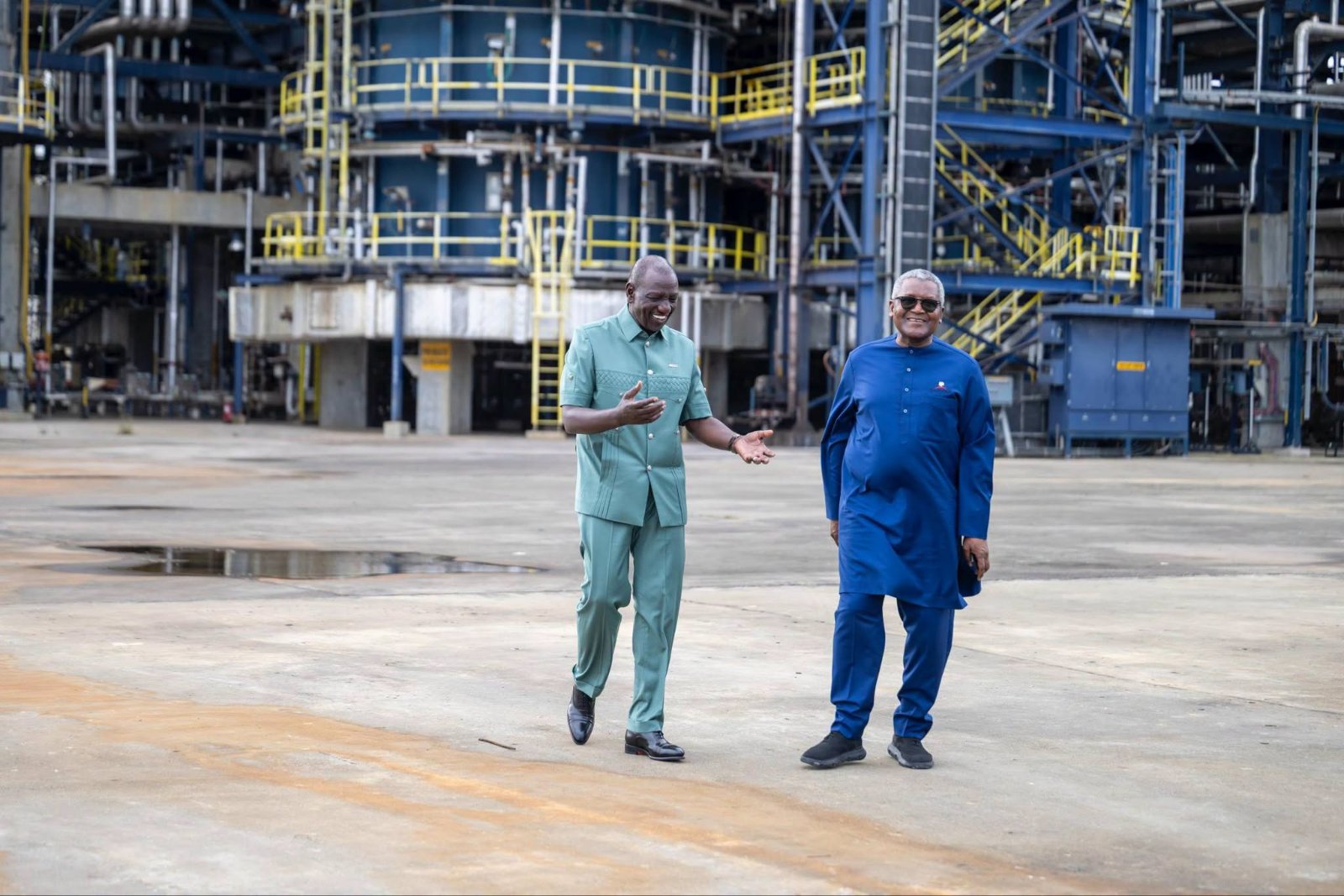
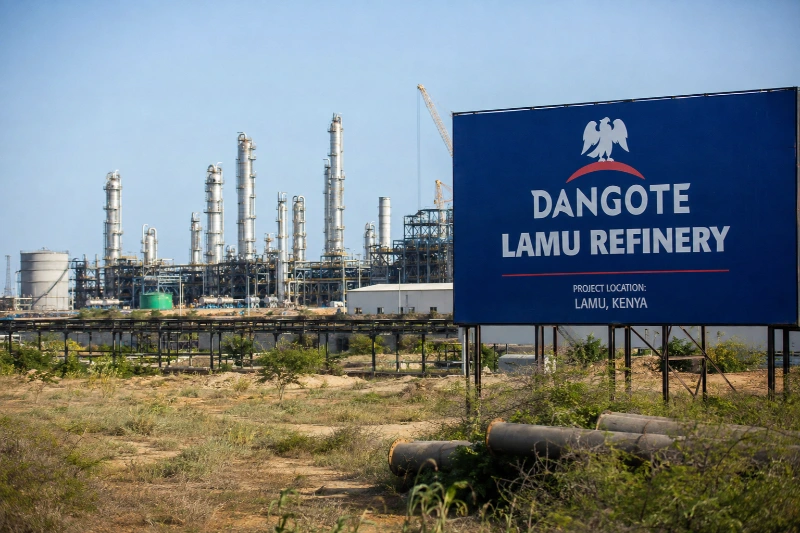
On 30 September 2026, President William Ruto and Nigerian industrialist Aliko Dangote broke ground on the proposed East Africa Petroleum Refinery and Petrochemicals Complex in Mokowe, Lamu County. The planned facility is designed to process up to 700,000 barrels of crude oil a day, making it one of the largest refining projects proposed in Africa.
Reuters puts the project’s announced cost at approximately US$16 billion. The development is expected to include petrochemical production and a 1,000-megawatt power plant, while Engineers India Limited has received a reported US$450 million engineering contract and Honeywell is providing technology support. The project is intended to supply Kenya and neighbouring countries with refined products, including petrol, diesel and jet fuel.
The scale is substantial, but so is the distance between the ceremony and commercial operation. The project has broken ground; it has not started refining crude oil. Its completion is targeted for 2030, leaving years in which construction, financing, legal approvals, land access, utilities and supply arrangements must be brought together.
Reuters reported in July that Dangote planned to finance the project through internal cash, bonds and an initial public offering. The final financing structure, the full funding commitments and the conditions attached to any Kenyan public investment remain important matters to verify. A construction contract is evidence of progress, but it does not by itself establish that the entire project is fully financed or that all risks have been resolved.
The first test: who controls the land?
The most immediate legal challenge concerns land in the Hindi/Manda Magogoni area of Lamu County.
A group of 133 Chandavai residents has asked the Environment and Land Court in Malindi to intervene over land they say their families have occupied, cultivated and developed for generations. Their case raises questions about the acquisition process, compensation, resettlement and the treatment of people who claim customary or other interests in land earmarked for the development.
The residents allege that land was cleared without adequate notice or valuation. Those allegations remain claims to be determined through the legal process; they should not be reported as established judicial findings.
In late September, Justice Jane Onyango declined to certify the application as urgent but directed the parties to maintain the status quo on the disputed parcel, identified as LR No. 13061, until the inter partes hearing scheduled for 14 October 2026.
The distinction between the court’s orders and the wider construction programme is essential. The court did not grant the applicants the full stop order they sought before the groundbreaking ceremony. Nor does the fact that the ceremony proceeded mean the land dispute has been settled. The status quo order applies to the disputed parcel, and the court is due to consider the parties’ positions at the scheduled hearing.
Dangote Group said the order would not prevent the groundbreaking ceremony, although activities on the affected land could be restricted. Reporting has sometimes described this as a halt to the refinery, but the more precise account is that the court ordered the status quo on a particular disputed parcel pending the hearing. The consequences for other areas of the project depend on the scope of the order and subsequent court directions.
The hearing matters commercially as well as legally. Large industrial developments require clear, durable access to land. If compensation, title or resettlement disputes remain unresolved, construction planning can become more difficult, contractors may face uncertainty over site access, and financing parties may require additional safeguards.
A negotiated settlement could reduce these risks, but it would need to address the claimants’ actual concerns and comply with the law. The existence of a major national investment does not remove the need for lawful acquisition and fair treatment of affected communities.
The second test: what exactly is Kenya buying?
The proposed public stake is potentially the most consequential question for taxpayers.
Dangote has offered East African governments a combined 30% stake in the refinery. Kenya has been reported to be considering a 10% interest, valued at approximately US$500 million. That valuation is consistent with a project valued at roughly US$5 billion for every 10% stake only if the equity valuation and the overall project valuation align in the relevant way; it should not be assumed to establish the final amount payable or the terms of the investment.
A government equity investment is different from a grant or subsidy. In principle, the state acquires an ownership interest and may receive dividends or benefit from an increase in value. But it also assumes investment risk: returns depend on the refinery being completed, operating competitively, selling products profitably and meeting its financing obligations.
The crucial unanswered questions include:
What valuation is being used to price Kenya’s proposed stake?
What precisely does the government receive in return, including voting rights, board representation and access to financial information?
Will the investment be made in cash, through a public fund, by transferring assets, or through another arrangement?
Will the state provide land, guarantees, tax concessions, infrastructure or other support in addition to any equity contribution?
Who bears cost overruns, delays, debt-servicing pressure and the risk of lower-than-expected returns?
What protections exist for the public if the project’s value falls or its financing structure changes?
These are not technical details to be left until after construction begins. They determine the state’s financial exposure and whether the proposed investment offers value for money compared with alternative uses of public resources.
A public-finance question, not just a political dispute
On 6 October, the High Court certified as urgent a petition seeking disclosure of agreements and public commitments associated with Kenya’s proposed participation. Justice David Mburu directed that the matter be handled on a priority basis and required the relevant parties to respond within the prescribed timetable.
The petition seeks clarity over possible public money, land, tax incentives, guarantees and other state resources. Its procedural status should not be confused with a finding that any particular commitment is unlawful or has already been made. The court has been asked to examine the information and arrangements; the substantive questions remain to be resolved.
The debate is especially relevant because Kenya’s National Infrastructure Fund is itself a major new vehicle for financing infrastructure. Reuters reported on 7 October that the fund had begun deploying seed capital, including through purchases of domestic government bonds, and was considering a stake in the Dangote refinery.
If the fund is to participate, the public needs to understand the investment criteria, risk limits, expected return and approval process. A strategic industrial project may justify a public investment, but strategic importance is not a substitute for transparent valuation and a credible financial case.
The state should publish, subject to legitimate commercial confidentiality, the core terms needed for public scrutiny: the proposed ownership percentage, valuation, financing source, risk allocation, government support commitments and expected returns. If material agreements remain confidential, the government should explain the legal basis for withholding them and provide meaningful disclosure of the public obligations involved.
The third test: will the refinery actually make fuel cheaper?
The promise of lower fuel costs is central to the project’s public appeal. Kenya and its neighbours depend heavily on imported petroleum products, exposing consumers and businesses to international prices, foreign-exchange movements, shipping costs and supply-chain disruptions.
A large regional refinery could reduce dependence on imports of finished petroleum products and retain more processing activity within Africa. It could also generate demand for port services, storage, transport, maintenance, engineering, petrochemicals and other industrial services.
But a refinery does not produce crude oil. It buys crude, processes it and sells refined products. Its commercial performance therefore depends on the price and availability of crude, the cost of moving it to the plant, the efficiency of the refining process, financing expenses, product demand and the prices it can secure in domestic and export markets.
This is why the project should not be described as a mechanism that will automatically shield Kenyans from global oil shocks.
Dangote’s refinery will still be exposed to international crude markets. Even if it replaces some imports of finished petrol and diesel, the price of crude oil and the cost of transporting it to Lamu will remain important. Refining locally changes where value is added and how products are supplied; it does not eliminate the global price of the raw material.
There is also a distinction between lower costs for the refinery and lower prices for consumers. If the plant produces efficiently, it may offer competitive products. But pump prices will still depend on taxes, distribution costs, margins, the regulatory framework, market competition and the terms under which the refinery sells to local buyers.
The Motorists Association of Kenya has called for a legally binding assurance that any refinery savings will translate into lower pump prices. That demand captures the public-policy challenge: if the government is considering a stake or providing other support, the public needs a clear explanation of how those benefits are expected to reach consumers.
A useful framework would publish the expected economic benefits separately: savings from reduced imports of finished products, potential foreign-exchange effects, employment and tax revenue, and any direct reduction in fuel costs. Those estimates should include assumptions and sensitivities rather than present lower pump prices as a guaranteed outcome.
Crude supply is the project’s central commercial risk
Kenya does not currently have commercial crude-oil production supplying a domestic refinery. That makes feedstock procurement a fundamental requirement, not a secondary logistical question.
The region has prospective and developing sources of crude, including Uganda’s oil fields and Kenya’s Turkana resources, while South Sudan produces crude oil. But geological resources, future production and commercially available refinery feedstock are not interchangeable. A refinery needs reliable volumes, suitable crude grades, transport arrangements and contracts that work under changing market conditions.
The government has argued that refineries can procure crude from the open market. That is correct in principle, but it leaves the project exposed to global prices, shipping availability, insurance costs, port capacity and competition with other buyers.
The question is whether Lamu can receive sufficient crude at a competitive delivered cost over the long term. This requires more than identifying potential suppliers. It requires binding supply agreements or a credible procurement strategy, suitable storage and handling facilities, marine logistics, and contingency plans if a supplier or route is disrupted.
Lamu’s port location is a potential advantage, giving the project access to maritime trade. But port access alone does not establish that the required crude-import and storage infrastructure is already operational. Those facilities must be designed, financed, built and integrated with the refinery.
The project also needs to manage the difference between regional resource ambitions and actual production schedules. If anticipated supplies from Uganda or other producers arrive later than planned, the refinery would have to source more crude internationally. If crude transport costs are high, that could weaken its cost advantage relative to competing refineries.
The strongest evidence of progress would therefore be published feedstock arrangements, infrastructure milestones and a transparent plan for crude procurement—not simply statements that regional oil resources exist.
Nigeria offers a useful test case, not a guarantee
Dangote’s Nigerian refinery provides the closest comparison, but its experience should be examined rather than treated as proof that the Kenyan project will achieve the same results.
The Nigerian plant has a nameplate capacity of around 650,000 barrels per day and began operations in 2024. It has become an important source of domestic refined products and exports. Yet the ramp-up has not been identical to its planned supply profile.
A Nigerian Midstream and Downstream Petroleum Regulatory Authority fact sheet reported that, between October 2024 and October 2025, the refinery supplied an average of 18.03 million litres of petrol per day against a planned 35 million litres. That is approximately 51.5% of the planned volume.
This comparison does not prove the refinery was operating at 51.5% of its total crude-processing capacity: the figures refer to petrol supply against a planned petrol-supply target. Product yields, maintenance, feedstock, market arrangements and the mix of refined products all affect the relationship between refinery capacity and petrol deliveries.
It does, however, demonstrate why a headline capacity figure should not be confused with actual product supply. The Lamu project will need to show not only that it can process crude, but that it can reliably produce and deliver the specific fuels required by regional markets.
Nigeria’s experience also shows that refinery development can trigger disputes over import licences, supply arrangements, pricing and the interests of existing marketers. Dangote has attributed opposition in Kenya to traders and businesses whose commercial interests could be threatened. That is his explanation, not independently established evidence that all or specific opponents are acting for those reasons.
The refinery may alter the economics of importing finished products, but market participants will still need clear rules on access, pricing, quality standards, storage, distribution and competition. If the government wants the facility to strengthen energy security rather than create a new concentration of market power, those rules will matter.
Regional demand: 700,000 barrels a day needs a regional market

The planned capacity is large relative to the needs of any single East African market. The commercial case therefore depends on selling products across the region and potentially to export markets beyond it.
Reuters reported that regional annual petroleum-product demand was estimated by Kenya’s chief economic adviser at 20 million to 30 million metric tonnes. A financier involved in African refinery projects said meeting that demand would require more than one million barrels per day of refining capacity. These are reported estimates, not a detailed independent forecast of the refinery’s future sales.
The implication is that the project’s viability depends on more than Kenya’s own consumption. It must secure access to a broad market, deliver products competitively and account for the infrastructure and regulatory barriers that affect cross-border trade.
Regional support at the groundbreaking is politically significant, but attendance at a ceremony is not equivalent to a binding purchase agreement, equity commitment or crude-supply contract.
Uganda illustrates the distinction. President Yoweri Museveni has supported the Lamu project’s regional significance, but Uganda is also pursuing its own refinery ambitions around Hoima. Uganda has separately been associated with plans involving Tanzania and the Tanga port corridor. These initiatives may be complementary in some respects, but they could also compete for capital, crude supplies, infrastructure and future product markets.
For the Lamu refinery, the critical questions are whether neighbouring governments will invest, whether regional buyers will commit to purchasing products, and whether pipelines, ports, roads and storage facilities can support the expected volumes.
The proposed offer of a combined 30% stake to regional governments may help secure political and financial buy-in. But the offer itself is not evidence that all 30% has been subscribed or that the governments involved have agreed on final terms.
The bankability test is therefore concrete: binding equity commitments, credible offtake arrangements, reliable crude supply and a workable logistics network.
Environmental risk is part of the project’s economics
The refinery’s location raises environmental questions that cannot be treated as separate from its commercial prospects.
Lamu’s coastal and marine environment supports fisheries, tourism, mangroves, seagrass, coral ecosystems and communities whose livelihoods depend on them. Greenpeace Africa has warned that a refinery of this scale could create risks involving habitat disruption, marine pollution, oil spills and air pollution. These are concerns raised by an environmental organisation, not findings that the project has already caused such damage.
The location also brings the project into a sensitive cultural and heritage landscape. Lamu Old Town is a UNESCO World Heritage Site, and conservation groups have expressed concern about the potential effects of large-scale industrial development on the wider area.
The relevant question is not whether industrial development and environmental protection must be mutually exclusive. It is whether the project’s design, location, safeguards, monitoring and emergency plans can adequately manage the risks.
A credible environmental assessment should identify the project’s likely impacts, alternatives considered, cumulative effects, mitigation measures and the arrangements for monitoring compliance. It should also address the concerns of affected communities and explain how environmental risks will be managed during construction and operation.
Greenpeace Africa has said it is considering legal action over the environmental assessment and disclosure process. The existence of that threat does not establish that the project lacks a required licence or that a court has ruled against it. Those questions require examination of the actual assessment documents, regulatory approvals and any subsequent court filings.
The public interest is best served by timely disclosure of the relevant environmental assessment and approvals, with any lawful redactions clearly explained. That would allow independent scrutiny of the evidence rather than leaving the debate dominated by competing claims.
The political calendar raises the stakes
The refinery has become a prominent part of the government’s industrialisation narrative as Kenya approaches its next general election in 2027.
President Ruto has said the project could boost annual GDP by 12%. That figure should be attributed to the President, not presented as an independently verified economic forecast. A credible estimate would need to explain whether the figure refers to the level of GDP, annual growth, direct project output or a wider multiplier effect—and how it accounts for imported equipment, financing costs, construction delays and the displacement of existing economic activity.
The project’s potential economic contribution is real enough to warrant analysis: construction could generate jobs and demand for services; refinery operations could support engineering, logistics and petrochemicals; and domestic processing could retain more value within the region. But the scale and distribution of those gains depend on implementation.
The political stakes run in both directions. The government has incentives to demonstrate progress on a flagship infrastructure project. Opposition figures and civic groups have incentives to scrutinise the terms, public costs and compliance with constitutional and environmental requirements. Neither fact establishes that any party’s substantive position is correct.
The appropriate test is whether the project meets clear standards: lawful land acquisition, transparent public commitments, credible financing, environmental compliance and measurable economic benefits. Those standards should remain the same regardless of the electoral calendar.
What happens next?
As of 13 October 2026, the next developments fall into three overlapping tracks.
The immediate legal track: The Malindi Environment and Land Court is scheduled to hear the land application on 14 October. The outcome could preserve the existing status quo, alter the interim arrangements or provide further directions. It should not be assumed in advance that the court will halt the entire project or that the dispute will be resolved at the hearing.
The disclosure track: The separate High Court petition seeks information about the government’s proposed financial involvement. The next important developments are the respondents’ filings, any court directions and the release of relevant agreements or public-commitment details. The urgency certification is procedural, not a ruling on the merits.
The commercial track: Over the coming months, the project’s credibility will depend on evidence of financing, equity commitments, crude-supply arrangements, construction progress, port and storage infrastructure, environmental compliance and access to regional markets. The proposed 2030 completion date remains a target, not a guarantee.
Three broad scenarios are possible:
Managed progress: The land dispute is addressed through lawful processes, material financing terms are disclosed, and construction proceeds alongside binding supply and market agreements.
Delay and cost escalation: Legal disputes, unresolved community concerns, environmental challenges or incomplete financing slow site development and increase project costs.
Stronger regional integration: Governments and buyers make credible commitments, infrastructure develops in step with construction, and the refinery becomes a competitive regional supplier.
These are analytical scenarios, not predictions of what the courts, governments or investors will decide.
The questions that should define the public debate
For the project to be judged on evidence rather than ceremony, five tests deserve sustained scrutiny:
Financial transparency: What exactly is the proposed Kenyan stake worth, how will it be funded, and what public liabilities accompany it?
Land and community rights: How will the claims of affected residents be resolved, and what compensation or resettlement obligations apply?
Commercial viability: Where will the refinery source crude, how will it transport and store it, and what binding arrangements support regional sales?
Consumer benefit: What mechanisms, if any, will ensure that efficiency gains translate into competitive prices for Kenyan consumers?
Environmental accountability: What do the assessment documents and regulatory approvals say, and how will compliance be monitored over the project’s life?
The answers should be published in a form that allows independent evaluation. This is especially important if public assets or public funds are involved.
Conclusion: the real milestone will be execution
The Lamu refinery could become a major industrial asset for Kenya and East Africa. It offers the prospect of more regional refining capacity, new industrial activity, jobs, port demand and a different balance in the supply of petroleum products.
But the project’s significance should not be measured by its announced size alone. Its economic value will depend on whether it is completed at a viable cost, secures reliable crude supplies, reaches regional markets, complies with environmental requirements and earns returns commensurate with the capital invested.
For Kenya, transparency is not an obstacle to industrial ambition. It is one of the conditions that can make a project of this scale more durable. Resolving land claims lawfully, disclosing public commitments and demonstrating the commercial basis for the investment would help distinguish a credible industrial strategy from an expensive promise.
The groundbreaking marks the beginning of construction. The decisive milestones will be the agreements, safeguards, infrastructure and operating performance that follow.
Citations
- 1.Reuters — refinery groundbreaking, capacity and project risks
- 2.Reuters — proposed financing structure
- 3.The Star — land case and 14 October hearing
- 4.Daily Nation — High Court petition seeking disclosure
- 5.Reuters — National Infrastructure Fund
- 6.Nigerian Midstream and Downstream Petroleum Regulatory Authority — 2025 fact sheet
- 7.Greenpeace Africa — environmental concerns
Finish Reading the Full Story and Expert Analysis.
Get the latest legal & regulatory intelligence in Kenya
Wansom is AI and can make mistakes.