
Court Extends Orders Halting Meru State Lodge Development Inside Imenti Forest for Third Time, Raising Questions on Executive Authority Over Protected Land
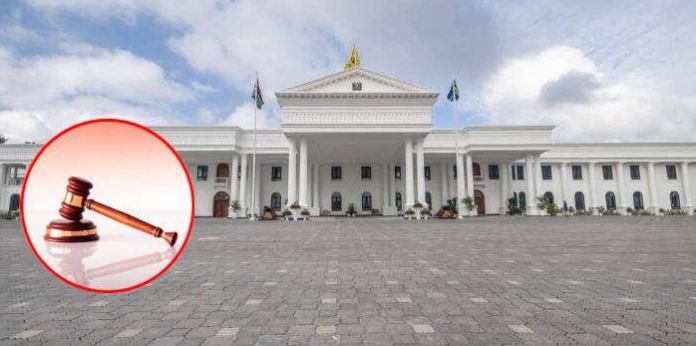
Abstract
Justice Oguttu Mboya of the Environment and Land Court has extended conservatory orders barring any excision, clearing, construction, or alteration of Imenti Forest, halting President Ruto's proposed state lodge development for a third consecutive time. The petitions, filed by the Pan-African Climate Justice Alliance and the Meru Forest Conservation Forum, challenge the project on environmental and constitutional grounds. Imenti Forest is a gazetted protected forest and a critical water catchment area on the slopes of Mount Kenya. The proposed development includes a state lodge, golf course, and airstrip. The court is set to consider consolidating all three petitions on 30 June 2026. The case raises a question that recurs across African jurisdictions: whether executive development priorities can override statutory forest protection frameworks and constitutional environmental rights. For environmental lawyers, governance advisers, and compliance professionals in the development and extractives sectors, the trajectory of this litigation establishes a precedent on the justiciability of executive decisions affecting protected land.
Introduction
Kenya has a well-developed statutory framework for forest protection, and Imenti Forest sits within it as a gazetted protected area. The proposal to excise part of that forest to accommodate a presidential facility has now been stopped by the same court three times, each time on conservatory orders pending full hearing. President Ruto has defended the project publicly, framing it as a matter of equitable regional development and arguing that other regions already benefit from presidential facilities. That political framing does not resolve the legal question, which is whether the executive has the authority to direct development inside a protected forest without following the statutory processes that govern excision and change of use.
The consolidation hearing on 30 June 2026 is the next material development. Three separate petitions are before the court, and consolidation will determine how the matter proceeds to substantive hearing. The repeated issuance of conservatory orders against the same project, combined with the President's public defence of it, sets up a direct confrontation between executive intent and judicial oversight over protected land. That confrontation is what gives this case significance beyond Meru County.
Background
Imenti Forest is protected under the Forests Conservation and Management Act, No. 34 of 2016, which governs the management, conservation, and sustainable use of forest resources in Kenya. Gazetted forests cannot be excised or converted to other uses without a formal legal process, including a recommendation from the Kenya Forest Service and approval by the Cabinet Secretary responsible for forestry, subject to parliamentary oversight. The Act is reinforced by the Environment and Land Court Act, No. 19 of 2011, which grants the court jurisdiction over disputes relating to the environment and natural resources, including protected forests.
The constitutional dimension runs through Article 42, which guarantees every person the right to a clean and healthy environment, and Article 69, which obliges the state to ensure sustainable exploitation and management of natural resources. Article 70 gives any person the right to apply to a court for redress where an environmental right has been or is likely to be violated. Public interest litigants invoking these provisions have successfully obtained conservatory orders in numerous cases involving development projects on protected land. The threshold for conservatory relief in environmental matters is lower than in ordinary civil proceedings, reflecting the irreversible nature of environmental harm. Once a forest is cleared, the court cannot restore it to its prior state through a subsequent order.
Analysis
The repeated grant of conservatory orders is itself a legal signal. Courts do not issue and extend interim orders three times in succession without finding, at minimum, a prima facie case that the petitioners' rights may be infringed and that the balance of convenience favours preservation pending full hearing. The irreversibility principle carries particular weight in forest cases. Any excision, clearing, or construction that takes place before the substantive hearing would render the petitions academic in practical terms, which is precisely why courts in environmental matters are willing to act on a lower evidential threshold than they would in commercial disputes. NTSA's voluntary suspension in the vehicle inspection matter was driven by public pressure. Here, the suspension is judicial and compulsory, and the executive has publicly stated its intention to proceed.
The governance dimension of this case extends beyond the specific project. The proposal to develop inside a gazetted forest without first completing the statutory excision process raises a question about administrative compliance at the highest level of government. The Forests Conservation and Management Act prescribes a process for changing the status or use of gazetted forest land. If that process was not followed before construction planning commenced, the project was in legal difficulty before the first petition was filed. For governance advisers and compliance professionals working with public sector clients or on development projects involving protected land anywhere in Africa, the case illustrates that executive approval of a project does not substitute for statutory compliance with land and environment laws. The lesson applies equally in jurisdictions with comparable forest protection frameworks, including Tanzania, Uganda, Ghana, and South Africa.
The consolidation hearing on 30 June will determine the procedural trajectory. If the court consolidates the three petitions, the matter moves to a single substantive hearing, which will require the government to put its legal justification for the project on the record. The government will need to explain what statutory authority authorises development inside a gazetted forest, whether the excision process has been initiated, and whether any environmental impact assessment has been conducted under the Environmental Management and Coordination Act. Those are answerable questions, but the answers need to exist before development proceeds. If they do not, the conservatory orders are likely to remain in place for an extended period.
Conclusion
A court stopping the same project three times in succession is a clear signal that the legal foundation for the Meru State Lodge development has not been established. The political case President Ruto has made, centred on regional equity, does not engage the legal question, which is whether the statutory process for developing inside a gazetted forest has been followed. Until the government can answer that question on the record, the conservatory orders will hold. For legal and compliance professionals across Africa, the case is a practical illustration of the principle that executive intent and statutory authority are not the same thing.
Citations
- 1.Constitution of Kenya, 2010, Articles 42, 69, and 70
- 2.Forests Conservation and Management Act, No. 34 of 2016
- 3.Environment and Land Court Act, No. 19 of 2011
- 4.Environmental Management and Coordination Act, No. 8 of 1999 (as amended)
- 5.Environment and Land Court, Meru, conservatory orders issued June 10 and June 23, 2026, extended June 29, 2026 (case numbers to be confirmed on consolidation)
- 6.Physical and Land Use Planning Act, No. 13 of 2019