
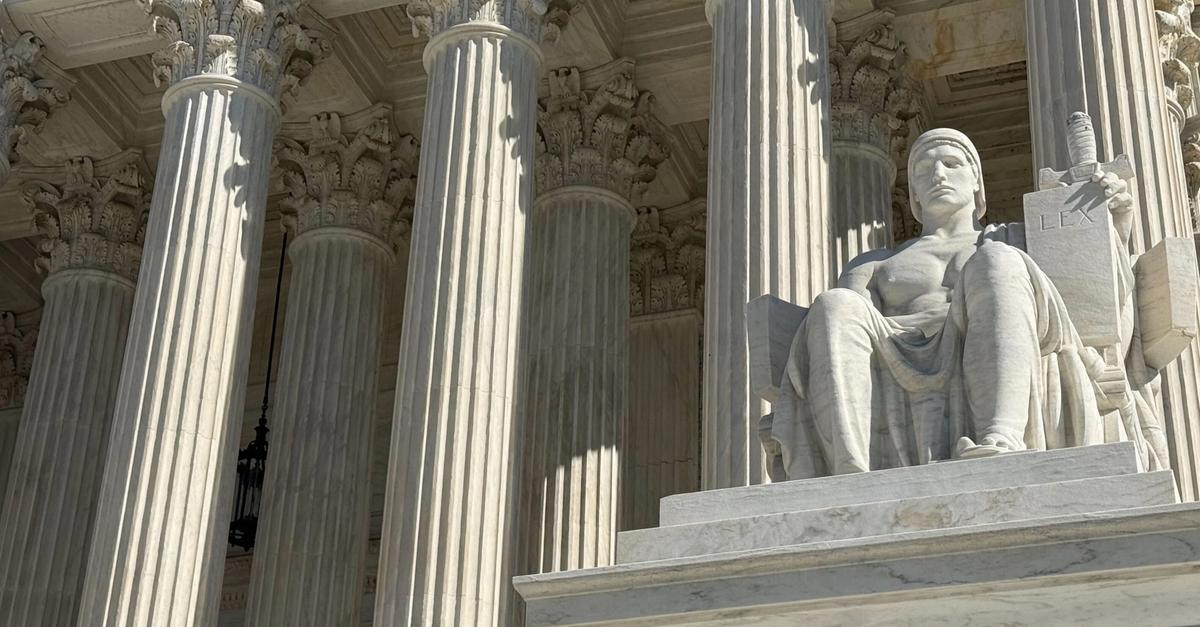
Court denies Alabama's request to allow execution using nitrogen gas
Abstract
The United States Supreme Court recently denied Alabama's emergency request to proceed with the execution of Jeffery Lee using nitrogen hypoxia. This decision effectively upheld lower federal court rulings that deemed Alabama's nitrogen gas protocol "likely unconstitutional" and a potential violation of the Eighth Amendment's prohibition against cruel and unusual punishment. The lower courts, including U.S. District Judge Emily Marks and the Eleventh Circuit Court of Appeals, found that the method presented a "substantial risk of serious harm" due to the sensation of "air hunger." This development marks a significant judicial intervention into the use of novel execution methods, particularly as states increasingly explore alternatives to lethal injection amidst drug shortages and legal challenges to existing protocols.
Introduction
The landscape of capital punishment in the United States continues to evolve under intense judicial scrutiny, particularly concerning the methods employed. A recent pivotal moment occurred on June 11, 2026, when the U.S. Supreme Court denied an emergency application from the State of Alabama, seeking to proceed with the execution of Jeffery Lee by nitrogen hypoxia. This denial, without a full explanation from the majority, effectively affirmed lower court injunctions that had barred the state from using this controversial and relatively new method of execution for Lee.
The Supreme Court's action, while specific to Lee's case, underscores the ongoing legal challenges to novel execution protocols and their alignment with the Eighth Amendment's prohibition against cruel and unusual punishment. Alabama has been at the forefront of implementing nitrogen hypoxia, a method that has drawn significant criticism from legal and medical experts. The decision in *Lovelace v. Lee*, as indicated by the dissenting justices, highlights the deep divisions within the judiciary regarding the acceptable boundaries of state power in carrying out death sentences.
This article will delve into the background of nitrogen hypoxia as an execution method, analyze the legal reasoning behind the lower courts' findings of unconstitutionality in Lee's case, and explore the broader implications of the Supreme Court's denial for capital punishment jurisprudence and practice in the United States.
Background
The adoption of nitrogen hypoxia as an execution method by several U.S. states, including Alabama, Oklahoma, Mississippi, and Louisiana, stems largely from the increasing difficulty in procuring drugs for lethal injection protocols. Alabama authorized nitrogen hypoxia as an alternative to lethal injection in 2018 through Ala. Code § 15-18-82.1. The state's protocol for nitrogen hypoxia involves placing a mask over the condemned inmate's face and administering pure nitrogen gas, thereby depriving the individual of oxygen until death occurs. The gas is administered for 15 minutes, or five minutes following a flatline indication on an EKG, whichever is longer.
Prior to Lee's case, Alabama had already carried out seven executions using nitrogen hypoxia, beginning with Kenneth Eugene Smith in 2024, making it the first state to utilize this method. These executions have been met with controversy, with observers noting violent shaking in inmates during the process, which critics attribute to "air hunger"—the primal sensation of suffocation. The American Veterinary Medical Association has deemed nitrogen hypoxia an "unacceptable" method of euthanasia for most mammals, further fueling concerns about its humaneness.
Challenges to execution methods under the Eighth Amendment are typically evaluated under a framework established by the Supreme Court in cases such as *Baze v. Rees*, 553 U.S. 35 (2008), *Glossip v. Gross*, 576 U.S. 863 (2015), and *Bucklew v. Precythe*, 139 S. Ct. 1112 (2019). This "Baze/Glossip/Bucklew" test requires a prisoner to demonstrate that the challenged method poses a "substantial risk of serious harm"—severe pain over and above death itself—and to identify a "readily available alternative method" that would significantly reduce that risk and which the state has refused to adopt without a legitimate penological reason.
Analysis
In the case of Jeffery Lee, who was convicted of a 1998 double murder, the legal challenge to Alabama's nitrogen hypoxia protocol proved successful in the lower federal courts. U.S. District Judge Emily Marks, on June 9, 2026, issued a permanent injunction blocking Alabama from executing Lee using nitrogen gas. Judge Marks concluded that Lee had demonstrated by a preponderance of the evidence that the state's nitrogen protocol constituted cruel and unusual punishment, violating the Eighth Amendment. Her ruling specifically found that the protocol presented a "substantial risk of serious harm—severe pain over and above death itself," primarily due to the likelihood of "air hunger," which she described as causing "extreme emotional distress, panic, anxiety, and fear."
The Eleventh Circuit Court of Appeals subsequently upheld Judge Marks' decision, agreeing that the suffering associated with nitrogen hypoxia could be constitutionally "intolerable." Crucially, Lee's legal team fulfilled the second prong of the *Baze/Glossip/Bucklew* test by proposing an alternative method: execution by firing squad. The lower courts found this alternative to be "feasible, readily implemented, and significantly reduces the substantial risk of serious harm" posed by nitrogen hypoxia. This finding was critical, as the Supreme Court's Eighth Amendment jurisprudence requires not just a showing of risk, but also a viable, less painful alternative.
Alabama's appeal to the Supreme Court sought to overturn these lower court injunctions. However, in a one-sentence order, the Supreme Court denied Alabama's emergency application on June 11, 2026, effectively leaving the lower court rulings in place. Justices Clarence Thomas, Samuel Alito, and Neil Gorsuch noted their dissent in *Lovelace v. Lee*, indicating their willingness to allow the execution to proceed with nitrogen hypoxia. While the Supreme Court's denial was not a definitive ruling on the general constitutionality of nitrogen hypoxia, it represents a significant judicial check on Alabama's use of the method in this specific instance.
Further complicating Lee's case is the historical context of his sentencing. A jury initially recommended a sentence of life imprisonment without parole, but the trial judge overrode this recommendation and imposed the death penalty. Alabama abolished this practice of judicial override in 2017, but the change was not applied retroactively, leaving individuals like Lee on death row under a practice the state now recognizes as flawed.
Conclusion
The Supreme Court's denial of Alabama's emergency request to execute Jeffery Lee by nitrogen hypoxia is a critical development in the ongoing legal debate surrounding capital punishment methods. While the decision does not issue a blanket prohibition on nitrogen hypoxia, it reinforces the judiciary's role in scrutinizing execution protocols under the Eighth Amendment. For practitioners, this case underscores the continued vitality of the *Baze/Glossip/Bucklew* framework, emphasizing the necessity of demonstrating both a substantial risk of severe pain and the availability of a feasible, less painful alternative when challenging execution methods.
Moving forward, Alabama will be barred from using nitrogen hypoxia for Jeffery Lee's execution, though Governor Kay Ivey has indicated the state remains committed to carrying out his sentence by another method, such as lethal injection or the electric chair. This outcome sets the stage for potential future legal battles, not only for Lee but also for other death row inmates in Alabama and other states that have authorized nitrogen hypoxia, including Oklahoma, Mississippi, Louisiana, and Arkansas. Attorneys should anticipate continued litigation over the specifics of these protocols, requiring robust evidentiary presentations on the physiological and psychological effects of novel execution methods. The "legal showdown" over nitrogen gas, as some have termed it, is far from over, and its ultimate constitutional fate remains to be definitively determined by the Supreme Court.
Citations
- 1.Ala. Code § 15-18-82.1
- 2.Baze v. Rees, 553 U.S. 35 (2008)
- 3.Bucklew v. Precythe, 139 S. Ct. 1112 (2019)
- 4.Glossip v. Gross, 576 U.S. 863 (2015)
- 5.Alabama Prepares to Become First State to Carry Out Execution by Nitrogen Gas. (November 21, 2023). American Bar Association Death Penalty Representation Project.
- 6.Supreme Court blocks state's plan to carry out nitrogen hypoxia execution. (June 12, 2026). Alabama Political Reporter.
- 7.Supreme Court declines to let Alabama move forward with nitrogen gas execution. (June 11, 2026). CBS News.
- 8.Ala. releases execution by nitrogen hypoxia protocol. (August 29, 2023). Corrections1.
- 9.US legal showdown looms over 'heinous' nitrogen gas after supreme court blocks execution. (June 12, 2026). The Guardian.
- 10.The Supreme Court's Jeffrey Lee Decision Says a Lot About the Death Penalty. (June 15, 2026). Slate.
- 11.Federal Courts Bar Alabama from Executing Jeffery Lee by Nitrogen Suffocation. (June 12, 2026). Death Penalty Information Center.
- 12.Why are states like Alabama, which is planning to use nitrogen gas, exploring new execution methods? (January 22, 2024). KSAT.
- 13.US Supreme Court blocks Alabama execution using controversial nitrogen hypoxia method. (June 12, 2026). Reuters.
- 14.Alabama Releases (Heavily Redacted) Lethal Gas Execution Protocol. (August 28, 2023). Death Penalty Policy Project.
- 15.Breaking down Alabama's nitrogen hypoxia execution plan. (January 25, 2024). CBS News (YouTube).
- 16.Three Largest Nitrogen Gas Manufacturers in the U.S. Prohibit Products from Use in Executions. (March 12, 2024). Death Penalty Information Center.
- 17.What to know about execution methods in the U.S. after judge blocks Alabama from using nitrogen gas. (June 10, 2026). PBS.
- 18.The Eighth Amendment's Paper Tiger: Pain, Executions, and the Cruel and Unusual Punishment Clause. (May 12, 2025). Northeastern University Law Review.
- 19.Authorized Methods by State. (October 5, 2001, last updated). Death Penalty Information Center.
- 20.Alabama plans to carry out first nitrogen gas execution. How will it work and what are the risks? (January 21, 2024). AP News.
- 21.Two damnable trilogies: The U.S. Supreme Court's jurisprudence on 'method-of-execution' challenges and resultant botched and failed executions in Alabama. (December 22, 2023). Oxford Law Blogs.
- 22.Alabama Federal Judges Block State from Using Nitrogen Gas to Execute Jeffery Lee. (June 11, 2026). Death Penalty Information Center.
- 23.How Would You Like to Die? Glossip v. Gross Deals Blow to Abolitionists. (2015). Digital Commons at Texas A&M University-San Antonio.
- 24.SAFE AND EFFECTIVE FOR HUMAN EXECUTIONS? GLOSSIP V. GROSS AND THE EIGHTH AMENDMENT BAR AGAINST OFF-LABEL DRUG LETHAL INJECTION. (May 4, 2015). Yale Law School.
How does this affect your business?
Get an AI analysis of this article grounded in your jurisdictions, practice areas, and any policy documents you've uploaded to Wansom.
Wansom is AI and can make mistakes.