
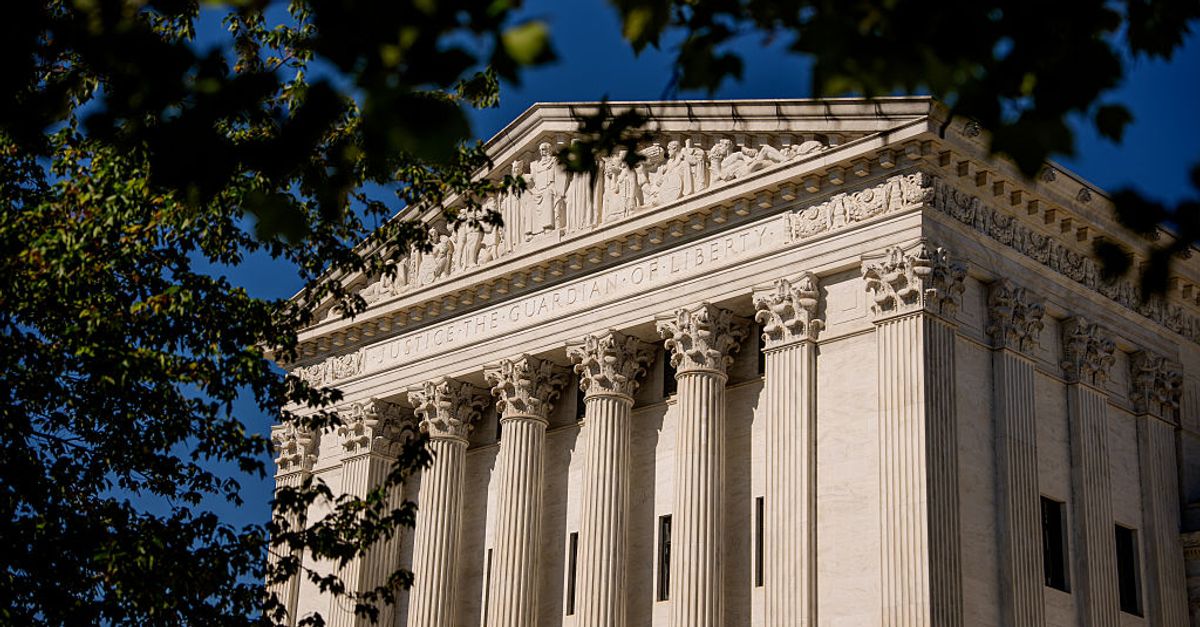
Court agrees to hear three new cases, including on the constitutionality of six-person juries
Abstract
The United States Supreme Court recently granted certiorari in three significant cases, poised to address fundamental questions concerning constitutional rights and procedural fairness. Among these, *Kian v. Florida* challenges the constitutionality of six-person juries in state criminal trials, potentially revisiting decades of precedent established in *Williams v. Florida*. The Court will also examine whether noncitizens held in prolonged immigration detention are constitutionally entitled to bond hearings, a question left open in prior rulings. Finally, *Guerrero v. Johnson* will explore the exceptions to the stringent rules governing second petitions for federal post-conviction relief, particularly in capital cases. These grants signal the Court's continued engagement with core tenets of the Sixth and Fourteenth Amendments, with the potential for far-reaching implications across the U.S. legal landscape for criminal defense, immigration, and habeas corpus practitioners.
Introduction
The United States Supreme Court recently announced its decision to hear three new cases, adding critical constitutional questions to its upcoming term docket. This development, stemming from the justices' June 11 conference, includes a direct challenge to the long-accepted practice of six-person juries in state criminal proceedings, alongside cases addressing the due process rights of noncitizens in immigration detention and the procedural hurdles for federal post-conviction relief. The grants underscore the Court's ongoing role in defining the scope of fundamental rights and the boundaries of governmental power.
The most anticipated of these cases, *Kian v. Florida*, directly confronts the constitutionality of Florida's six-person juries in non-capital criminal trials, a practice upheld by the Court over five decades ago. This challenge, rooted in an originalist interpretation of the Sixth Amendment, could necessitate a re-evaluation of established jury trial jurisprudence. The Court's willingness to revisit such a foundational issue suggests a potential shift in the understanding of what constitutes a 'jury' under the Constitution, with significant implications for criminal justice systems nationwide.
Beyond jury composition, the Court will also delve into the rights of noncitizens facing prolonged detention and the avenues for federal inmates to seek post-conviction relief. These cases collectively highlight the Court's commitment to addressing complex legal questions that impact individual liberties and the administration of justice, promising a term filled with consequential decisions for legal professionals.
Background
The Sixth Amendment to the United States Constitution guarantees the right to a speedy and public trial by an impartial jury in all criminal prosecutions. Historically, the common law jury was understood to consist of twelve members. However, the Supreme Court departed from this strict numerical requirement in *Williams v. Florida*, 399 U.S. 78 (1970), holding that the Sixth Amendment does not mandate a twelve-person jury for state criminal trials. The Court reasoned that the essential feature of a jury lies in its function as an interposition of common sense judgment, which could be adequately performed by six jurors. This decision paved the way for states, including Florida, to implement six-person juries in non-capital criminal cases.
Subsequently, in *Ballew v. Georgia*, 435 U.S. 223 (1978), the Court established a constitutional minimum, ruling that a jury of fewer than six persons in a state criminal trial deprives an accused of the right to trial by jury guaranteed by the Sixth and Fourteenth Amendments. This precedent solidified six as the smallest permissible jury size. Florida law currently mandates twelve jurors for capital cases but permits six jurors for all other criminal cases. The upcoming *Kian v. Florida* case directly challenges the continued validity of *Williams v. Florida* in light of more recent Sixth Amendment jurisprudence.
The other cases granted certiorari also touch upon critical areas of law. The question of bond hearings for noncitizens in prolonged immigration detention arises against the backdrop of the Immigration and Nationality Act, which mandates detention for certain noncitizens with criminal convictions during removal proceedings. The Supreme Court previously addressed aspects of this in *Jennings v. Rodriguez*, 583 U.S. 218 (2018), but left open the constitutional question of whether due process requires bond hearings after unreasonably prolonged detention. For federal post-conviction relief, the Antiterrorism and Effective Death Penalty Act of 1996 (AEDPA) significantly restricted the ability of prisoners to file second or successive habeas corpus petitions, creating a complex procedural framework for challenging convictions and sentences.
Analysis
The Supreme Court's decision to hear *Kian v. Florida* represents a direct challenge to the long-standing precedent set in *Williams v. Florida*, which permitted six-person juries in state criminal trials. The petitioner, Hamed Kian, argues that *Williams* is inconsistent with the Court's more recent decision in *Ramos v. Louisiana*, 590 U.S. 420 (2020). In *Ramos*, the Court held that the Sixth Amendment's right to a jury trial requires unanimous verdicts in state criminal cases, emphasizing the historical understanding of the jury at the time of the Amendment's adoption. Kian's argument posits that if the Sixth Amendment demands historical unanimity, it should similarly demand the historical twelve-person jury, as that was the common law understanding of a jury at the Founding.
This case forces the Court to grapple with the tension between a functionalist approach to constitutional interpretation, as seen in *Williams*, and an originalist approach, as applied in *Ramos*. The *Williams* Court focused on the jury's purpose of preventing oppression and ensuring common sense judgment, concluding that six jurors could fulfill this role as effectively as twelve. However, critics of *Williams* have long argued that smaller juries may be less representative of the community, less effective in deliberation, and more prone to inaccurate verdicts. Overturning *Williams* would have profound implications, potentially affecting thousands of past convictions in Florida and other states that utilize six-person juries for certain criminal offenses, including Arizona, Connecticut, Indiana, Massachusetts, and Utah.
In the realm of immigration law, *Genalo v. Black* (and related cases) will address whether the Due Process Clause of the Fifth Amendment mandates bond hearings for noncitizens subjected to prolonged mandatory detention under 8 U.S.C. § 1226(c). This issue stems from a circuit split and the unresolved constitutional question left by *Jennings v. Rodriguez*. The Second Circuit, in the case under review, held that due process requires a bond hearing for detention that becomes “unreasonably prolonged.” The government, under the Trump administration, has appealed this decision, arguing against a constitutional right to such hearings, regardless of detention length. The Court's decision will clarify the extent of due process protections for noncitizens in immigration custody, potentially impacting detention practices for thousands of individuals awaiting removal proceedings.
Finally, *Guerrero v. Johnson* concerns the exceptions to the strictures of the Antiterrorism and Effective Death Penalty Act (AEDPA) regarding second or successive petitions for federal post-conviction relief. Specifically, this case will examine the ability of federal inmates, particularly those facing capital sentences, to challenge their convictions or sentences through habeas corpus petitions after an initial attempt. AEDPA's framework is designed to promote finality in criminal judgments, but it has also been criticized for creating significant barriers to justice for inmates with legitimate claims of constitutional error. The Court's ruling could refine the procedural pathways available for such challenges, especially where new evidence or changes in law might warrant a second look at a conviction or sentence, balancing finality with the imperative of preventing wrongful incarceration, particularly in death penalty cases.
Conclusion
The Supreme Court's decision to grant certiorari in *Kian v. Florida*, *Genalo v. Black*, and *Guerrero v. Johnson* sets the stage for a term that will significantly impact criminal procedure, immigration law, and federal habeas corpus. Practitioners should pay close attention to the arguments and eventual rulings in these cases, as they carry the potential to reshape fundamental aspects of American jurisprudence.
The most immediate and widespread impact could stem from *Kian v. Florida*. If the Court reinterprets the Sixth Amendment to require twelve-person juries in state criminal trials, it would necessitate a dramatic overhaul of jury systems in numerous states and could open the door to challenges to past convictions. Immigration law attorneys will closely monitor *Genalo v. Black* for clarity on the due process rights of noncitizens in prolonged detention, which could lead to new avenues for release. Similarly, habeas corpus specialists will be keen to understand any adjustments to the AEDPA framework resulting from *Guerrero v. Johnson*, particularly concerning successive petitions in capital cases. These decisions will not only clarify existing legal ambiguities but may also establish new constitutional standards, requiring legal professionals to adapt their strategies and advice accordingly.
Citations
- 1.Williams v. Florida, 399 U.S. 78 (1970)
- 2.Ballew v. Georgia, 435 U.S. 223 (1978)
- 3.Ramos v. Louisiana, 590 U.S. 420 (2020)
- 4.Jennings v. Rodriguez, 583 U.S. 218 (2018)
- 5.Florida Statutes § 913.10
- 6.U.S. Constitution, Sixth Amendment
- 7.U.S. Constitution, Fourteenth Amendment
- 8.8 U.S.C. § 1226(c)
- 9.Antiterrorism and Effective Death Penalty Act of 1996 (AEDPA)
- 10.Kian v. Florida (Supreme Court of the United States, cert. granted June 15, 2026)
- 11.Genalo v. Black (Supreme Court of the United States, cert. granted June 15, 2026)
- 12.Guerrero v. Johnson (Supreme Court of the United States, cert. granted June 15, 2026)
How does this affect your business?
Get an AI analysis of this article grounded in your jurisdictions, practice areas, and any policy documents you've uploaded to Wansom.
Wansom is AI and can make mistakes.