
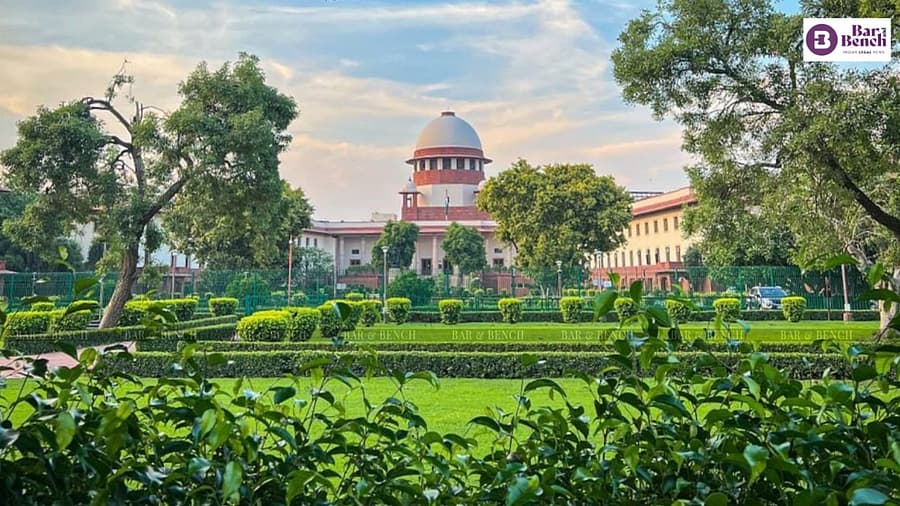
Bihar Supreme Court Ruling: Married Daughters Eligible for Compassionate Appointments
Summary
- The Supreme Court has ruled that the Bihar government's policy restricting compassionate appointment to divorced or deserted daughters cannot be sustained in law.
- The ruling has significant implications for women's rights in India, particularly in the context of employment and equal treatment under the law.
- Married daughters may now be eligible for compassionate appointments under this new precedent.
- Lawyers and compliance officers should review their clients' policies and procedures to ensure compliance with this new precedent.
Supreme Court Ruling
The Court held that restricting compassionate appointment to only divorced or deserted daughters could not be sustained in law.
The Supreme Court has dealt a significant blow to the Bihar government's 2014 policy on compassionate appointments, ruling that it cannot be sustained in law. In a recent order passed by Justices MM Sundresh and Prasanna B Varale, the Court set aside a Patna High Court judgment as well as the Bihar government's own order rejecting a widow's request for compassionate appointment for her daughter following her husband's death. Justices MM Sundresh and Prasanna B Varale are currently Judges of the Supreme Court of India. The Court's decision is a major victory for women's rights in India, particularly in the context of employment. The ruling has significant implications for the eligibility criteria for compassionate appointments, potentially expanding it to include married daughters.
Legal Context
The case arose from a widow's request for compassionate appointment for her daughter following her husband's death. The Bihar government rejected the claim under its 2014 policy, which restricted eligibility only to divorced or deserted daughters. However, the Supreme Court has now held that such classification cannot be sustained in law.
This ruling is significant because it challenges the notion that a daughter severs ties with her parental family merely because she gets married. The Court's decision is also notable for its emphasis on the importance of equal treatment under the law, particularly when it comes to women's rights and employment opportunities.
Why It Matters
The Supreme Court's ruling has far-reaching implications for the Bihar government's policies on compassionate appointments. Lawyers and compliance officers should take note that this new precedent may expand eligibility to include married daughters, potentially impacting their clients' policies and procedures.
This decision is also a significant victory for women's rights in India, particularly in the context of employment. It highlights the importance of equal treatment under the law and underscores the need for more inclusive and equitable policies when it comes to compassionate appointments.
Practical Implications
Lawyers and compliance officers should note that the Supreme Court's ruling may impact the Bihar government's policies on compassionate appointments, potentially expanding eligibility to include married daughters. They should review their clients' policies and procedures to ensure compliance with this new precedent.
Source
Source: Original reporting via The Hindu
How does this affect your business?
Get an AI analysis of this article grounded in your jurisdictions, practice areas, and any policy documents you've uploaded to Wansom.
Wansom is AI and can make mistakes.