
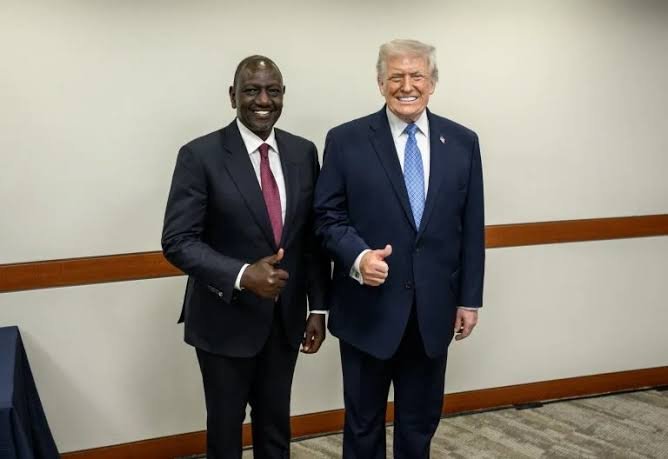
AGOA Lifeline to 2028 and a China Deal in Motion: Kenya's Two-Track Trade Strategy
Summary
AGOA extended to 31 December 2028: passed by the US Senate on 8 August, signed on 4 September 2026, and welcomed the same day by Trade CS Lee Kinyanjui.
Same rules: existing eligibility, product coverage and the third-country fabric provision for apparel are retained.
Retroactive refunds: general customs duties paid on qualifying entries during the lapse after 30 September 2025 can be reclaimed through US Customs, with processing within 90 days. Reciprocal tariffs, fees and interest are excluded.
Kenya's stake: AGOA apparel exports were worth about Sh60.6 billion in 2024; apparel is about 70% of Kenya's exports to the US, and EPZ apparel firms employ more than 66,000 people.
China Early Harvest: in force since May 2026, it gives duty-free access to about 98.2% of Chinese tariff lines, alongside China's zero-tariff offer to 53 African countries from 1 May.
CADEPA next: Prime CS Musalia Mudavadi says Kenya is ready to begin comprehensive negotiations. A full agreement is not yet signed, and Kenya is expected to open its own market in return.
Trade-law issues: the fragility of unilateral preferences, rules of origin and SPS barriers, EAC Common External Tariff constraints on bilateral concessions, and WTO rules for reciprocal agreements.
AGOA: A Two-Year Lifeline, Finally Signed
What AGOA is: The African Growth and Opportunity Act, enacted by the United States in 2000, grants duty-free access to the US market for more than 6,000 product lines from eligible sub-Saharan African countries. It is a unilateral preference: Washington grants it, sets the eligibility conditions, and can withdraw or let it lapse. Kenya gives nothing in return under AGOA itself.
A turbulent two years:
Date | Development |
|---|---|
30 September 2025 | AGOA authorisation lapses; Kenyan exports to the US face ordinary duties |
3 February 2026 | President Trump signs a one-year extension to 31 December 2026, applied retroactively |
8 August 2026 | US Senate passes an extension to 31 December 2028 |
13 August 2026 | Trade CS Lee Kinyanjui welcomes the Senate vote |
4 September 2026 | President Trump signs the extension into law; Kinyanjui welcomes it the same day |
What the extension provides:
Element | Detail |
|---|---|
Duration | Duty-free access for eligible exports to 31 December 2028 |
Framework | Existing AGOA framework, eligibility requirements and product coverage retained |
Apparel | The third-country fabric provision, which lets AGOA apparel use fabric from outside Africa, continues |
Retroactive relief | Refunds of eligible duties paid during the lapse after 30 September 2025, claimed through US Customs and Border Protection and to be processed within 90 days |
Scope of refunds | General ad valorem customs duties only, not interest, merchandise processing fees, anti-dumping or countervailing duties, or specialised reciprocal tariffs |
Kenya's exposure. Apparel is the heart of Kenya's AGOA trade:
Apparel is about 70% of Kenya's total exports to the US, and more than 70% of its textile and apparel exports go to the US.
AGOA apparel exports were worth about Sh60.6 billion in 2024, according to Economic Survey figures cited by the Trade Ministry.
The 43 Export Processing Zone apparel firms employ more than 66,000 Kenyans directly.
Beyond apparel, AGOA supports duty-free entry for cut flowers, tea, coffee and macadamia nuts.
The limits of the lifeline. AGOA removes ordinary US customs duties on eligible goods. It does not by itself shield Kenyan goods from other US tariff measures, which is why the refund carve-outs matter. The extension also runs out at the end of 2028, so the question of a longer-term, reciprocal arrangement with the US remains open.
Kenya–China: From Early Harvest to a Full Agreement
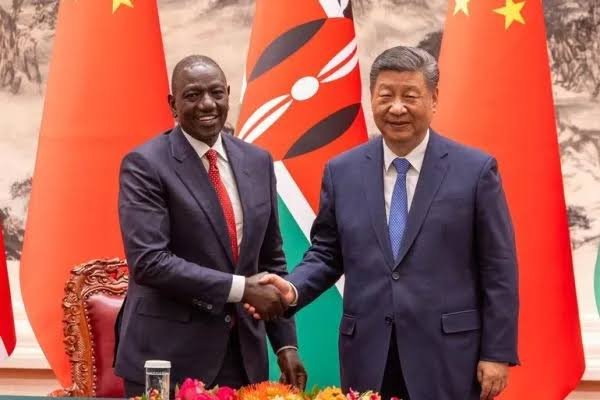
The framework. CADEPA, the China–Africa Development Economic Partnership Agreement (also called the Agreement on Economic Partnership for Shared Development), is China's model for bilateral economic partnership agreements with African states. Negotiators describe a concluded CADEPA as equivalent to a full free trade agreement. Kenya is among the first African countries to formalise its first stage.
How it unfolded:
Date | Development |
|---|---|
April 2025 | President Ruto's state visit to China; relations elevated to an "All-Weather Comprehensive Strategic Partnership" |
15 January 2026 | Kenya announces conclusion of the Early Harvest Arrangement |
March 2026 | Early Harvest Agreement signed; President Ruto describes negotiations on a bilateral deal as finalised |
1 May 2026 | China applies zero tariffs on all tariff lines to 53 African countries with which it has diplomatic relations; Kenya's Early Harvest takes effect, covering the same lines |
30 September 2026 | Prime CS Musalia Mudavadi says Kenya is ready to begin comprehensive negotiations on all aspects of CADEPA |
Reading the two statements together. The March remark is best read as referring to the Early Harvest Agreement, an interim, tariff-focused package. On 30 September, Mudavadi described the next stage: comprehensive negotiations covering everything else a full agreement would contain. The broader agreement has not yet been negotiated or signed.
What the Early Harvest gives Kenya. Duty-free access to China for about 98.2% of Chinese tariff lines. Coffee, tea, avocados, macadamia nuts, flowers and horticultural products are among the beneficiaries. According to China's ambassador, Guo Haiyan, avocado oil exports have risen about 700%, coffee exports have nearly doubled, and aquatic products, including sea cucumbers, are up about 350%.
What Kenya offers in return. Unlike AGOA, the arrangement is not one-way. Reports indicate that Kenya will also open its market further to Chinese goods. The scope of Kenya's concessions, and how they sit with its EAC Common External Tariff obligations, are central questions for the comprehensive talks.
The imbalance it aims to address. In 2024, Kenya imported about US$4.3 billion of goods from China, mostly machinery, electronics and vehicles, while exporting about US$197 million, mostly primary commodities. The government's stated aim is to raise export volumes and move Kenyan exports up the value chain.
The Trade-Law Analysis: Two Very Different Instruments
AGOA (United States) | Early Harvest / CADEPA (China) | |
|---|---|---|
Legal nature | Unilateral US statute granting preferences | Bilateral agreement, moving towards a reciprocal partnership agreement |
Who decides | US Congress and the President | Both governments, by negotiation |
Reciprocity | None required from Kenya | Kenya also expected to open its market |
Duration | Fixed: to 31 December 2028, unless renewed | Interim arrangement pending a comprehensive agreement |
Main risk | Lapse, or loss of eligibility after annual review | Scope of Kenya's concessions and their effect on local industry |
1. The fragility of unilateral preferences
AGOA's value is high, but so is its uncertainty. Eligibility depends on criteria set by US law, including market-economy and rule-of-law conditions and a requirement not to undermine US national security or foreign policy interests, assessed in annual reviews. Congress can let the programme lapse, as it did in 2025, or attach new conditions. AGOA also does not shield Kenyan goods from other US tariff tools, which is why the refund provision excludes specialised reciprocal tariffs. Two years of predictability is valuable, but it is not a long-term guarantee.
2. Rules of origin decide who actually benefits
Preferences only help goods that qualify. For AGOA apparel, the third-country fabric provision is decisive: it lets Kenyan factories use imported fabric, often from Asia, and still qualify. Most non-apparel goods must meet AGOA's value-content rules. Under the China arrangement, Kenyan goods will need to meet China's origin and sanitary and phytosanitary (SPS) requirements. For agricultural products, those include market-access protocols and registration with Chinese customs. Zero tariffs do not remove those conditions.
3. The EAC constraint on reciprocal deals
Kenya is part of the EAC Customs Union, with a Common External Tariff applied by all Partner States. That limits how far Kenya can unilaterally cut its own tariffs for Chinese goods. Concessions on the Kenyan side will need to be designed with the CET in mind, through mechanisms the EAC framework allows, or coordinated with Partner States. The same issue arose when Kenya pursued bilateral trade talks with the US. It will be a central legal question in comprehensive CADEPA negotiations.
4. WTO and preference erosion
Under WTO rules, a full reciprocal agreement between Kenya and China would generally need to cover substantially all trade to qualify as a free trade area under GATT Article XXIV, although arrangements among developing countries can also be notified under the more flexible Enabling Clause. Early Harvest arrangements are typically treated as interim steps towards that end. Meanwhile, China's zero-tariff offer to 53 African countries means Kenya's tariff advantage over other African exporters in China is limited. The distinctive value of a Kenyan CADEPA lies in legal certainty, binding commitments and the non-tariff provisions a comprehensive agreement could add.
5. AfCFTA and diversification
The two tracks sit alongside Kenya's African Continental Free Trade Area commitments. Better access to the US and China does not replace regional integration. Firms that build supply chains within Africa may gain under AfCFTA rules of origin while selling into both markets.
What It Means for Each Stakeholder
Apparel manufacturers and EPZ firms
The biggest winners of the AGOA extension. Two years of certainty lets factories accept multi-season orders from US brands, commit to new capacity and keep workforces in place. The third-country fabric provision continues, so current sourcing models remain viable. But the horizon is short. Firms should use the period to diversify buyers, explore EU and regional markets, and invest in local or regional fabric supply in case future AGOA terms tighten.
Apparel workers
For more than 66,000 workers in EPZ apparel factories, the extension removes the immediate risk of mass layoffs. Job security beyond 2028 depends on whether a longer-term US arrangement is secured.
Exporters who shipped during the AGOA lapse
Exporters, or more precisely their US importers of record, can claim refunds of general customs duties paid on qualifying entries during the lapse, through US Customs and Border Protection, to be processed within 90 days. Interest, merchandise processing fees, trade-remedy duties and specialised reciprocal tariffs are excluded. Kenyan exporters should work with their US buyers, who usually paid the duty, to identify entries, file claims and agree how refunds are shared under their contracts. The Trade Ministry has said it will support the process.
Agricultural exporters (coffee, tea, avocados, macadamia, flowers, horticulture)
This group gains on both tracks: AGOA duty-free entry to the US, and zero tariffs into China. Early figures from China point to sharp growth in avocado oil, coffee and aquatic product exports. To capture it, exporters must clear China's SPS protocols and registration requirements and meet volume and quality expectations. Tariff removal is only the first step.
Manufacturers competing with Chinese imports
A comprehensive CADEPA would likely require Kenya to open its market further to Chinese goods. Local manufacturers of steel products, furniture, plastics, electronics assembly and similar goods should engage the Trade Ministry and business associations now, to seek sensitive-product lists, transition periods and safeguards. The EAC Common External Tariff gives some protection, but negotiated concessions could erode it.
Investors
AGOA certainty to 2028 supports investment in EPZ apparel and agro-processing aimed at the US. China's market opening may attract Chinese investment into Kenyan processing for export back to China. Investors should factor in AGOA's expiry date, the outcome of the CADEPA talks, and EAC tariff rules when choosing where to locate production.
Importers and consumers
If CADEPA leads to lower Kenyan tariffs on Chinese goods, importers and consumers could see cheaper machinery, electronics and vehicles. That would come at the expense of some local producers and customs revenue. No such reductions have been agreed yet.
Government and trade negotiators
The task is to turn a short-term US preference into something more durable, and to negotiate a comprehensive China agreement that protects sensitive sectors and fits within EAC obligations. Keeping both partners engaged without being forced to choose is the core diplomatic challenge.
EAC Partner States
Any Kenyan concessions to China that touch the Common External Tariff affect the whole customs union. Partner States will expect consultation and coordination.
Lawyers and trade advisers
The immediate work is AGOA refund claims and contract allocation of refunds. Alongside that come origin and SPS compliance for the China market, submissions on CADEPA negotiating positions, and EAC-consistency analysis of any Kenyan tariff commitments.
What to Watch
Milestone | Why it matters |
|---|---|
US Customs and Border Protection refund guidance | How importers of record file claims for the AGOA lapse period, and whether the 90-day processing window is met |
Annual AGOA eligibility review | Whether Kenya's eligibility is maintained without new conditions |
Debate on AGOA after 2028 | Whether Congress moves towards a longer renewal, or the US pursues reciprocal deals with individual African states |
Launch of comprehensive CADEPA negotiations | Scope, sensitive-product lists and timelines for Kenya's market-opening commitments |
EAC coordination on CADEPA | How Kenya's concessions are reconciled with the Common External Tariff |
China SPS protocols | New market-access protocols that turn zero tariffs into actual exports for agricultural products |
Practical steps now:
Exporters to the US: compile entries made during the AGOA lapse, coordinate refund claims with US buyers, and review contract terms on who keeps the refund.
Apparel firms: lock in orders to 2028 and start diversification and regional sourcing plans.
Agricultural exporters: check registration and SPS compliance for China, and verify product eligibility under the Early Harvest.
Manufacturers: prepare evidence on import sensitivity and engage the Trade Ministry before CADEPA negotiating positions are set.
Advisers: track US and Chinese implementing measures and EAC consultations, and prepare clients for both tracks.
Frequently Asked Questions
Until when is AGOA extended? To 31 December 2028. President Trump signed the extension on 4 September 2026.
Did the extension change AGOA's rules? No. It keeps the existing framework, eligibility requirements, product coverage and the third-country fabric provision for apparel.
Can exporters recover duties paid while AGOA had lapsed? Yes. The extension provides for refunds of eligible general customs duties paid on qualifying entries after the 30 September 2025 lapse, claimed through US Customs and Border Protection and to be processed within 90 days. Interest, processing fees, trade-remedy duties and specialised reciprocal tariffs are excluded.
What is the Kenya–China Early Harvest Agreement? An interim agreement under the China–Africa Development Economic Partnership Agreement (CADEPA). It gives Kenyan exports duty-free access to about 98.2% of Chinese tariff lines, effective May 2026.
Has Kenya signed a full trade agreement with China? Not yet. The Early Harvest Agreement is in force. On 30 September 2026, Prime CS Musalia Mudavadi said Kenya is ready to begin comprehensive CADEPA negotiations.
Will Kenya cut tariffs on Chinese goods? Reports indicate Kenya is expected to open its market further under the partnership, but the scope of any concessions will be settled in the comprehensive negotiations and must fit within the EAC Common External Tariff.
Citations
- 1.• Trump signs AGOA extension, hands Kenya exporters lifeline to 2028, The Star (5 September 2026)
- 2.• Kenyan Traders Handed Major Boost as Trump Extends AGOA to 2028, Kenyans.co.ke (4 September 2026)
- 3.• Kenya to push for Agoa tariff refunds for its exporters, Business Daily (August 2026)
- 4.• State welcomes US Senate's approval of Agoa extension up to December 2028, The Standard (14 August 2026)
- 5.• Kenya Welcomes US Senate Approval of AGOA Extension, Kahawatungu (13 August 2026)
- 6.• Kenyan exports surge after China removes tariffs, The Star (1 October 2026)
- 7.• Kenya's exports to China surge after zero-tariff deal, Citizen Digital (1 October 2026)
- 8.• Kenya, China seal early trade deal as zero-tariff plan takes effect, Citizen Digital (15 February 2026)
- 9.• Kenya one of first African countries to secure Early Harvest Agreement with China, KBC
- 10.• Kenya and China Intensify Push to Close Trade Gap Through Zero-Tariff Agreement, Ministry of Foreign and Diaspora Affairs (23 March 2026)
- 11.• Kenya, China conclude early harvest trade deal on duty-free exports, Logupdate Africa (January 2026)
Finish Reading the Full Story and Expert Analysis.
Get the latest legal & regulatory intelligence in Kenya
Wansom is AI and can make mistakes.