
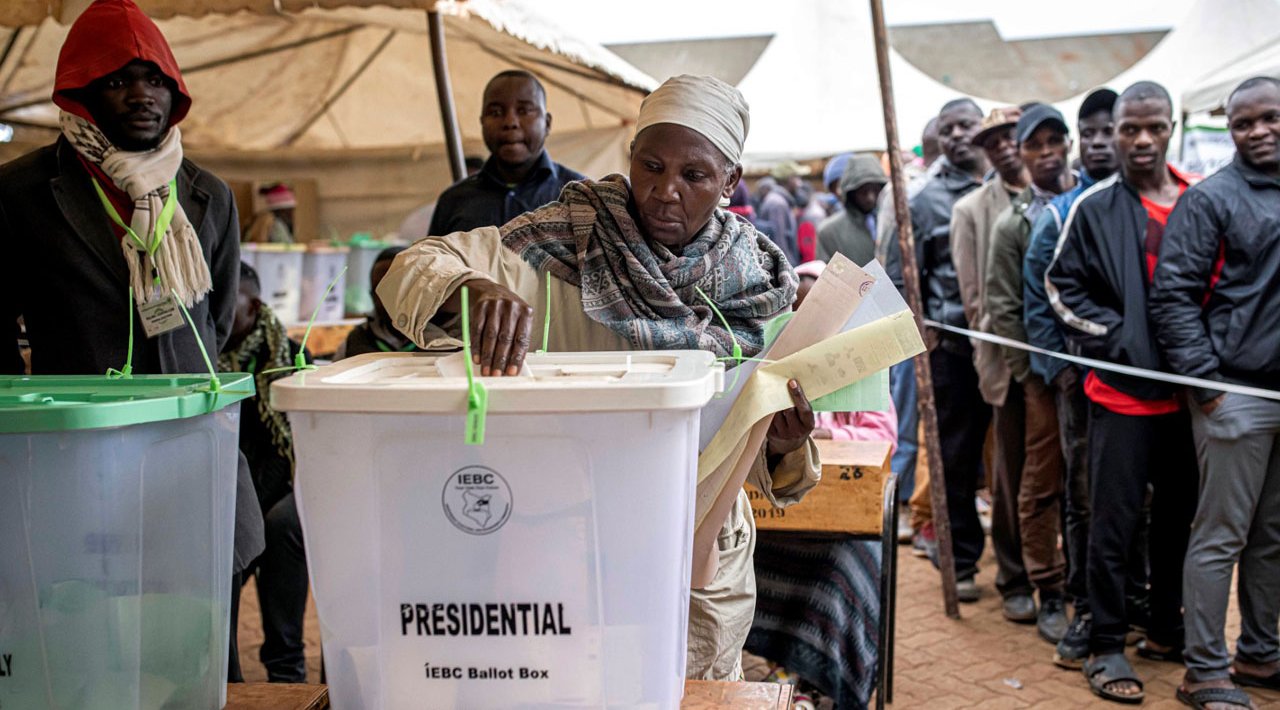
A New African AI Council Faces Its First Big Test: Protecting Democracy Before Kenya’s 2027 Election
Africa’s AI debate is becoming a question of democratic power
Artificial intelligence is becoming part of Africa’s political information environment before the continent has settled how the technology should be governed. Automated content generation, synthetic identities and coordinated social media activity are creating new challenges for election integrity, while governments are still working through the legal, institutional and financial choices required to regulate AI.
The establishment of the Africa Public Interest AI Council (APiAC) brings these tensions into sharper focus. Announced in October 2026, the six-member continental advisory body will examine how AI policies and investments affect public participation, cultural representation and democratic processes. Its launch comes as Kenya prepares for its 2027 General Election, giving its work a particularly immediate test case. The council is expected to commission research, convene public discussions, issue policy advisories and recommend philanthropic investment priorities. It will operate independently, with members serving initial two-year terms and meeting quarterly. Crucially, it will not function as a regulator or implement AI programmes.
That distinction matters. APiAC is not being established with the power to fine technology companies, compel platforms to remove content or enforce election rules. Its influence will instead depend on the quality of its evidence, its independence, its ability to bring public-interest concerns into policy discussions and whether governments, technology companies and funders act on its recommendations.
The council’s arrival also coincides with a pivotal moment for AI regulation in Kenya. On 15 October, The Star reported that the Senate’s Information, Communication and Technology Committee had recommended that the Senate not proceed with the Artificial Intelligence Bill, 2026. The committee argued that the proposed legislation risked imposing disproportionate penalties, duplicating existing regulatory functions and discouraging local innovation. It recommended finalising a comprehensive national AI policy before proceeding with legislation.
The development illustrates the challenge facing African policymakers: the risks of unregulated AI are becoming more visible, but the design of regulation remains contested. The question is no longer simply whether AI should be governed. It is how to build a framework that protects citizens, preserves democratic freedoms and remains workable for African developers and businesses.
Kenya’s 2027 election is an early stress test
The council’s democratic focus is not hypothetical. In its September 2026 threat-intelligence report, Anthropic documented a case in which a single actor used Claude to mass-produce Kenyan political content designed to resemble spontaneous public opinion.
According to the report, the actor generated batches of 50 posts across multiple sessions. The content praised Energy Cabinet Secretary Opiyo Wandayi over a planned electricity tariff increase and circulated claims that the United Opposition coalition was breaking apart ahead of the 2027 election. The posts were designed to appear like organic grassroots commentary rather than coordinated political messaging.
Anthropic said it removed the account and found no evidence of government involvement. It assessed that the activity remained within the network of fake accounts and did not reach or influence genuine users. That qualification is important: the case demonstrates an attempt to manufacture political sentiment, not proof that the operation changed voters’ views or affected an election outcome.
Even so, the case illustrates a fundamental shift in the economics of political manipulation. AI can reduce the time and effort required to generate large volumes of plausible political messages, adapt them to different audiences and make coordinated activity appear more organic. The underlying political strategy still comes from human actors, but AI can make execution cheaper and faster.
The implications extend beyond fabricated news articles. A coordinated campaign can attempt to create the impression that a policy is popular, that a candidate has lost support or that an opposition coalition is collapsing. Repeated claims, manufactured engagement and apparently independent accounts may influence what people believe other citizens think, even when the content itself is not persuasive.
The danger is not that every AI-generated political post is false or malicious. AI can also help journalists investigate public claims, translate civic information and make political debate more accessible. The governance challenge is distinguishing legitimate political expression and automated assistance from deceptive coordination, impersonation and deliberate attempts to mislead the public.
That distinction will be particularly important in Kenya, where APiAC’s work intersects with a wider national debate about the rules governing AI-generated content. Overly broad restrictions could suppress legitimate speech, satire, political criticism or the work of independent media. Weak safeguards, on the other hand, could leave citizens with little recourse when synthetic content impersonates them or when coordinated campaigns distort public debate.
The policy objective should therefore be to address demonstrable harm and deception rather than treat AI-generated political content as inherently illegitimate.
Why the council’s role matters and where its limits begin
APiAC’s remit covers several areas that conventional election monitoring may not fully address.
First is public participation. AI systems increasingly mediate how information is produced, translated, recommended and circulated. If their design or deployment favours certain political narratives, excludes communities or obscures who is responsible for content, the quality of public debate may suffer. Independent research can help establish where these risks exist and which interventions are proportionate.
Second is accountability. When a misleading campaign spreads through a chain of AI tools, social media accounts, content farms and advertising systems, responsibility can be difficult to establish. The people who commission a campaign, the services that enable its production and the platforms that distribute it may be different actors. A useful public-interest council can investigate these relationships and recommend clearer responsibilities without assuming that every participant has the same degree of control or liability.
Third is public trust. Trust is not protected merely by labelling some content as AI-generated. Labels can be useful, but they do not independently establish whether a claim is true, whether an account is authentic or whether an apparently grassroots campaign is coordinated. Effective safeguards may also require transparent political advertising, accessible reporting mechanisms, independent verification, timely platform responses and due process when accounts or content are restricted.
Fourth is the quality of regulation itself. An independent council can ask whether proposed rules are supported by evidence, whether their costs fall disproportionately on smaller African developers and whether safeguards protect citizens without granting public authorities excessive discretion over lawful expression.
But advisory scrutiny has limits. APiAC’s stated role does not give it direct enforcement powers. It cannot substitute for election authorities, data protection regulators, courts, legislatures or the operational responsibilities of technology platforms. Its impact will depend on whether those institutions are willing and able to use its findings.
There is also an institutional question: how will the council demonstrate its independence in practice? Public reporting of its research methods, funding, recommendations and responses from institutions would help establish credibility. Clear procedures for managing conflicts of interest and representing affected communities would make its work more accountable.
The announcement establishes a mandate, not yet a record of results. The council’s credibility will ultimately depend on what it investigates, what evidence it publishes and whether its recommendations lead to measurable changes.
Kenya’s regulatory disagreement exposes the difficult trade-off

The council’s launch comes at a revealing moment in Kenya’s domestic AI policy debate.
The Artificial Intelligence Bill, 2026, sponsored by nominated Senator Karen Nyamu, proposed a comprehensive legal framework and a new Office of the Artificial Intelligence Commissioner. As reported by The Star on 15 October, the Senate ICT Committee recommended that the Senate not proceed with the Bill after considering submissions from 143 stakeholders.
The committee raised concerns about proposed fines of up to KSh5 million, possible imprisonment of up to two years for serious offences, and the concentration of supervisory, investigative and enforcement powers in a new regulator. It warned that the proposed approach could impose disproportionate costs on smaller developers, duplicate the work of existing institutions and discourage investment. Stakeholders also questioned how the proposed framework would handle general-purpose AI models and systems developed by foreign companies.
The committee’s position should not be mistaken for a final determination that Kenya will have no AI law. Its recommendation was that the Senate should not proceed with this particular Bill and that the government should first finalise a comprehensive national AI policy. The next steps will depend on the broader legislative and policy process.
The disagreement reveals two legitimate concerns.
One is that AI systems can create harms that existing laws may not adequately address. Synthetic impersonation, automated discrimination, opaque decision-making and coordinated disinformation can affect rights and public institutions. Waiting until harms become widespread may leave citizens without clear remedies.
The other is that poorly designed rules can create costs that are especially difficult for young technology companies, researchers and open-source developers to absorb. A regime built around high penalties, uncertain obligations or a regulator with overlapping powers could make compliance expensive while giving established international companies an advantage over local entrants.
The policy challenge is to avoid treating innovation and accountability as opposing goals. Regulation can create trust and predictable rules, which are themselves important to a sustainable AI industry. But it must be clear about which actors have which obligations, what conduct is prohibited, how risks are assessed and how people can challenge regulatory decisions.
A more proportionate framework could distinguish between low-risk applications and systems used in sensitive settings, such as public administration, finance or other decisions that materially affect people’s rights. It could prioritise transparency, risk assessment, human review and effective complaint mechanisms where the potential harm is greatest, while avoiding unnecessary burdens on ordinary experimentation.
The details matter more than the label attached to the framework. A national AI policy can set strategic direction, but its effectiveness depends on implementation, institutional responsibility and whether the principles it contains are translated into enforceable and understandable rules where necessary.
A continental strategy already exists, Implementation is the harder task.
Africa is not starting from zero. The African Union endorsed its Continental Artificial Intelligence Strategy in July 2024. The strategy frames AI as a tool for economic and social development while emphasising responsible use, capacity-building, data availability, infrastructure, governance and cooperation among member states.
In May 2025, an AU high-level policy dialogue called for African countries to develop AI strategies, policies, laws and regulations suited to their national circumstances. Its communiqué also advocated a continental AI governance mechanism grounded in democratic values, human rights, inclusion and the rule of law. It emphasised transparency, accountability, fairness, explainability and the protection of personal data.
This establishes an important distinction between continental direction and national execution. A common strategy can help governments coordinate priorities and avoid fragmented approaches, but it does not automatically create uniform laws, enforcement capacity or consistent protections across every country.
National governments have different legal systems, regulatory institutions, levels of digital infrastructure and AI development capabilities. Their approaches will inevitably vary. The challenge is to make those differences compatible with a shared baseline of rights and principles, particularly when AI systems and online information flows cross borders.
APiAC could contribute by examining how policy decisions translate into practical outcomes, identifying gaps that recur across jurisdictions and bringing evidence from civil society, journalism, research and technology development into the debate. Its contribution would be strongest if it complemented the AU’s formal processes rather than created a parallel system of governance.
Coordination is especially important because the infrastructure and expertise required to build and deploy AI remain unevenly distributed. A continent that relies heavily on systems developed elsewhere may have limited leverage over their design choices, data practices and commercial priorities. Yet importing technology does not remove the need for local accountability: AI systems used in African societies still need to be evaluated against local laws, languages, institutions and lived realities.
Language representation is also a democratic issue
One of the council’s most significant areas of focus is cultural and linguistic representation.
Reporting by iAfrica and KBC, citing a 2025 study of major language models, says only 42 of Africa’s roughly 2,000 languages were supported, with consistent coverage limited to Amharic, Swahili, Afrikaans and Malagasy. The precise coverage depends on the models and the definition of support used, but the broader issue is clear: AI language capabilities are not evenly distributed across the continent.
This is not merely a technical limitation. Language determines who can access information, use digital services and participate meaningfully in public life.
If AI tools work well in a handful of widely represented languages but perform poorly in many others, communities may face barriers to accessing government information, understanding political claims, using civic services or producing content in their own languages. Translation errors and weak contextual understanding can also distort the meaning of political speech, cultural references and local reporting.
The risk is not only that some communities receive fewer AI services. It is that the information environment may increasingly reflect the priorities and linguistic assumptions of the populations and institutions best represented in the underlying data.
Addressing this problem requires more than adding language names to a product list. It involves investing in representative datasets, language research, evaluation by native speakers, local developer capacity and tools that work with regional varieties and everyday speech. Community participation is essential because a model that can generate fluent sentences may still misunderstand local context or reproduce stereotypes.
There is an economic dimension as well. Stronger language support can expand the potential market for AI services, improve access to education and public information, and create opportunities for African researchers and companies. In that sense, inclusion is not simply a constraint on innovation; it can help define where valuable innovation occurs.
The council’s interest in cultural representation could therefore connect democratic accountability with a broader question of who benefits from the continent’s AI development.
Infrastructure and ownership shape the rules
The council is also expected to examine data ownership and accountability as AI becomes more embedded in financial services, public administration and other sectors.
The infrastructure imbalance is substantial. The figures cited by iAfrica and KBC indicate that Africa accounts for approximately 0.6% of global data-centre capacity, compared with nearly 45% in the United States, despite Africa being home to about 18% of the world’s population. These figures should be read as a measure of infrastructure concentration, not as a direct measure of AI capability: countries can access AI services hosted elsewhere, and data-centre capacity alone does not determine the quality of local research or adoption.
Nevertheless, infrastructure concentration affects bargaining power. Training and operating advanced AI systems requires computing resources, data, specialised expertise and reliable energy and connectivity. Where these resources are controlled largely by external companies, African governments and businesses may have limited influence over product design, pricing, data governance and access conditions.
Data ownership raises related questions. Who can use data collected from African communities to train commercial models? What permissions and protections apply? How are sensitive or personal data handled? Can local researchers and companies access the datasets they need to develop useful applications? Who is accountable when a system produces harmful or discriminatory outcomes?
These questions do not have a single answer across all use cases. Personal data, public-sector records, licensed commercial datasets and open research resources require different governance arrangements. But the principles of transparency, lawful use, privacy, fair access and accountability need to be clear.
This is where public-interest scrutiny could be valuable. It can ask whether investments in AI infrastructure and services create durable local capabilities or mainly expand dependence on external suppliers. It can also examine whether public money and philanthropic funding support local language resources, independent research and systems that meet African needs.
The objective should not be technological self-sufficiency at any cost. It should be meaningful agency: the ability to select, evaluate, adapt and govern AI systems in ways that serve local priorities.
What effective AI governance should look like before 2027
The Kenyan election gives policymakers a deadline, but the safeguards needed for democratic resilience cannot be reduced to a single deepfake detector or a new legal instrument.
First, establish clear responsibilities. Election authorities, data protection regulators, communications regulators, law-enforcement bodies, media organisations and technology platforms need to understand their respective roles. Overlapping mandates can delay responses, while gaps in responsibility can leave people without effective remedies.
Second, improve transparency around coordinated political activity. Public reporting on political advertising, clear rules against deceptive impersonation and accessible mechanisms for reporting coordinated inauthentic behaviour can help citizens and researchers assess the information environment. Measures should be designed carefully to protect legitimate political expression and avoid giving authorities a broad licence to suppress criticism.
Third, build independent verification capacity. Journalists, election observers, researchers and civil society groups need access to timely information, credible verification methods and channels for escalating concerns. Detection tools can assist this work, but their results should not be treated as infallible. False positives can wrongly discredit authentic content, while false negatives can allow manipulated material to spread.
Fourth, make platforms more accountable for their response. Where services are used to distribute coordinated deceptive campaigns, transparency about enforcement decisions, timely reporting channels and appropriate cooperation with independent researchers can improve the public response. Such processes should include safeguards against politically motivated or arbitrary takedowns.
Fifth, keep remedies accessible to citizens. People whose identities are impersonated, whose personal data are misused or who are harmed by consequential automated decisions should have clear ways to complain and seek review. Where automated systems materially affect important decisions, meaningful human oversight and an avenue to challenge the outcome can help preserve accountability.
Sixth, invest in African research and language capacity. Regulation cannot depend entirely on imported tools or external assessments. Local researchers, journalists and developers need resources to test systems in African contexts, document their limitations and develop alternatives that reflect regional needs.
Finally, policymakers should measure outcomes rather than count announcements. Relevant indicators could include the time required to investigate credible reports of coordinated manipulation, the transparency of political advertising, the accessibility of complaint mechanisms, the representation of African languages in AI evaluations and the extent to which public institutions respond to independent findings.
These measures would help distinguish real preparedness from the appearance of preparedness.
The council’s credibility will be tested by what happens next
The Africa Public Interest AI Council enters a crowded governance landscape: the African Union is advancing a continental strategy, Kenya is debating its national policy and legislative approach, and technology companies are developing their own safeguards against misuse.
Its potential value lies in connecting these strands through independent scrutiny. It can investigate the social consequences of AI deployment, challenge weak assumptions in policy design, raise concerns that may be overlooked by commercial or governmental institutions and make public-interest questions harder to ignore.
But the council cannot compensate for weak institutions or replace the legal powers required to enforce protections. Nor should its independence be assumed to guarantee impact. Its research must be credible, its priorities transparent and its recommendations specific enough for decision-makers to act upon.
The wider lesson is that AI governance is not simply about controlling algorithms. It is about the distribution of power across the people who build AI systems, the institutions that deploy them, the platforms that distribute their outputs and the citizens whose choices and opportunities may be affected.
Kenya’s 2027 election will provide a highly visible test of whether institutions can respond to AI-enabled manipulation while protecting legitimate political speech. But the stakes extend beyond a single vote. The same questions of accountability, transparency, inclusion and human oversight will apply as AI enters public services, financial decisions, education and other parts of African life.
Africa has already articulated many of the principles it wants to govern AI. The next challenge is to turn those principles into institutions, safeguards and measurable outcomes.
The council’s most important contribution may be to keep one question at the centre of that process: not simply how advanced AI becomes, but who it serves, who controls it and who can hold its operators accountable.
Citations
- 1.iAfrica — New Continental Council to Scrutinise AI’s Impact on Democracy in Africa Ahead of Kenya’s 2027 Election, 16 October 2026.
- 2.https://iafrica.com/new-continental-council-to-scrutinise-ais-impact-on-democracy-in-africa-ahead-of-kenyas-2027-election/
- 3.Africa AI News — AfDB’s $10B Africa AI Plan; Kenyan Senate Rejects AI Bill, 16 October 2026.
- 4.https://www.africaainews.com/p/afdbs-10b-africa-ai-plan-kenyan-senate
- 5.Kenya Broadcasting Corporation — New Africa AI Council to Scrutinise Technology Policies Ahead of 2027 Elections, 14 October 2026.
- 6.https://www.kbc.co.ke/new-africa-ai-council-to-scrutinise-technology-policies-ahead-of-2027-elections/
- 7.The Star — Senate Committee Shoots Down Nyamu’s Bill on AI, Warns of Sh5 Million Fines, 15 October 2026.
- 8.https://www.the-star.co.ke/news/2026-10-15-senate-committee-shoots-down-nyamus-bill-on-ai/
- 9.Anthropic — Detecting and Countering Misuse of AI: September 2026.
- 10.https://www.anthropic.com/threat-intelligence-report-september-2026
- 11.African Union — Continental Artificial Intelligence Strategy, endorsed in July 2024.
- 12.https://www.au.int/en/documents/20240809/continental-artificial-intelligence-strategy
- 13.African Union — Communiqué of the High-Level Policy Dialogue on the Development and Regulation of AI in Africa, 17 May 2025.
- 14.https://au.int/en/pressreleases/20250517/communique-high-level-policy-dialogue-ai-africa
- 15.Africa AI News — Kenya Publishes Draft AI Policy for Public Consultation, 24 July 2026.
- 16.https://www.africaainews.com/p/kenya-publishes-draft-ai-policy
Finish Reading the Full Story and Expert Analysis.
Get the latest legal & regulatory intelligence in Kenya
Wansom is AI and can make mistakes.