
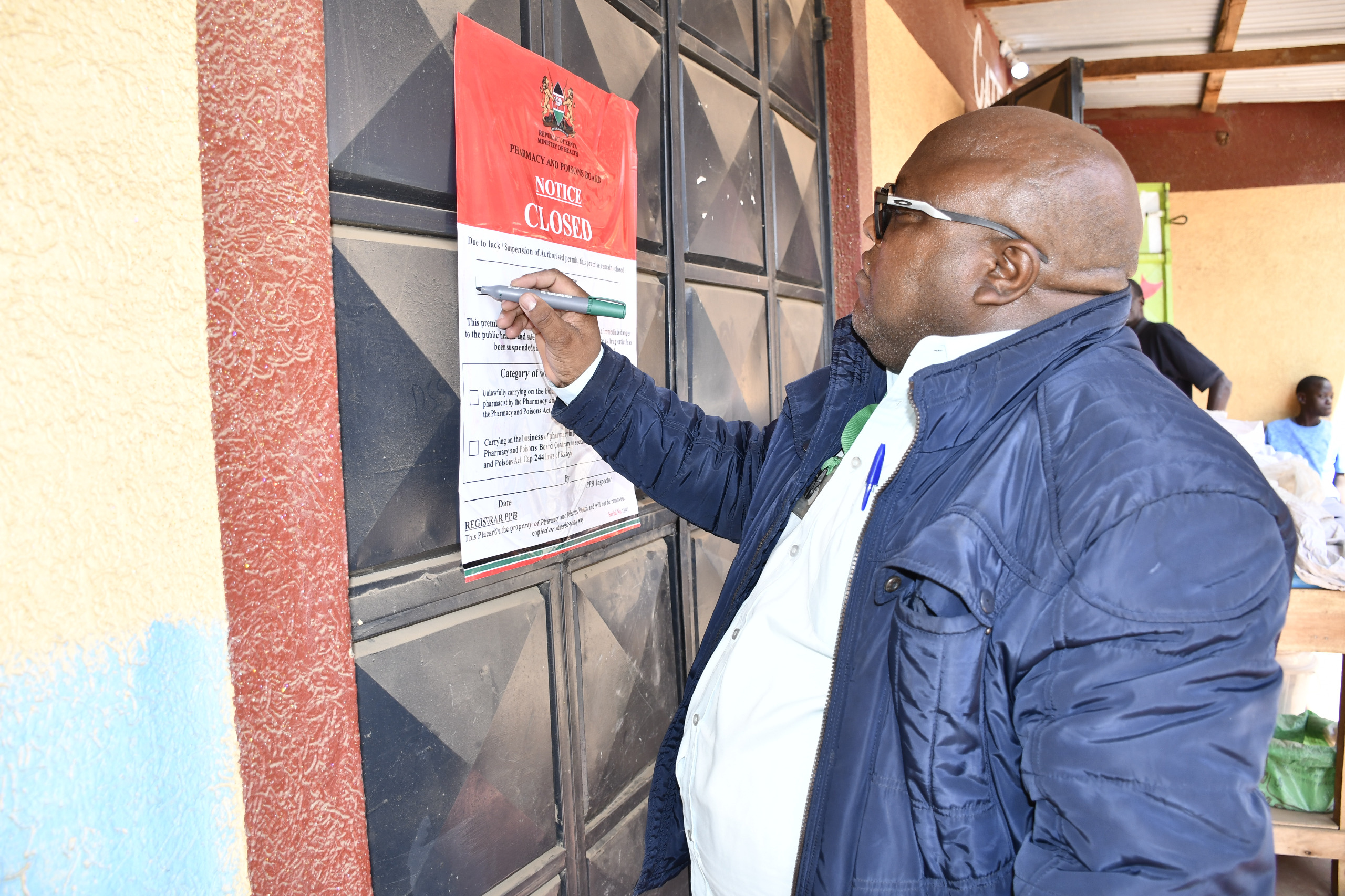
95 arrested, 48 premises closed in crack down to weed out fake pharmaceutical enterprises
Abstract
The Pharmacy and Poisons Board (PPB) in Kenya recently concluded a week-long surveillance operation, leading to the arrest of 95 individuals and the closure of 48 pharmaceutical premises operating without valid licenses in Nairobi and Kajiado counties. This enforcement action underscores the PPB's commitment to upholding the Pharmacy and Poisons Act (Cap 244) and safeguarding public health by ensuring that all pharmaceutical services and drug trade adhere to stringent regulatory standards. The crackdown highlights the ongoing challenges of illegal pharmaceutical enterprises and the Board's intensified efforts to combat the proliferation of fake pharmacists and unlicensed outlets, which pose significant risks to patient safety and the integrity of the healthcare system.
Introduction
Kenya's pharmaceutical sector is a critical component of its public health infrastructure, necessitating robust regulatory oversight to ensure the safety, efficacy, and quality of medicines available to the populace. In a significant move to reinforce this regulatory framework, the Pharmacy and Poisons Board (PPB) recently undertook an extensive surveillance exercise, resulting in the apprehension of 95 individuals and the closure of 48 premises found to be operating without the requisite licenses. This week-long operation, which concluded on June 19, 2026, focused on informal settlements within Nairobi and the neighboring Kajiado county, inspecting 155 premises in total.
The crackdown by the PPB serves as a stark reminder of the persistent challenge posed by illegal pharmaceutical enterprises and unregistered practitioners in Kenya. Such illicit operations not only undermine legitimate businesses but, more critically, endanger public health through the dispensing of substandard, falsified, or counterfeit medicinal products. This article will delve into the legal framework underpinning the PPB's actions, examining the statutory provisions that govern pharmaceutical practice and trade in Kenya, the powers vested in the Board, and the implications of non-compliance for legal professionals and the broader healthcare ecosystem.
Background
The regulation of pharmacy practice and the trade in drugs and poisons in Kenya is primarily governed by the Pharmacy and Poisons Act, Chapter 244 of the Laws of Kenya (Cap 244). This Act establishes the Pharmacy and Poisons Board (PPB) as the principal drug regulatory authority, mandated to ensure the highest standards of safety, efficacy, and quality for all drugs, chemical substances, and medical devices manufactured, imported, exported, distributed, sold, or used within the country.
The PPB's functions, as stipulated by law, include advising the Minister of Health on all matters relating to the administration and implementation of pharmaceutical law, monitoring the market for illegal or counterfeit medicinal products, and ensuring that all medicinal products conform to prescribed standards. Crucially, the Board is responsible for inspecting and licensing all manufacturing premises, importing agents, wholesalers, distributors, hospitals, dispensaries, pharmacies, and retail outlets. Furthermore, it is tasked with registering pharmacists and enrolling pharmaceutical technologists, maintaining these registers, and issuing annual practice licenses. A person cannot carry on a pharmacy business in Kenya unless the premises have current approval and all financial interest holders are registered pharmacists or enrolled pharmaceutical technologists. The Act also makes provisions for the control of poisons, requiring authorized sellers and licensed dealers for Part I poisons and specific licensing for Part II poisons.
Analysis
The recent enforcement action by the PPB directly invokes several key provisions of the Pharmacy and Poisons Act (Cap 244). Section 19 of the Act, for instance, imposes general restrictions on unregistered persons, prohibiting anyone other than a registered pharmacist from carrying on the business of a pharmacist, preparing, mixing, compounding, or dispensing any drug except under the immediate supervision of a registered pharmacist, or using titles that suggest they are registered pharmacists. Contravention of this section constitutes an offence, with penalties including fines or imprisonment.
Furthermore, Section 23 of the Act explicitly requires all premises where a pharmacy business is conducted to be registered with the Board. The PPB's guidelines for registration and licensing of premises elaborate on the stringent requirements, including the need for a registered pharmacist or pharmaceutical technologist to supervise the premises, and for the physical premises to meet prescribed layout, dispensing area, and storage standards. Operating a pharmaceutical business without a valid license or without the presence of a registered pharmacist or enrolled pharmaceutical technologist in the premises is a direct contravention of the Act.
The PPB's inspectors are vested with significant powers under the Act to conduct regulatory inspections across the health product and technologies supply chain, including retail pharmacies, to ensure compliance with the Act and applicable national Good Practices (GXPs) guidelines. These powers include inspecting premises, seizing unregistered or counterfeit drugs, and initiating prosecution against offenders. The penalties for operating an unlicensed pharmacy have been substantial, with reports indicating fines of up to KES 1 million per count for certain offenses, in addition to potential imprisonment and revocation of licenses. The Board also investigates and prosecutes licensed wholesalers found supplying illegal premises, with potential revocation of their licenses. This comprehensive approach underscores the legal risks associated with non-compliance, extending beyond the direct operators to their supply chain partners.
Conclusion
The recent crackdown by the Pharmacy and Poisons Board serves as a critical reminder to all legal professionals advising clients in the pharmaceutical sector in Kenya of the imperative for strict adherence to the Pharmacy and Poisons Act (Cap 244) and its subsidiary regulations. The intensified surveillance and enforcement actions highlight the PPB's unwavering commitment to safeguarding public health and maintaining the integrity of the pharmaceutical supply chain. Practitioners must ensure their clients are fully compliant with all licensing, registration, and operational requirements, including the annual renewal of practice licenses and premises registrations, to avoid severe penalties, including fines, imprisonment, and revocation of licenses.
Moving forward, legal professionals should advise clients to proactively review their compliance frameworks, particularly those operating in informal or rapidly expanding areas, as these are often targets for such enforcement drives. The PPB's focus on identifying and prosecuting both unlicensed operators and their suppliers signals a broader strategy to eliminate illicit trade from the root. Staying abreast of the Board's guidelines, public notices, and any amendments to the Act is crucial for mitigating legal risks and ensuring sustainable, lawful operations within Kenya's highly regulated pharmaceutical landscape.
Citations
- 1.Pharmacy and Poisons Act, Chapter 244 of the Laws of Kenya
- 2.Pharmacy and Poisons Board - Wikipedia
- 3.Pharmacy and Poisons Act Overview | PDF - Scribd
- 4.Pharmacy and Poisons Board PPB Kenya: Medicine & Pharmacy Guide - Huduma Global
- 5.Introduction to Kenya's PPB and Its Regulatory Mandate – pharma rules and regulations
- 6.About Us - Pharmacy and Poisons Board
- 7.Pharmacy and Poisons Board (PPB-Kenya) - Devex
- 8.Pharmacy Practice in Kenya - PMC - NIH
- 9.Pharmacy and Poisons Act | PolicyVault.Africa
- 10.Guidelines for Registration and Licensing of premises - Pharmacy and Poisons Board
- 11.Registration of a Pharmaceutical Business in Kenya - Capita Registrars
- 12.Fines of not less than Sh60,000 per charge to be imposed on unregistered pharmacists
- 13.Laws of Kenya- - PHARMACY AND POISONS ACT - Medbox.org
- 14.PHARMACY AND POISONS BOARD Guidelines for Registration of Premises and issuance of Wholesale Dealer's License - InfoTradeKenya
- 15.Nairobi Quack Eradication - Pharmacy and Poisons Board
- 16.the pharmacy and poisons act
- 17.CHAPTER 244 PHARMACY AND POISONS ACT - InfoTradeKenya
- 18.Licensing - Pharmacy and Poisons Board
- 19.Pharmacists, pharmaceutical outlets face penalties as 2026 licence renewal deadline passes | The Eastleigh Voice
- 20.Pharmacy and Poisons (Amendment) Bill, 2021 - Parliament of Kenya
- 21.Pharmacy and Poisons Board - Grokipedia
- 22.THE PHARMACY AND POISONS ACT - FAOLEX
- 23.Regulatory Inspections - Pharmacy and Poisons Board