
Wanjiku Muhia wins temporary reprieve as court halts IEBC penalty
Abstract
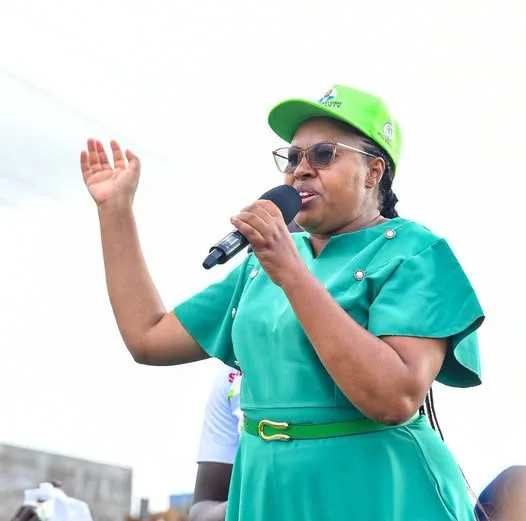
Kipipiri Member of Parliament Wanjiku Muhia has secured a temporary reprieve from the High Court, which has stayed the implementation of a KSh 1.5 million fine and public apology imposed by the Independent Electoral and Boundaries Commission (IEBC) Electoral Code of Conduct Enforcement Committee. The Committee had found Muhia in breach of the Electoral Code of Conduct for alleged inflammatory remarks made during a political rally. Justice Nabil Mokaya of the Milimani High Court issued interim orders, certifying Muhia’s application for judicial review as urgent and halting the IEBC’s sanctions pending the full hearing and determination of the lawmaker’s challenge. This development underscores the critical role of judicial oversight in administrative decisions by electoral bodies and highlights ongoing debates surrounding fair administrative action and due process in electoral dispute resolution in Kenya.
Introduction
In a significant development for electoral jurisprudence in Kenya, Kipipiri Member of Parliament Wanjiku Muhia has been granted a temporary stay by the High Court against a punitive decision by the Independent Electoral and Boundaries Commission (IEBC). The IEBC Electoral Code of Conduct Enforcement Committee had, on July 10, 2026, found Ms. Muhia in breach of the Electoral Code of Conduct, imposing a KSh 1.5 million fine and mandating a public apology within 72 hours, with further sanctions threatened for non-compliance. This ruling, stemming from alleged inflammatory remarks made during a by-election campaign, was swiftly challenged in the High Court.
Justice Nabil Mokaya of the Milimani High Court, on July 13, 2026, issued interim orders suspending the implementation of the IEBC’s judgment, pending the hearing and determination of Ms. Muhia’s application for judicial review. This judicial intervention is crucial for practising attorneys, as it illuminates the interplay between the quasi-judicial powers of electoral bodies and the High Court’s supervisory jurisdiction. The case raises fundamental questions about the scope of administrative fairness, the right to a fair hearing, and the procedural safeguards available to individuals facing sanctions from regulatory authorities, particularly in the sensitive electoral environment.
Background
The Independent Electoral and Boundaries Commission (IEBC) is established under Article 88 of the Constitution of Kenya, 2010, with a mandate that includes the settlement of electoral disputes, excluding election petitions and disputes arising after the declaration of election results. A key aspect of its regulatory function is the development and enforcement of an Electoral Code of Conduct, as mandated by Article 88(4)(j) of the Constitution. Article 84 further obliges all candidates and political parties to comply with this code. The Elections Act, 2011 (No. 24 of 2011), specifically Section 110, reinforces the requirement for political parties and individuals participating in elections to subscribe to and observe the Electoral Code of Conduct, which is set out in the Second Schedule to the Act.
To enforce this Code, the IEBC established the Electoral Code of Conduct Enforcement Committee, as provided for under Paragraph 15 of the Second Schedule to the Elections Act. This Committee is vested with powers to summon individuals, conduct hearings, and impose penalties for breaches of the Code. The Supreme Court of Kenya, in *Independent Electoral and Boundaries Commission v. Hon. Sabina Wanjiru Chege*, SC Petition No. 23 (E026) of 2022, affirmed the constitutional validity of the IEBC’s power to enforce the Code of Conduct through its committee, emphasizing that such powers are essential for the Commission to fulfil its constitutional and statutory mandate. While the Committee is not bound by the strict provisions of the Criminal Procedure Code or the Evidence Act in its proceedings, it is obligated to accord every summoned person the right to be heard.
Analysis
The High Court’s decision to grant a stay of execution in the *Wanjiku Muhia* matter hinges on established principles of judicial review and the exercise of judicial discretion. Ms. Muhia’s application for judicial review seeks to quash the IEBC Committee’s decision, compel a fresh hearing, and prohibit the enforcement of the impugned judgment. Her grounds for challenge include alleged violations of her constitutional rights to fair administrative action and a fair hearing, citing inadequate notice, the Committee proceeding in her absence, denial of the opportunity to cross-examine witnesses, and non-disclosure of evidence. These claims directly invoke Article 47 of the Constitution on fair administrative action and Article 50 on the right to a fair hearing, which are fundamental tenets of Kenyan law.
Judicial review in Kenya allows the High Court, under Article 165(3)(a) of the Constitution, to supervise the exercise of power by administrative bodies. The grant of a stay order, as seen in this case, is a discretionary remedy. Courts typically intervene in discretionary matters if it is demonstrated that the decision-maker misdirected themselves, acted unreasonably, or occasioned an injustice, as articulated in the locus classicus *Mbogo & Another v Shah* [1968] EA 93. For a stay of execution, the applicant must generally demonstrate an arguable case and that the appeal or application would be rendered nugatory if the stay is not granted. This principle was affirmed by the Supreme Court in *Gatirau Peter Munya v. Dickson Mwenda Kithinji & 2 Others*, Application No. 5 of 2014, [2014] eKLR. Ms. Muhia's argument that the IEBC Committee's decision was made without affording her due process, including her legal team's walkout in protest over the committee's composition and jurisdiction, suggests an arguable case regarding procedural impropriety and potential ultra vires actions.
The IEBC Committee, while possessing quasi-judicial powers, must operate within the confines of the law and constitutional principles of natural justice. The *Sabina Chege* Supreme Court decision, while affirming the IEBC's enforcement powers, does not grant it unfettered discretion to disregard fair hearing principles. The High Court's stay order serves as an important check, ensuring that even in the pursuit of electoral integrity, the rights of individuals are not trampled upon. The requirement for the IEBC to file its response within five days and the mention date on July 20, 2026, indicate the urgency with which the court views the need to balance electoral timelines with individual rights.
Conclusion
The temporary reprieve granted to Hon. Wanjiku Muhia by the High Court serves as a timely reminder to all administrative and quasi-judicial bodies, including the IEBC, of the constitutional imperative to adhere to principles of fair administrative action and due process. For legal practitioners, this case highlights the enduring importance of judicial review as a mechanism to challenge decisions by regulatory bodies that may infringe upon fundamental rights. It underscores the need for meticulous attention to procedural fairness in all stages of administrative proceedings, particularly where significant penalties are at stake.
Practitioners should closely monitor the substantive hearing of Ms. Muhia’s application, as its determination will further clarify the boundaries of the IEBC’s enforcement powers and the standards of procedural fairness expected from its Code of Conduct Enforcement Committee. This case is a critical illustration of the judiciary’s role in upholding the rule of law and safeguarding individual liberties within Kenya’s electoral framework, ensuring that the pursuit of electoral integrity does not come at the expense of constitutional rights. The outcome will undoubtedly shape future engagements between political actors and the electoral body, reinforcing the necessity for robust legal counsel in navigating the complexities of electoral law.
Citations
- 1.Constitution of Kenya, 2010
- 2.Elections Act, 2011 (No. 24 of 2011)
- 3.Independent Electoral and Boundaries Commission v. Hon. Sabina Wanjiru Chege, SC Petition No. 23 (E026) of 2022
- 4.Mbogo & Another v Shah [1968] EA 93
- 5.Gatirau Peter Munya v. Dickson Mwenda Kithinji & 2 Others, Application No. 5 of 2014, [2014] eKLR
How does this affect your business?
Get an AI analysis of this article grounded in your jurisdictions, practice areas, and any policy documents you've uploaded to Wansom.