
US Sanctions on DRC Conflict Minerals: What East African Traders, Banks, and Corporates Must Do Now
Abstract
The US Department of State has sanctioned two individuals and four companies, predominantly Rwanda-linked, for allegedly trafficking minerals from eastern DRC through networks connected to the M23 armed group. The sanctions are accompanied by an explicit warning to all African mineral supply chain actors , traders, refiners, exporters, manufacturers, and financial institutions that participation in conflict mineral trade creates sanctions exposure under US law. For Kenyan and East African businesses, the warning is not theoretical: Kenya is a transit and trade hub for East African minerals, Kenyan banks finance mineral trade transactions, and Kenyan companies source minerals regionally. The compliance obligation created by US secondary sanctions risk, combined with existing conflict minerals due diligence frameworks, requires immediate supply chain review and board-level risk assessment from every organisation with direct or indirect exposure to DRC-origin mineral flows.
Introduction
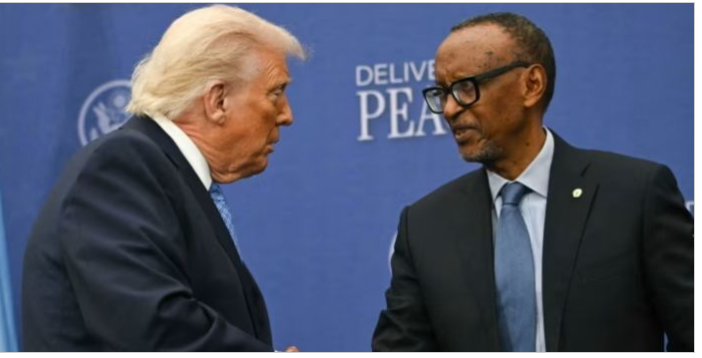
On June 25, 2026, the US Department of State announced sanctions against six targets two individuals and four companies accused of facilitating the smuggling of minerals from eastern DRC, where the M23 armed group has been exploiting mineral resources to finance weapons, pay fighters, and sustain its insurgency. The sanctions are framed within the Washington Accords for Peace and Prosperity, the US-backed DRC-Rwanda peace framework signed in December 2025, which President Ruto witnessed at the White House. The State Department's accompanying statement extended its compliance demand beyond the sanctioned parties, warning that responsibility applies to the entire supply chain , refiners, exporters, manufacturers, financial institutions, and multinational corporations and that all actors must implement responsible sourcing practices.
That warning has direct implications for Kenya. As a regional trade and financial hub, Kenya sits within the mineral trade flows that the US is now actively policing. Kenyan banks that finance mineral export transactions, Kenyan traders that handle transit mineral shipments, and Kenyan companies that source regionally produced minerals for manufacturing all face potential exposure if their supply chains connect even indirectly to conflict mineral flows from eastern DRC.
Background
US sanctions on conflict minerals operate under Executive Order 13671 and related authorities, which allow the Office of Foreign Assets Control (OFAC) to designate individuals and entities involved in the illicit trade of natural resources from conflict zones. OFAC designations create strict liability for US persons and secondary sanctions risk for non-US persons who transact with designated parties or who knowingly facilitate the sanctioned conduct. The US sanctions framework has extraterritorial reach: non-US financial institutions that process transactions involving sanctioned parties risk being cut off from the US financial system, creating a compliance imperative that extends well beyond American companies.
The conflict minerals due diligence framework more broadly is anchored internationally in the OECD Due Diligence Guidance for Responsible Supply Chains of Minerals from Conflict-Affected and High-Risk Areas, which sets out a five-step due diligence process for companies sourcing tin, tantalum, tungsten, and gold the so-called 3TG minerals from conflict-affected regions including eastern DRC. The International Conference on the Great Lakes Region's Regional Certification Mechanism provides the regional framework for mineral certification in the DRC and neighbouring countries. Kenya, as an EAC partner state, is party to regional commitments on conflict mineral governance, and Kenyan businesses sourcing or trading DRC-origin minerals are expected to comply with these frameworks regardless of the US sanctions development.
Analysis
The secondary sanctions risk created by OFAC designations is the most immediate compliance concern for Kenyan financial institutions. Banks that process payments for mineral trade transactions , letters of credit, trade finance facilities, wire transfers must screen counterparties against OFAC's Specially Designated Nationals list. A Kenyan bank that processes a transaction involving a newly designated party, or a party owned or controlled by a designated person at 50% or more, is in breach of US sanctions regardless of whether the transaction touches the US financial system directly. Correspondent banking relationships the channel through which Kenyan banks access US dollar clearing ,create the enforcement lever: OFAC can and does revoke access to US dollar clearing for financial institutions that repeatedly process sanctioned transactions. For compliance officers at Kenyan banks with mineral trade exposure, the OFAC designations announced on June 25 require immediate addition to sanctions screening systems.
For Kenyan traders and companies in the mineral supply chain, the OECD due diligence standard already a compliance expectation for businesses sourcing 3TG minerals now carries additional urgency. A supply chain review that cannot demonstrate traceability of mineral origin through a certified chain of custody creates both sanctions exposure and ESG liability. International buyers particularly in Europe and the US are tightening responsible sourcing requirements, and Kenyan exporters whose supply chains cannot withstand due diligence scrutiny face market access risk that goes beyond regulatory compliance. The US State Department's explicit extension of responsibility to refiners, exporters, and manufacturers means that Kenyan companies in these categories should treat conflict mineral due diligence as an export market access requirement, not a voluntary ESG commitment.
The geopolitical dimension of the sanctions is also relevant for Kenyan government affairs teams. Kenya has invested significantly in its relationship with Rwanda through EAC integration, bilateral trade, and shared infrastructure — and Kenya's President was present at the Washington Accords signing. The US sanctions against Rwanda-linked entities, in support of the same Accords, create a diplomatic context in which Kenya's silence or inaction on conflict mineral governance could attract attention from Washington at a moment when Kenya is seeking to deepen its strategic relationship with the US. That political dynamic is not a compliance obligation, but it is a risk factor that government affairs teams advising on Kenya's regional positioning should be tracking.
Conclusion
The US sanctions on Rwanda-linked mineral firms are not a distant geopolitical development , they are an enforcement signal aimed squarely at the East African mineral trade network, and the warning attached to them is addressed to every trader, bank, and manufacturer in the supply chain. For Kenyan institutions, the compliance response is immediate and practical: update sanctions screening, review supply chain due diligence, and treat conflict minerals traceability as the market access and regulatory requirement it has now become.
Citations
- 1.US Executive Order 13671 — authority for OFAC sanctions targeting illicit natural resource trade from conflict zones.
- 2.US Department of State — June 25, 2026 sanctions designations against two individuals and four companies linked to DRC conflict mineral trafficking.
- 3.OFAC Specially Designated Nationals List — US sanctions screening requirement for financial institutions and companies.
- 4.OECD Due Diligence Guidance for Responsible Supply Chains of Minerals from Conflict-Affected and High-Risk Areas — five-step due diligence framework for 3TG mineral sourcing.
- 5.International Conference on the Great Lakes Region — Regional Certification Mechanism for mineral certification in DRC and neighbouring states.
- 6.Washington Accords for Peace and Prosperity — US-backed DRC-Rwanda peace framework, December 2025, within which the sanctions are framed.
- 7.Proceeds of Crime and Anti-Money Laundering Act 2009 (Kenya) — AML/CFT framework relevant to financial institution obligations in mineral trade finance.
- 8.EAC Treaty and Common Market Protocol — regional framework within which Kenya's mineral trade governance obligations sit.