
Talanta Sports City Audit: Delayed Payments, Direct Procurement Concerns, and a Financing Structure the Auditor-General Cannot See
Abstract
The Auditor-General has flagged the Ksh45.8 billion Talanta Sports City project for delayed contractor payments, direct procurement award concerns, a Ksh10.8 billion financing gap, and an opaque trustee payment structure whose details were not made available to auditors. By June 2025, the project was 44.54% complete but only 4.5% of the contract sum had been paid , a payment shortfall that, under the contract terms, attracts interest at three percentage points above the CBK's average base lending rate, creating escalating taxpayer liability for every month payments remain delayed. A July 2025 deed transferred future payment obligations to a trustee, but auditors say the arrangement has not been fully disclosed and have recommended a special audit to assess value for money. Similar findings on the Ksh41.9 billion BICC and a Ksh4.35 billion military housing project suggest the procurement and financing governance concerns are systemic rather than isolated. For public finance, procurement law, and governance professionals, the audit raises accountability questions that Parliament, the National Treasury, and the relevant procuring entities must now answer.
Introduction
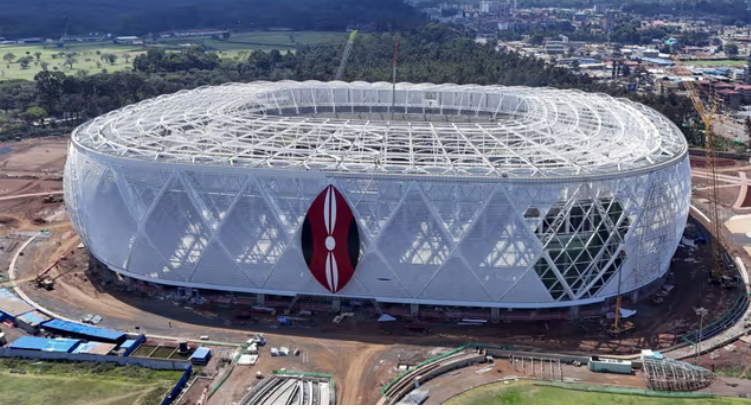
The Talanta Sports City project at Jamhuri Grounds, being developed ahead of the 2027 Africa Cup of Nations, was awarded in May 2024 at a contract sum of USD 344.5 million through direct procurement. The Auditor-General's report reveals that despite reaching 44.54% physical completion by June 2025, only Ksh2 billion 4.5% of the contract value had been paid to the contractor. Under the contract's payment terms, overdue amounts attract interest at three percentage points above the CBK base lending rate. On a contract of this size, with this payment shortfall, the accruing interest liability represents a material additional cost to the public purse that was not part of the original appropriation.
The project's governance problems extend beyond delayed payments. The National Treasury approved financing of Ksh35 billion against a contract value of Ksh45.8 billion, creating a Ksh10.8 billion gap whose resolution is not publicly documented. A deed signed in July 2025 restructured the payment obligations through a trustee, but auditors have stated that the details of that arrangement were not fully disclosed prompting a recommendation for a special audit. The combination of a direct procurement award, a financing gap, and an undisclosed payment restructuring on a project of this scale is the audit governance profile that should concern Parliament, the Public Accounts Committee, and every professional advising on public infrastructure transactions.
Background
Public procurement in Kenya is governed by the Public Procurement and Asset Disposal Act 2015, which establishes competitive tendering as the default procurement method and restricts direct procurement to defined circumstances including emergency situations, proprietary goods and services, and cases where only one supplier exists. The Auditor-General's concern about the Talanta project's direct procurement award is that those circumstances have not been publicly demonstrated or documented. Public finance management obligations under the Public Finance Management Act 2012 require that government expenditure be authorised, properly accounted for, and supported by adequate financing before commitments are made.
The Auditor-General is established under Article 229 of the Constitution of Kenya 2010, with a mandate to audit and report on the use of public funds and to draw Parliament's attention to irregularities. Audit findings do not themselves constitute legal determinations they create a record that Parliament's Public Accounts Committee is constitutionally obligated to examine and that can form the basis of referrals to investigative bodies including the Director of Criminal Investigations, the Ethics and Anti-Corruption Commission, and the Office of the Director of Public Prosecutions where the findings disclose potential criminal conduct.
Analysis
The payment shortfall on the Talanta project is the most immediately quantifiable risk. A project 44% complete with 4.5% of the contract value paid means that the contractor has financed approximately 40% of completed works from its own resources and is accruing interest on the unpaid balance at a contractually specified rate. That interest is a contingent liability of the Kenyan government that does not appear in any approved budget line and that grows with every month payments are delayed. Parliament's Public Accounts Committee should request a current quantification of accrued and projected interest liability on the Talanta contract as a priority, alongside similar figures for the BICC project where auditors identified comparable payment-delay risk.
The trustee payment structure introduced by the July 2025 deed is the governance opacity that most concerns auditors and should concern legal and compliance professionals advising on public infrastructure transactions. Transferring future payment obligations to a trustee is a mechanism that can serve legitimate purposes in project finance structures, but only if the arrangement is fully disclosed, legally documented, and subject to proper audit access. When auditors cannot see the details of a payment structure on a Ksh45.8 billion government project, the fundamental accountability principle that public money must be traceable and auditable has been breached. The special audit recommended by the Auditor-General needs to be actioned by Parliament without delay, and the National Treasury should be required to produce the full deed and trustee arrangement documentation before the next sitting of the Public Accounts Committee.
The direct procurement concern sits at the heart of the project's legal exposure. If the award did not meet the statutory conditions for direct procurement under the PPADA 2015, the contract itself may be challengeable. Parties with standing to petition including unsuccessful tenderers, civil society organisations, and taxpayer litigants have a credible legal basis for challenge if the procurement records do not demonstrate compliance with the direct procurement conditions. The parallel findings on BICC and the military housing project suggest that the governance failures on Talanta are not aberrations ,they reflect a procurement culture in major infrastructure projects that the relevant oversight bodies have not yet disciplined effectively.
Conclusion
The Auditor-General's findings on the Talanta Sports City project document a governance failure that spans procurement law, public finance management, and audit transparency. The interest liability is running, the financing gap is unresolved, and the trustee structure is undisclosed. Parliament has the constitutional tools to compel accountability , the question is whether it will use them before the contractor's interest clock and Kenya's AFCON deadline force the issue.
Citations
- 1.Public Procurement and Asset Disposal Act 2015 (Kenya) — governing framework for public procurement including direct procurement conditions.
- 2.Public Finance Management Act 2012 (Kenya) — public expenditure authorisation, accounting, and financing obligations.
- 3.Constitution of Kenya 2010, Article 229 — Auditor-General's mandate and constitutional basis for audit reports.
- 4.Constitution of Kenya 2010, Article 226 — accounting standards and financial reporting obligations for public entities.
- 5.Public Accounts Committee — parliamentary oversight body constitutionally mandated to examine Auditor-General reports.
- 6.Ethics and Anti-Corruption Commission Act 2011 (Kenya) — EACC mandate relevant to integrity concerns arising from undisclosed financing arrangements.
- 7.Office of the Auditor-General — audit report on Talanta Sports City project, BICC, and military housing programme, June 2026.
- 8.Public Procurement Regulatory Authority — oversight body for procurement compliance under PPADA 2015.