
Supreme Court Upholds Exclusive Jurisdiction Clause as Arbitration Seat
Summary
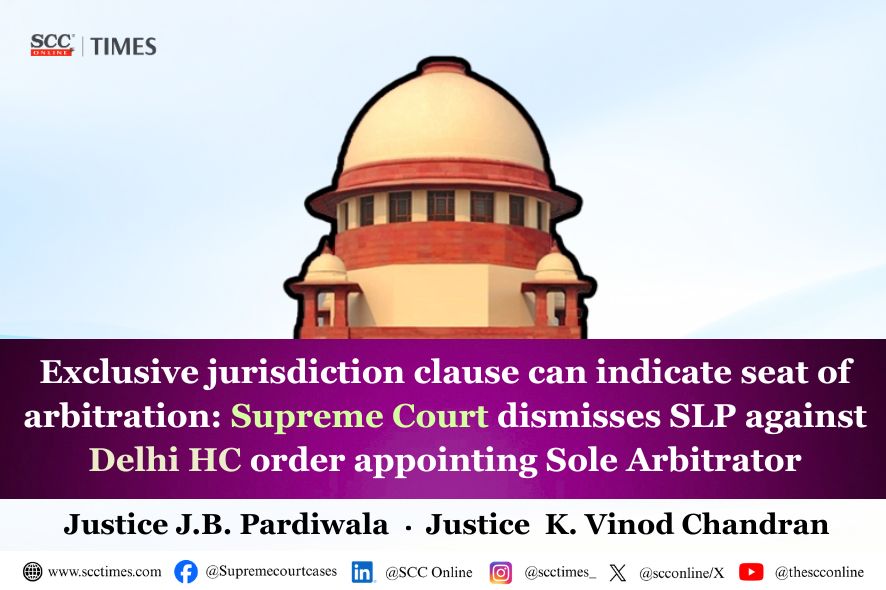
- The Supreme Court has dismissed a special leave petition challenging the Delhi High Court's order appointing a Sole Arbitrator under Section 11 of the Arbitration and Conciliation Act, 1996.
- The court upheld the view that exclusive jurisdiction clauses can be indicative of the seat of arbitration in arbitration proceedings.
- This ruling has significant implications for lawyers handling arbitration cases, particularly those involving exclusive jurisdiction clauses.
What Happened
The Supreme Court's dismissal of the SLP means that the Delhi High Court's order stands, and the appointed Sole Arbitrator will continue to preside over the arbitration proceedings.
The Supreme Court has dismissed a special leave petition (SLP) challenging the Delhi High Court's order appointing a Sole Arbitrator under Section 11 of the Arbitration and Conciliation Act, 1996. The SLP was filed against the Delhi High Court's decision to appoint a Sole Arbitrator in an arbitration proceeding. This development has significant implications for lawyers handling arbitration cases, particularly those involving exclusive jurisdiction clauses.
The Supreme Court's dismissal of the SLP means that the Delhi High Court's order stands, and the appointed Sole Arbitrator will continue to preside over the arbitration proceedings.
Legal Context
The Supreme Court's ruling is a significant milestone in the interpretation of exclusive jurisdiction clauses in arbitration proceedings. The court has upheld the view that such clauses can be indicative of the seat of arbitration, which is a crucial factor in determining the applicable law and jurisdiction. This interpretation is consistent with the provisions of Section 11 of the Arbitration and Conciliation Act, 1996, as amended, which empowers courts to appoint Sole Arbitrators in certain circumstances.
The Delhi High Court's order appointing the Sole Arbitrator was based on this understanding of exclusive jurisdiction clauses. The court's decision has now been validated by the Supreme Court's dismissal of the SLP.
Why It Matters
This ruling has important implications for lawyers handling arbitration cases, particularly those involving exclusive jurisdiction clauses. The Supreme Court's interpretation of these clauses as indicative of the seat of arbitration will likely impact the way lawyers argue their cases and present evidence to support their clients' claims. Lawyers should be aware of this precedent and consider citing it in future arbitration proceedings to strengthen their arguments.
The ruling also highlights the importance of carefully drafting arbitration agreements, including exclusive jurisdiction clauses, to avoid potential disputes and ensure smooth resolution of disputes through arbitration.
Practical Implications
Lawyers should be aware that the Supreme Court's ruling may impact their clients' arbitration proceedings, particularly in cases where an exclusive jurisdiction clause is present, and they should consider citing this precedent to support their arguments.
Source
Source: Original reporting via SCC Times
How does this affect your business?
Get an AI analysis of this article grounded in your jurisdictions, practice areas, and any policy documents you've uploaded to Wansom.