
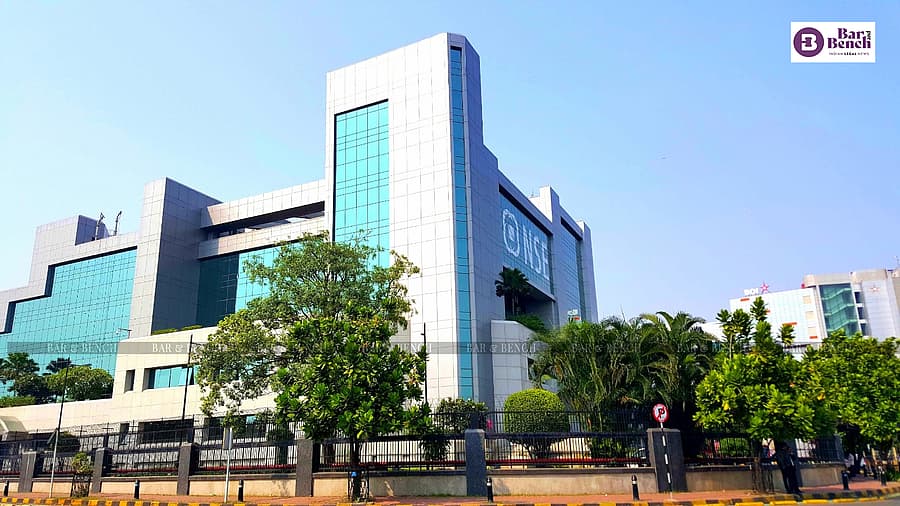
Supreme Court Stays CIC Order on NSE RTI Act Applicability
Summary
- The Supreme Court has stayed a 2007 CIC order declaring NSE a public authority under the RTI Act.
- The stay was issued while the Supreme Court considers NSE's appeal against a Delhi High Court judgment upholding the applicability of the RTI Act to stock exchanges.
- The dispute dates back to 2007, when a full Bench of the CIC ruled that stock exchanges fell within the RTI Act.
- The RTI Act is a key transparency law in India, aimed at promoting accountability and openness in government and public institutions.
What Happened
transparency has assumed increasing importance
The Supreme Court has intervened in a long-standing dispute between the National Stock Exchange of India (NSE) and the Central Information Commission (CIC). On Friday, a Bench of Justices Vikram Nath and Sandeep Mehta passed an interim order staying the execution and operation of a 2007 CIC order that declared NSE a public authority under the Right to Information Act (RTI Act).
The stay was issued while the Supreme Court considers NSE's appeal against a Delhi High Court judgment that upheld the applicability of the RTI Act to stock exchanges. The CIC had originally ruled in 2007 that stock exchanges, including NSE and the Jaipur Stock Exchange, are public authorities under Section 2(h) of the RTI Act.
The Supreme Court's order has significant implications for the transparency obligations of Indian stock exchanges. As the Bench observed during the hearing, 'transparency has assumed increasing importance.' The Court also orally indicated that NSE's protection against the CIC order may not continue indefinitely.
Legal Context
The dispute between NSE and the CIC dates back to 2007, when a full Bench of the CIC ruled that stock exchanges fell within the RTI Act. The NSE challenged this order in court, leading to a series of judgments and appeals.
In 2019, the Delhi High Court upheld the applicability of the RTI Act to stock exchanges, ruling that they are indeed public authorities under Section 2(h) of the Act. NSE then appealed this decision to the Supreme Court, which has now stayed the execution of the CIC order pending further consideration.
The RTI Act is a key transparency law in India, aimed at promoting accountability and openness in government and public institutions. The applicability of the Act to stock exchanges has significant implications for their compliance obligations.
Why It Matters
The Supreme Court's stay on the CIC order has important implications for the transparency obligations of Indian stock exchanges. As lawyers and compliance officers, it is essential to watch for the potential implications of this stay on the RTI Act.
Stock exchanges must ensure that they are complying with their transparency obligations under the RTI Act. This includes establishing mechanisms for handling applications under the law and providing access to information as required.
The Supreme Court's decision will have far-reaching consequences for the stock exchange industry in India, highlighting the need for greater transparency and accountability.
Practical Implications
Lawyers and compliance officers should watch for the potential implications of this stay on the transparency obligations of Indian stock exchanges, which may impact their compliance with the RTI Act.
Source
How does this affect your business?
Get an AI analysis of this article grounded in your jurisdictions, practice areas, and any policy documents you've uploaded to Wansom.
Wansom is AI and can make mistakes.