
Supreme Court sets aside bail granted to Sonam Raghuvanshi in honeymoon murder case
Abstract
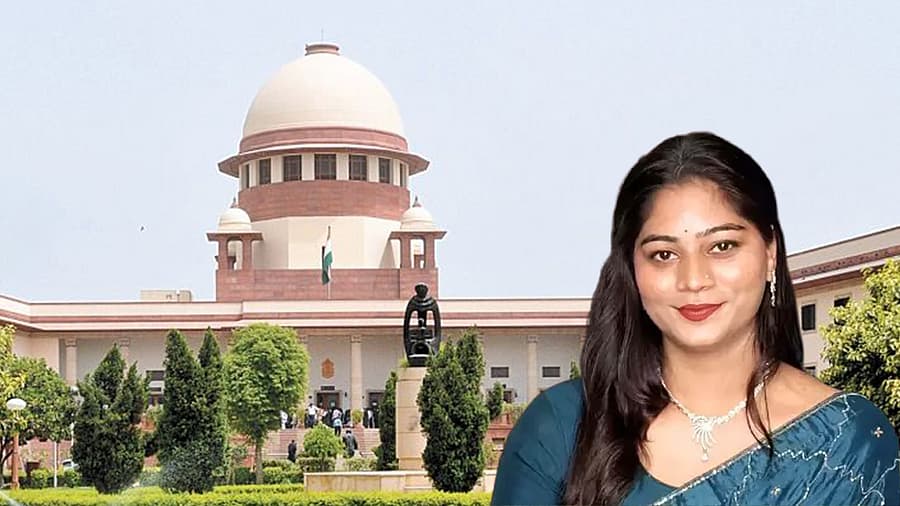
The Supreme Court of India has set aside a trial court's order granting bail to Sonam Raghuvanshi, the prime accused in the alleged murder of her husband during their honeymoon in Meghalaya. The decision was made by a Bench of Justices MM Sundresh and PB Varale, who allowed the State government's challenge to the Meghalaya High Court's order upholding her release. The Supreme Court noted that bail was granted over non-compliance with the mandate to serve grounds of arrest, but found that Sonam Raghuvanshi was not entitled to bail due to the prejudice caused by the lack of adequate reasons for her arrest. This decision has significant implications for the ongoing trial and may hinder its progress.
Introduction
The Supreme Court of India on Thursday set aside a trial court order granting bail to Sonam Raghuvanshi, the prime accused in the alleged murder of her husband during their honeymoon in Meghalaya. The decision was made by a Bench of Justices MM Sundresh and PB Varale, who allowed the State government's challenge to the Meghalaya High Court's order upholding her release. This development has significant implications for the ongoing trial and may hinder its progress.
Background
The case involves Sonam Raghuvanshi, who was accused of murdering her husband during their honeymoon in Meghalaya. The trial court had granted her bail over non-compliance with the mandate to serve grounds of arrest. However, the State government challenged this decision before the Supreme Court, arguing that Sonam Raghuvanshi was not entitled to bail due to the prejudice caused by the lack of adequate reasons for her arrest. The Meghalaya High Court had previously upheld the trial court's order granting her release on bail.
Analysis
The Supreme Court's decision to set aside the trial court's order granting bail to Sonam Raghuvanshi has significant implications for the ongoing trial. The Court noted that while bail is the rule and jail is the exception, the accused had been denied bail three times before and those orders had attained finality. This suggests that the Supreme Court was concerned about the potential prejudice caused by allowing Sonam Raghuvanshi to remain on bail at this stage, particularly given that the trial has already begun. The decision also highlights the importance of ensuring that grounds of arrest are properly served and adequate reasons provided for an accused person's detention.
Conclusion
The Supreme Court's decision to set aside the trial court's order granting bail to Sonam Raghuvanshi is a significant development in this case. Practitioners should note that the Court's ruling emphasizes the importance of ensuring that grounds of arrest are properly served and adequate reasons provided for an accused person's detention. This decision may have implications for future cases involving similar circumstances.
How does this affect your business?
Get an AI analysis of this article grounded in your jurisdictions, practice areas, and any policy documents you've uploaded to Wansom.