
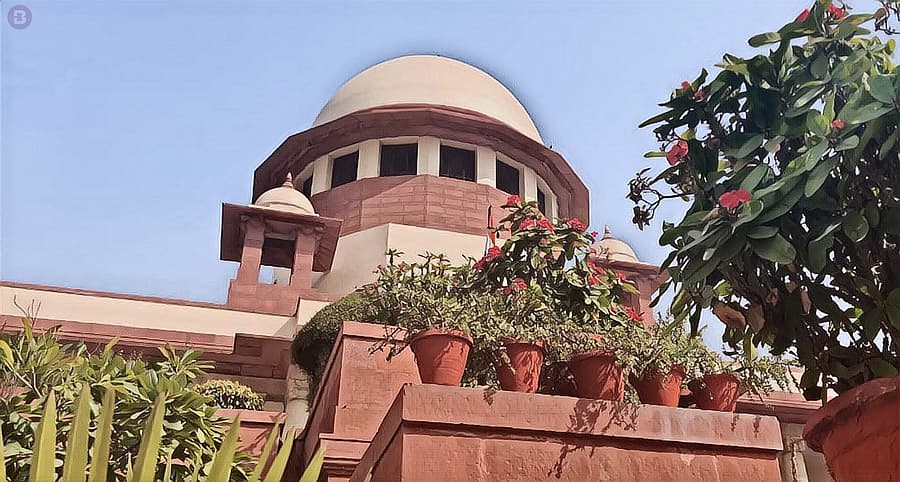
Supreme Court allots site near Bhojshala-Kamal Maula complex for namaz
Summary
- The Supreme Court clarified its interim order on the Bhojshala-Kamal Maula complex dispute by specifying a new site for Muslim prayers.
- The new site is located near the disputed structure and is approximately 1.3 kilometres away from it.
- If the parties to the dispute arrive at a more suitable site later, the prayers can be shifted to those premises.
- The Supreme Court's decision sets a precedent for future disputes over shared heritage structures.
- Lawyers and compliance officers should monitor the development of this case due to its significance in setting a precedent.
What Happened
The Supreme Court has clarified its interim order on the Bhojshala-Kamal Maula complex dispute by specifying a new site for Muslim prayers. On Thursday, a Bench comprising Chief Justice of India Surya Kant and Justices Joymalya Bagchi and V Mohana passed an order allowing Muslims to offer Friday prayers at Khasra number 596, which is closer to the disputed structure than the previously allocated site. This decision came after the Muslim side moved an application alleging that the Court's July 14 interim order had not been followed properly.
The new site, identified by the Muslim side as more suitable for prayers, is located near the complex and is approximately 1.3 kilometres away from it. The Court noted that if the parties to the dispute arrive at a more suitable site later, the prayers can be shifted to those premises.
Legal Context
The Bhojshala-Kamal Maula complex in Dhar, Madhya Pradesh, has been at the centre of a long-standing dispute between Hindus and Muslims. The complex is claimed by Hindus as an ancient temple dedicated to Goddess Saraswati and by Muslims as the Kamal Maula Mosque. On May 15, the Madhya Pradesh High Court ruled in favour of Hindu groups, but the matter eventually reached the Supreme Court, which passed an interim order on July 14 permitting Muslim prayers near the complex. The latest development is a clarification of that order, specifying a new site for prayers.
The dispute highlights the complexities of shared heritage structures and the challenges of allocating sites for religious practices in such cases. The Supreme Court's decision sets a precedent for future disputes and will be closely watched by lawyers and compliance officers.
Why It Matters
The Supreme Court's order has significant implications for the allocation of sites for religious practices in disputes over shared heritage structures. As the case sets a precedent, it is essential for lawyers and compliance officers to monitor its development. The decision demonstrates the Court's willingness to balance competing interests and find solutions that respect the rights of all parties involved.
The matter also underscores the need for careful consideration of the cultural and historical significance of shared heritage structures. By allocating a new site for Muslim prayers, the Supreme Court has shown sensitivity to the concerns of both Hindu and Muslim groups, highlighting the importance of finding mutually acceptable solutions in such disputes.
Practical Implications
Lawyers and compliance officers should monitor the development of this case, as it sets a precedent for the allocation of sites for religious practices in disputes over shared heritage structures.
Source
How does this affect your business?
Get an AI analysis of this article grounded in your jurisdictions, practice areas, and any policy documents you've uploaded to Wansom.
Wansom is AI and can make mistakes.