
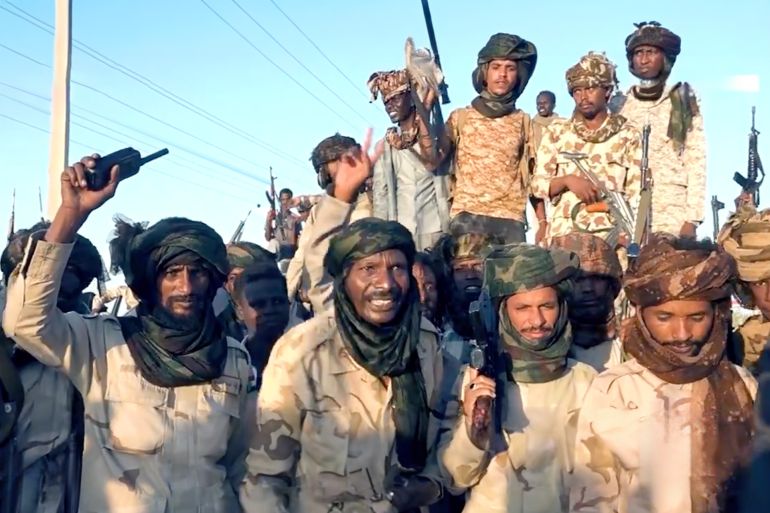
Sudanese military launches airstrikes against Rapid Support Forces in Kordofan
Summary
- The Sudanese military has launched airstrikes against the Rapid Support Forces in North and West Kordofan states.
- Government forces have captured several key areas, including Jabra al-Sheikh, Bara, Am Siyal, Am Qurfah, and Jerijikh.
- The RSF's ability to attack the capital city has been significantly reduced as a result of the military's control over a vital trade route.
- International humanitarian law prohibits attacks on civilian infrastructure and requires parties to distinguish between military targets and civilians.
Sudanese Military Launches Airstrikes Against Rapid Support Forces in Kordofan
The Sudanese military has launched a series of intense airstrikes against positions and military equipment belonging to the Rapid Support Forces (RSF) in North and West Kordofan states.
The Sudanese military has launched a series of intense airstrikes against positions and military equipment belonging to the Rapid Support Forces (RSF) in North and West Kordofan states. The aerial campaign, which began on July 25 and continued into July 26, has resulted in the capture of several key areas by government forces, including Jabra al-Sheikh, Bara, Am Siyal, Am Qurfah, and Jerijikh. This development allows the military to exert control over a vital trade route connecting North Kordofan to Khartoum, expanding the security perimeter around the capital city to approximately 400 kilometers southwest. The RSF's ability to attack the capital has been significantly reduced as a result.
Relevant Legal and Regulatory Context
The use of force in a non-international armed conflict, such as the one unfolding in Sudan, is governed by international humanitarian law. This body of law prohibits attacks on civilian infrastructure and requires parties to distinguish between military targets and civilians. The targeting of RSF positions and equipment raises concerns about potential violations of these principles. Lawyers and compliance officers should closely monitor the situation for any indications that these laws may be being disregarded.
Why It Matters
The ongoing conflict in Sudan has significant humanitarian implications, particularly with regards to the targeting of civilian infrastructure and the use of force in a non-international armed conflict. The international community should closely follow developments in this situation and be prepared to respond if necessary. Compliance officers and lawyers must remain vigilant in monitoring potential violations of international humanitarian law.
Practical Implications
Lawyers and compliance officers should monitor the situation for potential humanitarian law implications, particularly with regards to the targeting of civilian infrastructure and the use of force in a non-international armed conflict.
Source
How does this affect your business?
Get an AI analysis of this article grounded in your jurisdictions, practice areas, and any policy documents you've uploaded to Wansom.
Wansom is AI and can make mistakes.