
Srinagar court permits renewal of Farooq Abdullah’s passport but says prior permission needed for foreign travel
Abstract
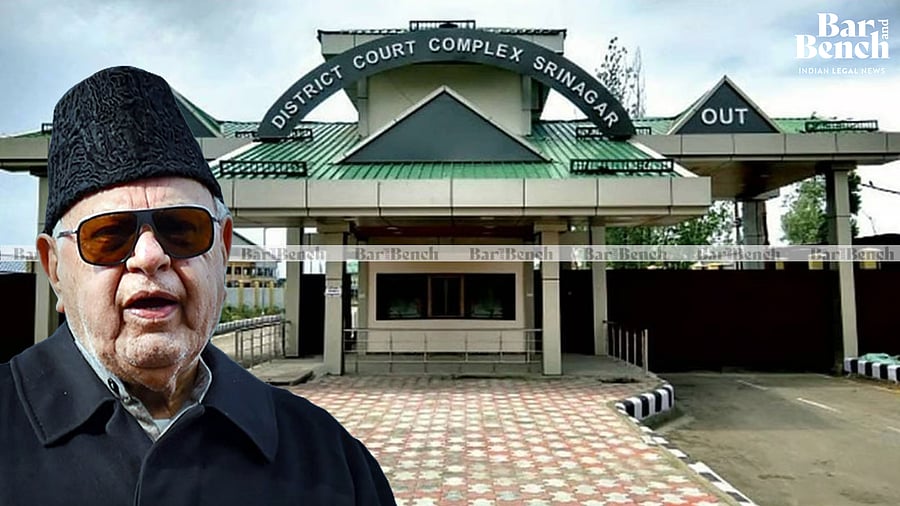
A Jammu and Kashmir court has directed the passport officer at Srinagar to consider the issuance or renewal of National Conference President Farooq Abdullah's passport for a period of one year. The order was passed on a petition filed by Dr. Abdullah, who sought permission for renewal despite pending criminal proceedings against him in connection with the Jammu and Kashmir Cricket Association (JKCA) funds misappropriation case. The court noted that although charges were framed against Dr. Abdullah, the operation of the order framing charges has been kept in abeyance by a revisional court.
Introduction
The recent order of Additional Sessions Judge Farooq Ahmad Bhat in the matter of Farooq Abdullah's passport renewal has significant implications for individuals facing criminal proceedings and seeking to travel abroad. The case highlights the importance of understanding the interplay between the Passports Act, 1967, and the exemption provided under notification GSR 298(E) of 1976, as amended by notification GSR 570(E) of 1993. This article will examine the background and legal framework governing passport issuance in cases where criminal proceedings are pending.
Background
The Passports Act, 1967, empowers the Central Government to refuse a passport if an individual is facing criminal proceedings. However, Section 6(2)(f) of the Act permits courts to permit issuance of passports subject to appropriate safeguards. The exemption provided under notification GSR 298(E) of 1976, as amended by notification GSR 570(E) of 1993, enables courts to grant permission for passport issuance in cases where the individual is not a flight risk. In this context, it is essential to understand that the operation of the order framing charges against Dr. Abdullah has been kept in abeyance by a revisional court through an interim order dated April 25.
Analysis
The court's reliance on the Supreme Court's decision and the exemption provided under notification GSR 298(E) of 1976, as amended by notification GSR 570(E) of 1993, suggests that it considered the individual circumstances of Dr. Abdullah's case. The court's observation that Section 6(2)(f) of the Passports Act is subject to the exemption provided under the notifications implies that it recognized the need for a nuanced approach in balancing the rights of individuals facing criminal proceedings with their right to travel abroad. However, the implications of this order are not clear-cut, and further analysis is required to understand its full significance.
Conclusion
The recent order of Additional Sessions Judge Farooq Ahmad Bhat has significant practitioner implications. Attorneys representing clients facing criminal proceedings who seek to travel abroad must carefully consider the individual circumstances of each case and the relevant legal framework governing passport issuance. The court's reliance on the exemption provided under notification GSR 298(E) of 1976, as amended by notification GSR 570(E) of 1993, suggests that courts may be willing to grant permission for passport issuance in cases where the individual is not a flight risk.
How does this affect your business?
Get an AI analysis of this article grounded in your jurisdictions, practice areas, and any policy documents you've uploaded to Wansom.