
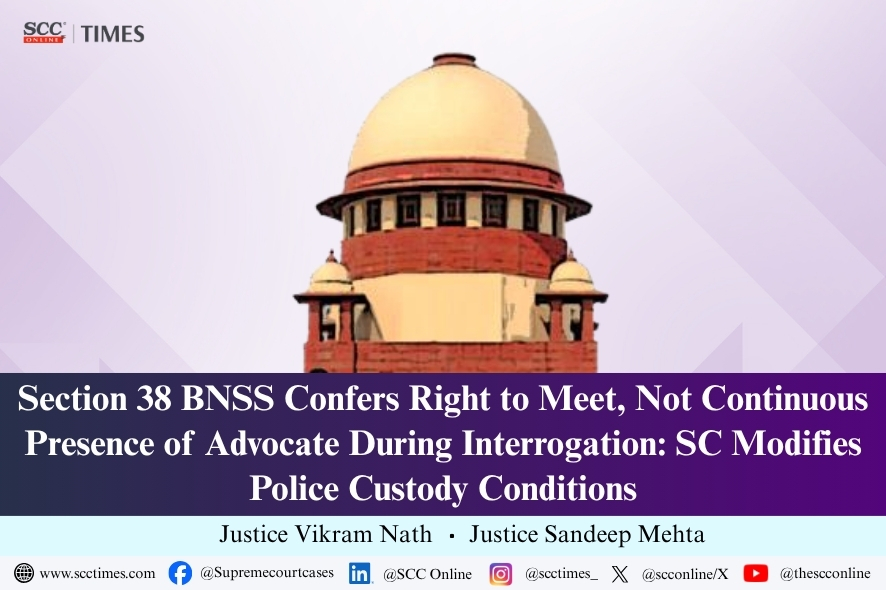
SC modifies police custody conditions under Section 38 BNSS allowing advocate presence
Summary
- The Supreme Court has modified police custody conditions under Section 38 BNSS, allowing advocates to be present during interrogation but not intervene in investigations.
- Advocates will now be permitted to remain at a place from where they can see the respondent, but must refrain from intervening in the investigation at any cost.
- The decision aims to strike a balance between effective investigation and individual rights, with implications for lawyers and their clients.
What Happened
In its revised order, the court directed that an advocate can remain at a place from where they can see the respondent, but must refrain from intervening in the investigation at any cost.
The Supreme Court has modified the police custody conditions under Section 38 BNSS, allowing an advocate to be present during interrogation but not intervene in investigations. The court's decision was made after reviewing the impugned condition, which had been challenged by various parties. In its revised order, the court directed that an advocate can remain at a place from where they can see the respondent, but must refrain from intervening in the investigation at any cost.
Legal Context
Section 38 BNSS is a provision of the law that deals with police custody and interrogation. The section has been subject to various interpretations and challenges over the years, with some arguing that it infringes upon the rights of suspects. The Supreme Court's decision to modify the police custody conditions under this section is significant, as it aims to strike a balance between the need for effective investigation and the protection of individual rights. Lawyers have long argued that the presence of an advocate during interrogation can help prevent miscarriages of justice and ensure that suspects are treated fairly.
Why It Matters
The Supreme Court's decision has important implications for lawyers and their clients. With the modified police custody conditions, advocates will now be allowed to remain present during interrogation, but they must not intervene in investigations. This means that lawyers can continue to provide support and guidance to their clients, while also ensuring that the investigation is conducted fairly and without any undue influence. The decision is a welcome development for those who have long argued that the presence of an advocate during interrogation is essential for upholding individual rights.
Practical Implications
Lawyers should note the modified police custody conditions, which now allow an advocate to be present but not intervene in investigations, and advise clients accordingly.
Source
Source: Original reporting via SCC Times
How does this affect your business?
Get an AI analysis of this article grounded in your jurisdictions, practice areas, and any policy documents you've uploaded to Wansom.