
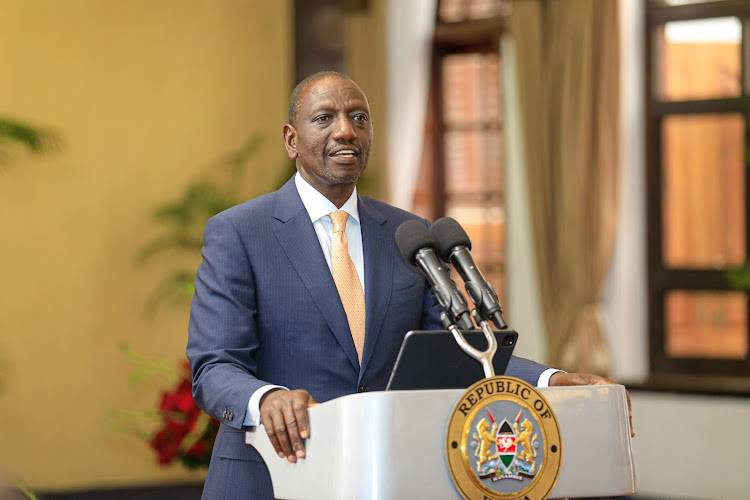
Ruto Seeks New Vision for Kenya's Economic Growth Amid Vision 2030 Challenges
Summary
- President William Ruto has invited Kenyans to participate in a national conversation to chart the next chapter of Kenya's development story.
- Kenya is off track to achieve its goal of becoming an upper-middle-income country by 2030, as set out in Vision 2030.
- The government will formally launch a nationwide conversation on August 12, 2026, to develop a new long-term development blueprint for Kenya.
- Recent economic reforms have laid a stronger foundation for future growth, with improvements in key macroeconomic indicators and a record $3.2 billion in foreign direct investment last year.
Kenya's Development Trajectory
The question we must ask ourselves candidly and honestly is why other nations have fulfilled so much of their potential while we have repeatedly fallen short.
President William Ruto has acknowledged that Kenya is off track to achieve its ambitious goal of becoming an upper-middle-income country by 2030, as set out in Vision 2030. This development agenda was designed to transform the country into a high-income economy, but despite some progress, Kenya remains far from reaching this target. The President's admission highlights the need for a new long-term vision that addresses the challenges and opportunities facing the country. To achieve this, Ruto has invited Kenyans to participate in a national conversation that will help chart the next chapter of Kenya's development story.
A New Era of National Reflection
The President's call for a national dialogue is seen as an opportunity for Kenyans to come together and reflect on their country's progress, successes, and failures. This conversation will be the most significant since the adoption of the 2010 Constitution, and it is expected to transcend partisan politics and electoral cycles. The government has announced that the nationwide conversation will formally launch on August 12, 2026, with the aim of developing a new long-term development blueprint for Kenya. This exercise in national reflection and public participation is seen as crucial in shaping the country's future beyond Vision 2030.
Economic Reforms and Investment
Ruto has highlighted recent economic reforms that have laid a stronger foundation for future growth, citing improvements in key macroeconomic indicators. The President noted that Kenya has stabilized its currency, reduced inflation, decreased borrowing costs, and restored investor confidence. These efforts have paid off, with the country attracting a record $3.2 billion in foreign direct investment last year, more than double the amount recorded in 2022. Additionally, Kenya's improving investment climate has earned international recognition, with the country ranked as the most competitive economy in Africa by the IMD World Competitiveness Ranking.
Practical Implications
Lawyers and compliance officers should watch for the potential implications of a national dialogue on Kenya's future, including any changes to investment policies or regulatory frameworks that may arise from this conversation.
Source
How does this affect your business?
Get an AI analysis of this article grounded in your jurisdictions, practice areas, and any policy documents you've uploaded to Wansom.
Wansom is AI and can make mistakes.