
Ruto Assents to County Allocation of Revenue Bill 2026, Releasing Ksh428 Billion to County Governments Amid Heightened Accountability Scrutiny
Abstract
The County Allocation of Revenue Act 2026 is now law, authorising the distribution of Ksh428 billion among Kenya's 47 county governments as their equitable share of nationally raised revenue for the 2026/27 financial year. The allocation represents 20.9 percent of the most recently audited national revenue, above the constitutional floor of 15 percent, and is Ksh13 billion higher than the 2025/26 allocation. Distribution follows the revenue-sharing formula under Article 217 of the Constitution, incorporating population, poverty, geographical size, and equal share considerations. The Act completes the two-stage constitutional revenue allocation process, following the earlier assent to the Division of Revenue Act 2026. For county finance officers, procurement teams, internal auditors, and suppliers contracting with county governments, disbursements can now begin. The signing arrives at a time when county financial management is under heightened scrutiny, making governance and accountability obligations around the incoming funds more consequential than the headline figure alone suggests.
Introduction
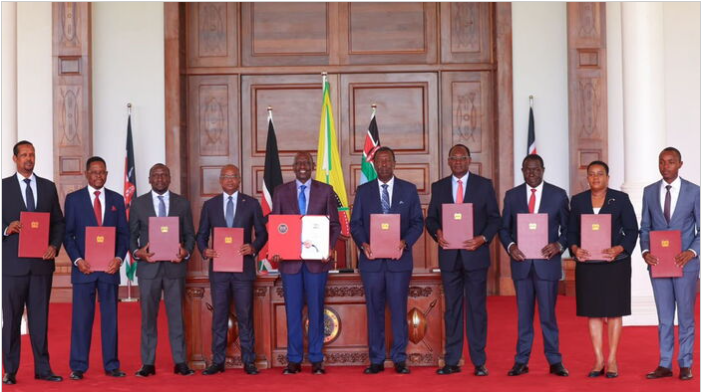
Kenya's devolution framework requires two separate legislative steps before county governments can access their share of national revenue. The Division of Revenue Act determines the split between national and county governments. The County Allocation of Revenue Act then distributes the county share among the 47 counties using the constitutionally prescribed formula. President Ruto's assent on 29 June 2026 completes that second step for the 2026/27 financial year, clearing the National Treasury to begin processing disbursements.
The Ksh428 billion figure is above the constitutional minimum and represents a Ksh13 billion increase on the previous year. It fell short of the Council of Governors' proposal, which is a recurring feature of the annual negotiation between the national government and counties. The more consequential context is that the funds arrive against a backdrop of growing concerns over financial mismanagement at county level, with transparency and accountability obligations carrying real enforcement weight this cycle.
Background
The constitutional framework for county financing is set out in Articles 202 and 203 of the Constitution of Kenya, 2010. Article 202 requires that revenue raised nationally be shared equitably between the national government and county governments. Article 203 sets the minimum county share at 15 percent of the most recently audited national revenue. Article 217 requires the Senate to determine the formula for distributing the county share among the 47 counties, incorporating factors including population, poverty levels, land area, and equal share allocation.
The Public Finance Management Act, No. 18 of 2012, and the Public Finance Management (County Governments) Regulations, 2015, govern how counties receive, manage, and account for those funds. The Controller of Budget oversees county budget implementation and produces quarterly reports on expenditure against approved allocations. The Office of the Auditor General audits county financial statements annually. Both offices have, in recent years, documented persistent weaknesses in county financial management, including irregular expenditure, pending bills, and procurement irregularities, providing the accountability context within which this allocation lands.
Analysis
The immediate legal effect of the Act is to authorise disbursement. The National Treasury can now process transfers to county revenue funds under the framework established by the Public Finance Management Act. County governments cannot legally appropriate or spend equitable share funds before the enabling legislation is in place, so assent removes the primary legal barrier to the 2026/27 county budget cycle commencing. For suppliers, contractors, and service providers with pending county contracts, this is the signal that payment frameworks can now be activated.
The governance dimension is where the analysis matters more. The Controller of Budget's recent reports have identified counties where absorption rates are low, pending bills have accumulated, and procurement processes have not followed the Public Procurement and Asset Disposal Act, No. 33 of 2015. A higher allocation does not resolve those structural problems. County finance officers and internal audit teams should treat the commencement of disbursements as the trigger for activating their internal controls frameworks, not as the end of a process. Boards of county-level state corporations and county assembly oversight committees carry direct accountability for ensuring the funds are appropriated and spent lawfully. Where those oversight structures have been weak, the incoming allocation represents both an opportunity and an elevated risk of further audit findings.
For the private sector, the practical read is straightforward. Businesses contracted to county governments should confirm their payment claims are properly lodged before the financial year gets underway in earnest. The accumulation of pending bills across counties has been a persistent problem, and suppliers who do not actively manage their receivables position at the county level often find themselves at the back of an informal queue. Law firms, audit firms, and financial advisers working with county governments should also confirm that their engagements are covered by properly approved county budgets for 2026/27, since spending commitments made before approved budgets are in place carry procurement compliance risk.
Conclusion
Presidential assent to the County Allocation of Revenue Act 2026 is a constitutional formality that carries real operational consequences. Ksh428 billion can now move through the National Treasury to county governments, activating the 2026/27 county budget cycle. The governance question is not whether the funds will be disbursed, but whether the oversight and accountability frameworks at county level are adequate to ensure they are spent lawfully. Given the track record documented in recent audit and Controller of Budget reports, that question deserves more attention than the headline allocation figure typically receives.
Citations
- 1.Constitution of Kenya, 2010, Articles 202, 203, and 217
- 2.County Allocation of Revenue Act, 2026
- 3.Division of Revenue Act, 2026
- 4.Public Finance Management Act, No. 18 of 2012
- 5.Public Finance Management (County Governments) Regulations, 2015
- 6.Public Procurement and Asset Disposal Act, No. 33 of 2015
- 7.Controller of Budget, County Governments Budget Implementation Reports (relevant quarters)
- 8.Office of the Auditor General, County Government Audit Reports (most recent cycle)