
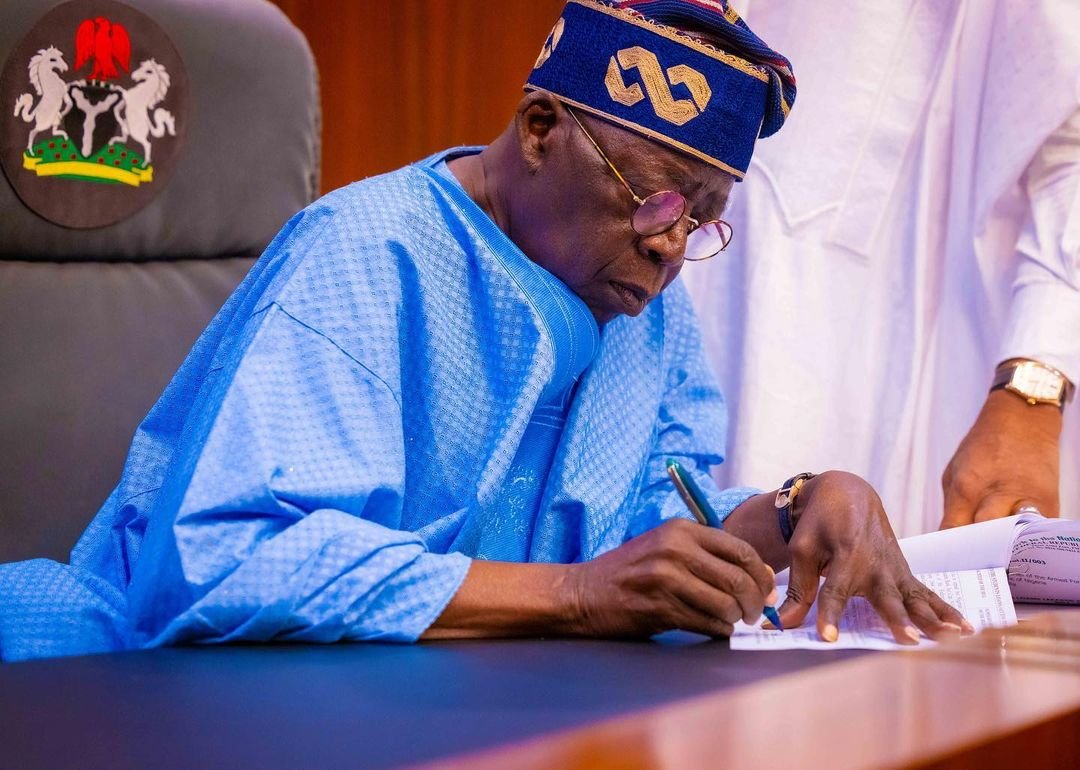
President Tinubu Signals Readiness for Early Review of ₦70,000 Minimum Wage
Abstract
On June 25, 2026, the Bola Ahmed Tinubu administration officially stated that the ₦70,000 national minimum wage benchmark no longer reflects prevailing domestic economic realities. Disclosed by the Chief of Staff to the President at the Good Governance Summit 2026, the executive signal arrives alongside aggressive demands from organized labor for upward consequential salary adjustments to curb widespread multidimensional poverty. This article analyzes the legal and statutory timeline of Nigeria's adjusted minimum wage review cycles, the competing fiscal arguments presented by state executives, and the corporate compliance risks confronting employers navigating volatile public sector salary adjustments
Introduction
The fiscal architecture governing Nigeria’s workforce is set for an accelerated renegotiation. On June 25, 2026, Chief of Staff to the President Femi Gbajabiamila verified that the Federal Government is prepared to approach an early review of the ₦70,000 national minimum wage not as an adversary to organized labor, but as a proactive partner.
The announcement, delivered at a public policy summit in Abuja, acknowledges a bitter economic reality: the ₦70,000 threshold—which was celebrated as a milestone when President Tinubu signed it into law in July 2024—has been rendered mathematically insufficient by persistent hyperinflation and currency depreciation. With the Nigeria Labour Congress (NLC) and the Trade Union Congress (TUC) coordinating to formally restart structured wage demands by July 2026, public and private sector employers face intense labor market corrections.
Background
Nigeria’s minimum wage framework underwent an institutional overhaul in mid-2024 when President Tinubu signed the Minimum Wage Act, which effectively more than doubled the legacy ₦30,000 benchmark to ₦70,000. Crucially, that legislative milestone also fundamentally compressed the national strategic review cycle, shortening it from five years down to three years to ensure that statutory wages could keep pace with fast-moving economic conditions.
The timeline compressed further in January 2025, when the Federal Government administratively adjusted the policy to a two-year review cycle, making 2026 the official milestone for the next legislative reassessment. However, the economic pressures facing Nigerian households have outpaced the state's legislative timeline. Joint labor communiqués published in June 2026 indicate that an estimated 65% of the country's population remains trapped in multidimensional poverty, driven primarily by the soaring costs of essential services, transportation, housing, and food
Analysis
The impending minimum wage review highlights deep structural and political tensions inside Nigeria's federalist economic system:
The SADC and Sub-National Fiscal Disparity: While federal administrators express a willingness to re-evaluate the baseline wage, the primary barrier to holistic wage reform remains sub-national financial compliance. Revelations from former minimum wage negotiation committees indicate that while the Federal Government was originally open to implementing up to a ₦150,000 floor during past rounds, intense pushback from state governors, local government authorities, and private sector representatives—who claimed they lacked the basic liquidity to pay—stalled negotiations.
The Demand for a 400% Wage Adjustment: In late June 2026, the Joint National Public Service Negotiating Council (JNPSNC) dramatically escalated the conversation, calling on federal and state authorities to approve a 400% increase on the current ₦70,000 base to completely offset inflation. Concurrently, legislative leaders, including Deputy Minority Leader Abdussamad Dasuki, have countered that dramatically improved post-subsidy revenue profiles mean individual states have the clear financial capacity to independently implement a ₦100,000 baseline without waiting for federal mandates.
The "Consequential Adjustment" Mandate: Organized labor has explicitly warned that a nominal lift of the absolute minimum wage floor is legally insufficient. Any upcoming amendment must be accompanied by mandatory, legally binding consequential adjustments across all public service salary structures. Failure to implement these proportional upgrades across higher grade levels creates severe salary compression and violates international labor practices, threatening long-term industrial harmony.
Conclusion
President Tinubu’s invitation to re-evaluate the ₦70,000 national minimum wage is a vital concession to pressing economic realities, but it represents the beginning of a complex legislative process. As the formal July 2026 renegotiation window opens, the challenge for the administration will be balancing organized labor's demand for a genuine living wage against the stark financial limitations of state governments and the private sector. For corporate employers, the impending review underscores the need for rigorous internal audit planning to ensure salary structures remain resilient against sudden legislative shifts.
Citations
- 1.Good Governance Summit 2026 Proceedings, Address by Chief of Staff to the President, Femi Gbajabiamila (Delivered June 25, 2026).
- 2.Nigeria National Minimum Wage Act of 2024 (Assented to July 18, 2024). Nigeria Labour Congress (NLC) and Trade Union Congress (TUC)
- 3.Joint Communiqué and Charter of Demands (Issued June 17, 2026).
- 4.Joint National Public Service Negotiating Council (JNPSNC), National Chairman Benjamin Uyanto, Institutional Enforcement Notice (June 2026).
- 5.Bureau of Public Service Lecture Series, Address by Bukar Goni, Former Head of the Civil Service of the Federation (June 23, 2026).