
Nandi-Ndaitwah pushes for Namibia-SA industrial shift
Abstract
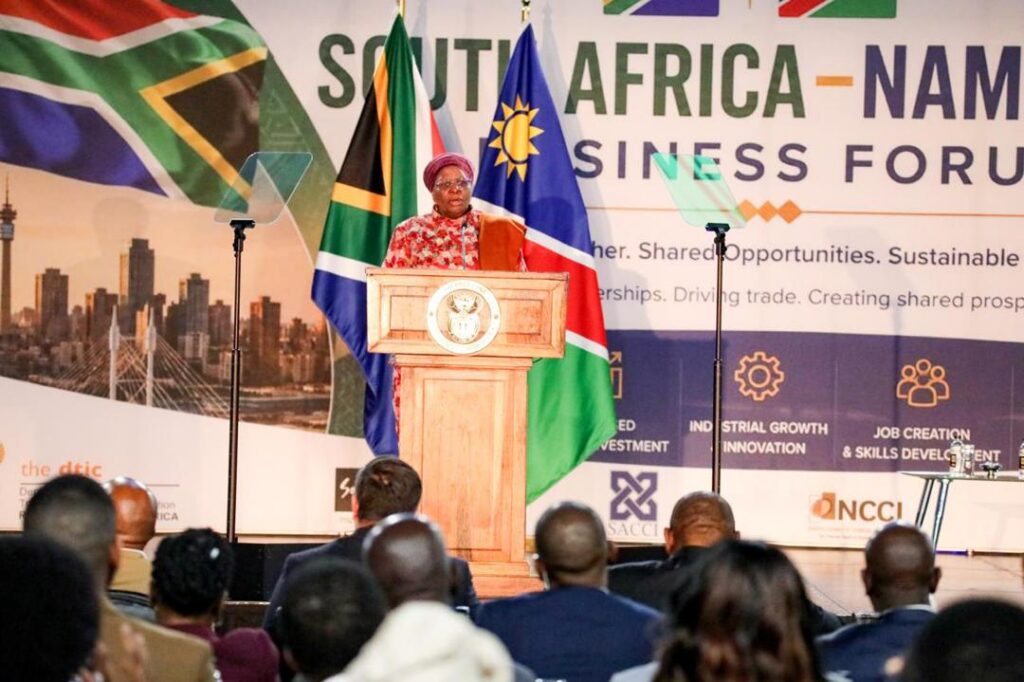
President Netumbo Nandi-Ndaitwah has called for a shift in the trade relationship between Namibia and South Africa, advocating for investment in industrialisation, value addition, and regional manufacturing to drive economic growth and create jobs. This proposal aims to move beyond the traditional trade relationship between the two countries, which has been the focus of their economic interactions. The President's call for industrialisation is likely to have significant implications for the Namibian economy, particularly in terms of job creation and economic diversification.
Introduction
The recent South Africa-Namibia business forum provided a platform for President Netumbo Nandi-Ndaitwah to outline her vision for strengthening economic ties between the two countries. Her call for industrialisation and value addition is a significant development in the Namibian economy, with potential far-reaching implications for job creation, economic growth, and regional manufacturing. This article will examine the background to this proposal, its significance, and what it may mean for practitioners in the field.
Background
The traditional trade relationship between Namibia and South Africa has been a key aspect of their economic interactions. However, President Nandi-Ndaitwah's call for industrialisation and value addition suggests that there is a desire to move beyond this model and explore new opportunities for economic growth. The concept of regional manufacturing is not new in the context of Southern African Development Community (SADC) member states, but it has gained momentum in recent years as countries seek to diversify their economies and reduce reliance on primary commodity exports.
Analysis
The implications of this proposal are far-reaching and will require careful consideration from practitioners in the field. As the Namibian government seeks to implement policies aimed at promoting industrialisation and value addition, lawyers will need to navigate complex regulatory frameworks and provide advice on issues such as investment, trade, and employment law.
Conclusion
The success of this proposal will depend on various factors, including cooperation between the two countries, investment in infrastructure development, and regulatory frameworks. As the situation unfolds, it is essential for lawyers to stay informed about developments and provide advice that takes into account the complexities of industrialisation and value addition.
How does this affect your business?
Get an AI analysis of this article grounded in your jurisdictions, practice areas, and any policy documents you've uploaded to Wansom.