
Namibia's President Obligated to Dissolve Parliament Under Article 57
Summary
- Panduleni Itula, president of IPC, has called on President Netumbo Nandi-Ndaitwah to dissolve parliament or form a government of national unity.
- Itula's call is based on Article 57 of the Constitution of Namibia, which obliges the president to take decisive action in situations like this.
- The situation in Namibia's parliament has significant implications for the country's governance and politics.
What Happened
Article 57 of the Constitution of Namibia gives the president significant powers to intervene in parliamentary processes.
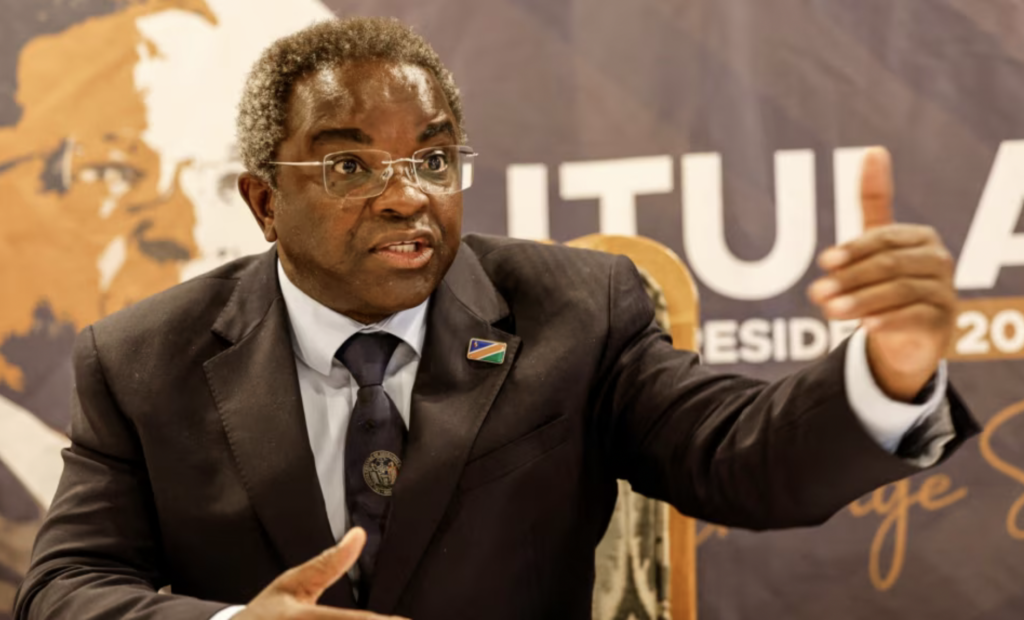
Panduleni Itula, the president of Independent Patriots for Change (IPC), has called on President Netumbo Nandi-Ndaitwah to take action to address the parliamentary deadlock in Namibia. Itula's proposal includes dissolving parliament, forming a government of national unity, or backing a vote of no confidence in the speaker. This move comes after Nandi-Ndaitwah criticized parliament for its slow pace in February.
Legal Context
Article 57 of the Constitution of Namibia gives the president significant powers to intervene in parliamentary processes. According to Itula's reading of the article, the president is obligated to dissolve parliament if it becomes deadlocked or unable to function effectively. This provision is meant to ensure that the government can continue to operate smoothly and make decisions necessary for effective governance.
It's worth noting that Article 57 has not been explicitly invoked in recent times, but Itula's call highlights its potential implications for ongoing legislative processes.
Why It Matters
The situation in Namibia's parliament has significant implications for the country's governance and politics. If the president were to dissolve parliament under Article 57, it could lead to a reconfiguration of the government and potentially alter the balance of power between different factions. This development would have far-reaching consequences for ongoing legislative processes and client interests.
Lawyers advising clients in Namibia should be aware of these developments and consider how they may impact their clients' interests.
Practical Implications
Lawyers advising clients in Namibia should be aware that the president may be legally obligated to dissolve parliament under Article 57, which could have implications for ongoing legislative processes and client interests.
Source
How does this affect your business?
Get an AI analysis of this article grounded in your jurisdictions, practice areas, and any policy documents you've uploaded to Wansom.