
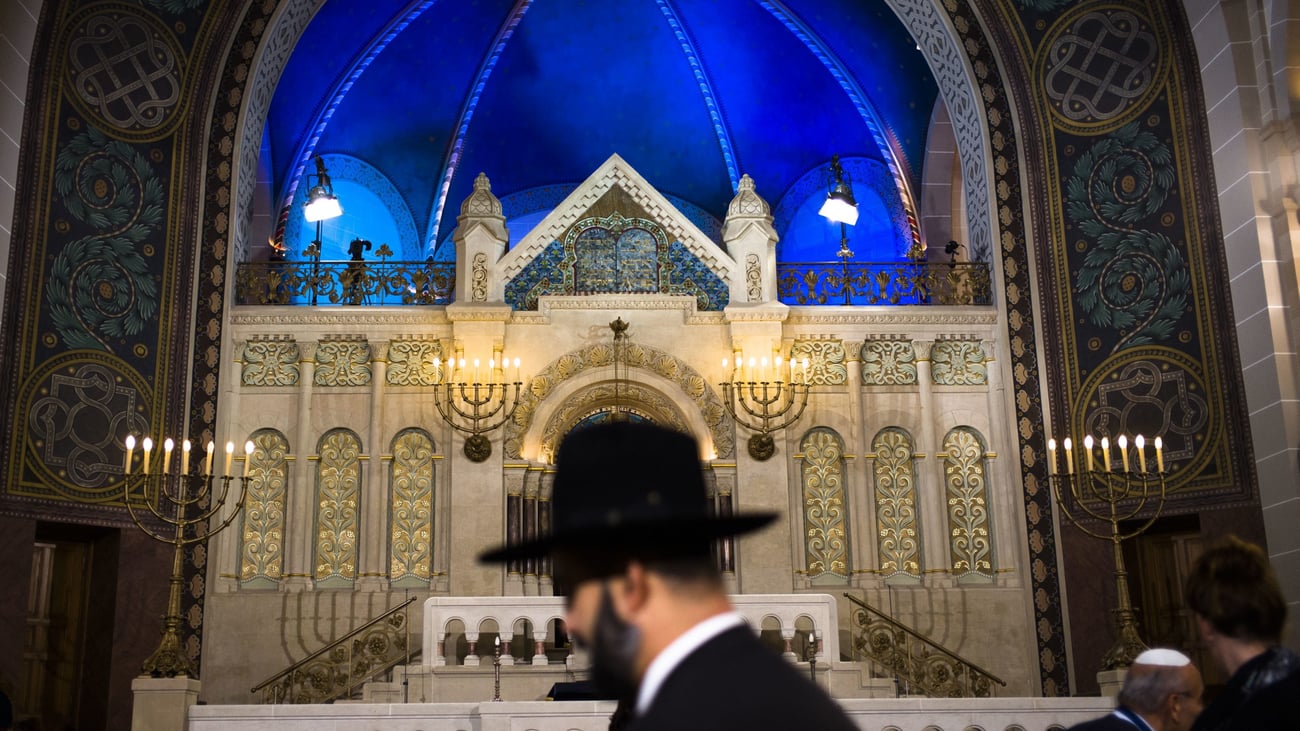
Maryland synagogue sues county over firearm ban near places of worship
Summary
- The Silver Spring Jewish Center has filed a lawsuit against Montgomery County over its new regulation prohibiting firearm possession near places of worship.
- The synagogue argues that this regulation violates the First, Second, and Fourteenth Amendments and prevents them from defending their members from anti-Semitic attacks.
- The county's ordinance is more restrictive than New York's law, which was held unconstitutional by the U.S. Supreme Court in a 6-3 opinion in *New York State Rifle & Pistol Association Inc. v. Bruen* (2022).
- This lawsuit may have significant implications for places of worship across Maryland and sets a precedent for similar cases in the future.
What Happened
The synagogue argues that this regulation violates their congregation's Second Amendment right to bear arms and their rights under the Free Exercise Clause and the Establishment Clause of the First Amendment and the Equal Protection Clause of the Fourteenth Amendment.
The Silver Spring Jewish Center, one of Maryland's oldest Orthodox synagogues, has filed a lawsuit against Montgomery County, arguing that its new regulation prohibiting firearm possession near places of worship violates the First, Second, and Fourteenth Amendments. The synagogue claims that this regulation prevents them from defending their members from anti-Semitic attacks and fulfilling their religious obligations to provide security for themselves and other Jews. According to the synagogue's motion for a preliminary injunction, they consider it a religious obligation to ensure that at least some of their members carry firearms due to the threat environment they face.
The county council enacted this regulation in July 2018 as an expedited measure, which prohibits the possession of firearms within 100 yards of places of worship. This move was made to comply with the Supreme Court of Maryland's ruling in *Montgomery County v. Anchor Inn* in April 2018, which clarified localities' authority to enact such regulations. Under Maryland law, localities are prohibited from enacting firearm regulations, except for those pertaining to minors, law enforcement, or regulations concerning the possession of firearms within 100 yards of certain locations such as parks, churches, schools, public buildings, and other places of public assembly.
Relevant Legal/Regulatory Context
The county's regulation is a response to a Supreme Court of Maryland ruling that clarified the authority of localities in enacting firearm regulations. In April 2018, the Supreme Court of Maryland ruled that counties had previously exceeded their authority in adopting regulations concerning possession within 100 yards of certain locations. However, the court greenlit the county's regulations on possession near parks, places of worship, schools, libraries, recreational facilities, multipurpose exhibition facilities, polling places, courthouses, and legislative assembly. This ruling has significant implications for firearm regulation in Maryland, as localities are now allowed to enact regulations concerning possession within 100 yards of these locations.
The U.S. Supreme Court has also weighed in on firearm regulations, with a 6-3 opinion in *New York State Rifle & Pistol Association Inc. v. Bruen* (2022) holding that New York's law requiring a special need for a concealed carry permit in public violates the Second Amendment. The synagogue argues that the county's ordinance is even more restrictive and therefore unconstitutional.
Why It Matters
This lawsuit may have significant implications for places of worship across Maryland, as it challenges the constitutionality of the county's firearm ban near places of worship under the Second Amendment. The synagogue's argument that this regulation violates their congregation's right to bear arms and their rights under the Free Exercise Clause and the Establishment Clause of the First Amendment and the Equal Protection Clause of the Fourteenth Amendment may set a precedent for similar cases in the future.
The development of this lawsuit also highlights the need for lawyers to advise their clients on the implications of the county's firearm ban, particularly for places of worship. As the legal landscape surrounding firearm regulation continues to evolve, it is essential for individuals and organizations to understand their rights and obligations under the law.
Practical Implications
This development may require lawyers to advise their clients on the implications of the county's firearm ban, particularly for places of worship, and potentially challenge its constitutionality under the Second Amendment.
Source
How does this affect your business?
Get an AI analysis of this article grounded in your jurisdictions, practice areas, and any policy documents you've uploaded to Wansom.
Wansom is AI and can make mistakes.