
Lagos seals Ikoyi property over untreated sewage discharge
Abstract
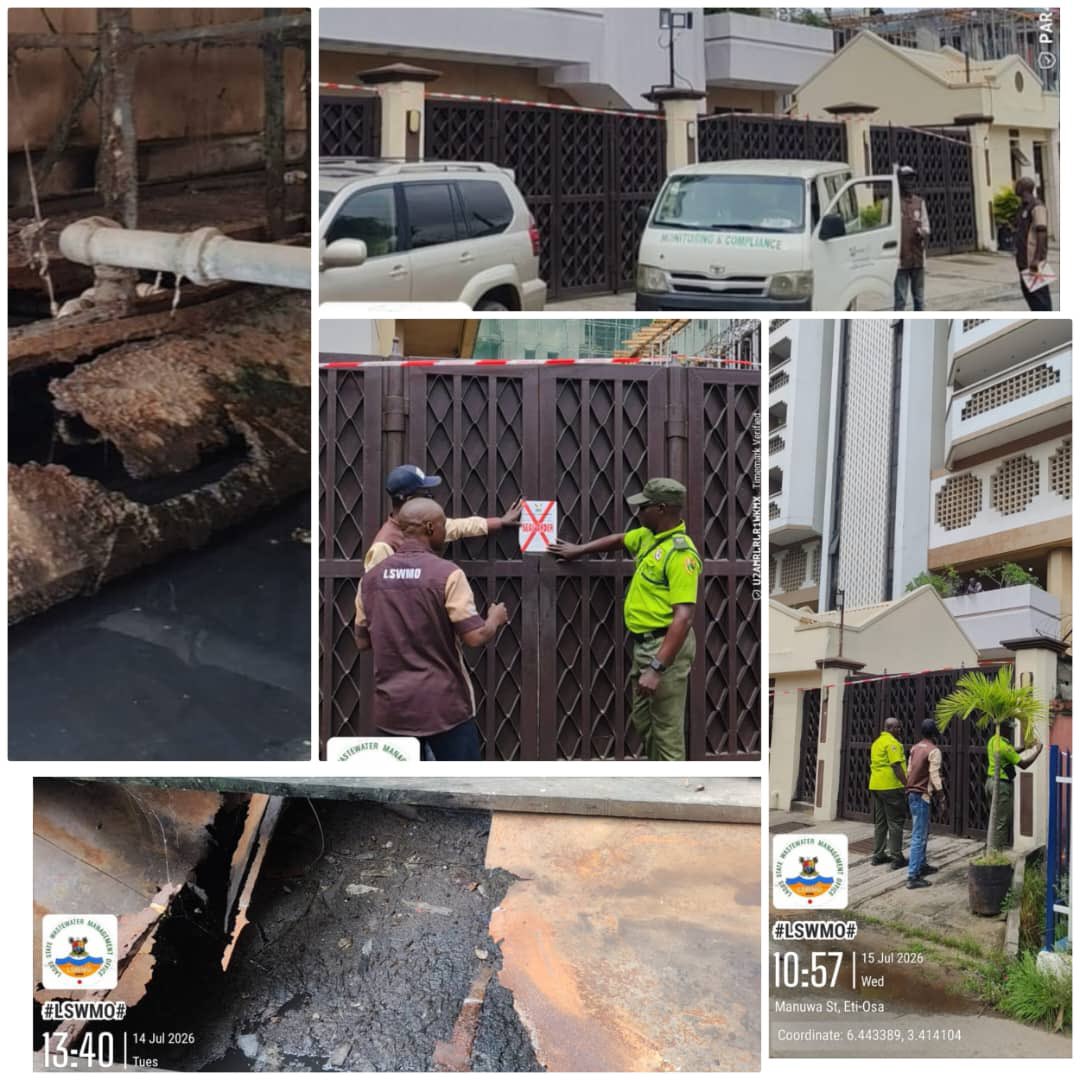
The Lagos State Government recently sealed a property in Ikoyi for allegedly discharging untreated sewage into a canal, highlighting the state's intensified commitment to environmental protection and compliance. This enforcement action, carried out under the provisions of the Lagos State Environmental Management and Protection Law 2017, underscores the critical role of regulatory bodies like the Lagos State Environmental Protection Agency (LASEPA) and the Lagos State Wastewater Management Office (LSWMO) in curbing pollution. The incident serves as a stark reminder to property owners and developers of their legal obligations regarding wastewater management and the severe consequences of non-compliance, including property sealing and significant financial penalties. It signals a zero-tolerance approach to environmental infractions, aiming to safeguard public health and preserve the state's natural resources.
Introduction
The Lagos State Government recently took decisive action by sealing a property at No. 5, Manuwa Street, Ikoyi, following allegations of discharging untreated sewage directly into a canal through a non-functional sewage treatment plant. This incident, reported by Vanguard Nigeria, is not an isolated event but rather a clear indication of the state's escalating efforts to enforce environmental regulations and combat pollution. The sealing of the property serves as a potent warning to developers, facility managers, and property owners across Lagos that environmental compliance, particularly concerning wastewater management, is no longer a matter of discretion but a stringent legal imperative.
This enforcement action carries significant implications for the legal and property sectors in Lagos. It underscores the robust powers vested in state environmental agencies and signals a renewed commitment to upholding environmental standards. For legal practitioners, understanding the statutory framework, the powers of regulatory bodies, and the potential liabilities for non-compliance is crucial. This article will delve into the legal context surrounding this development, examining the relevant state and federal environmental laws, the roles of key regulatory agencies, and the practical implications for legal professionals advising clients on environmental sustainability and compliance in Lagos State.
Background
Environmental governance in Nigeria operates on both federal and state levels, with specific legislation addressing pollution control and waste management. At the federal level, the National Environmental Standards and Regulations Enforcement Agency (NESREA) Act 2007 established the National Environmental Standards and Regulations Enforcement Agency (NESREA) to enforce environmental laws, guidelines, policies, standards, and regulations across the country. Complementing this, federal regulations such as the National Environmental (Sanitation and Wastes Control) Regulations, 2009, and the National Environmental (Surface and Groundwater Quality Control) Regulations, 2011, set national standards for waste discharge and water quality.
In Lagos State, the primary legislative instrument is the Lagos State Environmental Management and Protection Law 2017 (LSEMPL 2017). This comprehensive law consolidates various environmental statutes and establishes the Lagos State Environmental Protection Agency (LASEPA) as the principal regulatory body responsible for environmental management within the state. The LSEMPL 2017 explicitly prohibits the discharge of untreated waste (Section 185) and mandates the proper maintenance of drains, sewage, and tanks (Section 125). Furthermore, the Lagos State Wastewater Management Office (LSWMO), established in line with the LSEMPL 2017, is specifically tasked with overseeing and coordinating sewage and faecal sludge management, including monitoring private properties for functional wastewater treatment plants and issuing sewage clearances. These legal frameworks collectively form the bedrock for environmental enforcement actions, such as the recent sealing of the Ikoyi property.
Analysis
The sealing of the Ikoyi property by the Lagos State Government is a direct application of the enforcement powers granted under the Lagos State Environmental Management and Protection Law 2017 (LSEMPL 2017). Specifically, Section 185 of the LSEMPL 2017 prohibits the discharge of untreated waste, a provision directly contravened by the property's alleged actions. Furthermore, Section 125 of the same Law places an obligation on property owners for the maintenance of drains, sewage, and tanks, implying a duty to ensure that sewage treatment plants are functional and effective. The power to seal premises, as exercised in this instance, is explicitly provided for under Section 133 of the LSEMPL 2017, allowing the state to take swift action against environmental defaulters.
LASEPA, as the enforcing authority, is empowered to monitor and control the disposal of liquid waste generated by both government and private facilities, and to enforce environmental standards. The agency's consistent sealing of properties for various environmental infractions, including noise pollution and illegal waste disposal, demonstrates its readiness to wield these powers. The involvement of the Lagos State Wastewater Management Office (LSWMO) further highlights the specialized focus on sewage management, as LSWMO is responsible for monitoring private properties to ensure the provision and proper functioning of Wastewater Treatment Plants.
The enforcement action also aligns with the “polluter pays” principle, which is increasingly being emphasized in environmental regulations in Lagos State. This principle places the financial burden of pollution prevention, control, and remediation on those who cause the pollution. The Lagos State Government has recently announced stiffer penalties for environmental offences, including fines of up to ₦250,000 or three months imprisonment for illegal dumping and littering, indicating a broader trend towards more stringent enforcement and higher punitive measures. This move aims to deter environmental abuse and promote responsible practices among residents and businesses. The sealing of properties serves as a significant economic deterrent, forcing owners to rectify environmental deficiencies before resuming operations or occupancy.
Conclusion
The sealing of the Ikoyi property by the Lagos State Government for untreated sewage discharge is a significant development that underscores the increasing rigor of environmental enforcement in Nigeria's commercial hub. It serves as a critical reminder to all property owners, developers, and facility managers of their non-negotiable legal obligations under the Lagos State Environmental Management and Protection Law 2017 and associated regulations. The proactive stance of LASEPA and LSWMO signals a clear intent to move beyond mere warnings to tangible, impactful sanctions, including the temporary or permanent closure of non-compliant premises.
Practitioners must advise their clients to conduct thorough environmental audits, ensure the functionality and compliance of all wastewater treatment infrastructure, and obtain necessary permits and clearances from relevant agencies. Proactive compliance, rather than reactive remediation, is the only sustainable path forward. Failure to adhere to these standards will not only result in significant financial penalties but also reputational damage and operational disruptions. As Lagos continues its rapid urbanization, the emphasis on environmental sustainability will only intensify, making robust environmental compliance a cornerstone of responsible property development and management.
Citations
- 1.Lagos State Environmental Management and Protection Law 2017
- 2.National Environmental Standards and Regulations Enforcement Agency (NESREA) Act 2007
- 3.National Environmental (Sanitation and Wastes Control) Regulations, 2009
- 4.National Environmental (Surface and Groundwater Quality Control) Regulations, 2011
How does this affect your business?
Get an AI analysis of this article grounded in your jurisdictions, practice areas, and any policy documents you've uploaded to Wansom.