
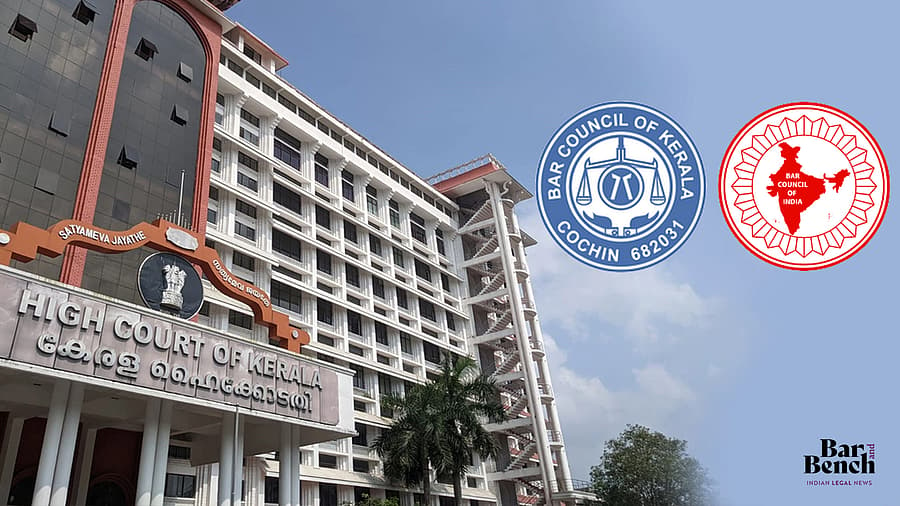
Kerala High Court Stays BCI Orders Constituting Interim Authority to Carry Out Bar Council Functions
Summary
- The Kerala High Court has stayed two orders issued by the BCI Chairman constituting an interim authority to carry out certain functions of the Bar Council of Kerala.
- The stay was granted in response to writ petitions filed by newly elected BCK members, including advocate Yeshwanth Shenoy.
- Shenoy's plea argued that the interim arrangement was issued without proper consideration and contravened the scheme of the Advocates Act.
- The case highlights concerns about the legitimacy and authority of interim arrangements put in place by the BCI Chairman.
What Happened
The Kerala High Court has intervened in a dispute over the legitimacy of an interim arrangement put in place by the Bar Council of India (BCI) Chairman. On Friday, Justice Bechu Kurian Thomas stayed two orders issued by the BCI Chairman constituting an interim authority to carry out certain functions of the Bar Council of Kerala (BCK). The stay was granted in response to writ petitions filed by newly elected BCK members, including advocate Yeshwanth Shenoy.
Shenoy's plea argued that the interim arrangement was issued without proper consideration and contravened the scheme of the Advocates Act. He pointed out that the recently elected XIII Bar Council of Kerala had been officially notified in the Kerala Gazette on June 16, 2026, making it unclear why an interim authority was necessary. The BCI Chairman's communication setting up the limited interim authority to carry out routine functions was issued just eight days later, on June 24.
Legal Context
The Advocates Act, 1961, governs the administration of bar councils in India, including the Bar Council of Kerala. The Act outlines the procedures for electing members to these councils and their functions. In this case, the BCI Chairman's actions have been questioned by Shenoy and other newly elected BCK members.
Shenoy's writ petition challenged the interim arrangement on several grounds, including its alleged contravention of the Advocates Act. The petition argued that the BCI Chairman had failed to apply his mind properly before issuing the orders constituting the interim authority. This has raised concerns about the legitimacy and authority of such arrangements in light of the recently elected XIII Bar Council of Kerala.
The stay granted by Justice Bechu Kurian Thomas is significant, as it highlights the importance of adhering to established procedures and laws when making decisions that affect the administration of bar councils.
Why It Matters
The implications of this stay are far-reaching for lawyers and stakeholders in Kerala. The legitimacy and authority of interim arrangements put in place by the BCI Chairman have been called into question, particularly in light of the recently elected XIII Bar Council of Kerala.
This development has significant implications for the administration of bar councils in India. It highlights the need for careful consideration and adherence to established procedures when making decisions that affect the functioning of these councils.
Lawyers should watch this case closely, as it may set a precedent for future disputes over interim arrangements and their legitimacy.
Practical Implications
Lawyers should watch for the implications of this stay on the legitimacy and authority of interim arrangements put in place by the BCI Chairman, particularly in light of the recently elected XIII Bar Council of Kerala.
Source
How does this affect your business?
Get an AI analysis of this article grounded in your jurisdictions, practice areas, and any policy documents you've uploaded to Wansom.
Wansom is AI and can make mistakes.