
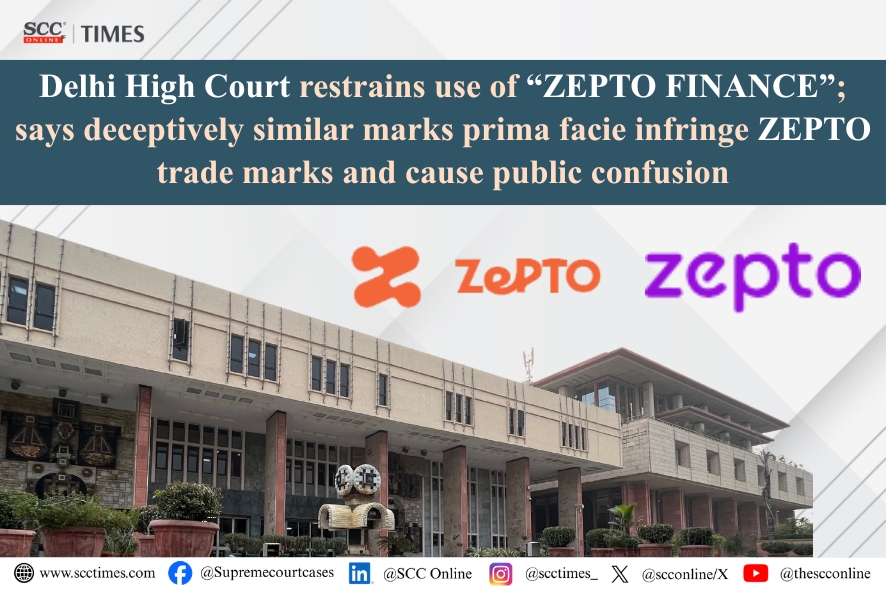
Delhi High Court Grants Interim Protection to Zepto Trademarks
Summary
- The Delhi High Court granted interim protection to 'ZEPTO' trade marks, restraining defendants from using deceptively similar marks.
- The court found that deceptively similar marks prima facie infringe ZEPTO trade marks and cause public confusion.
- This decision sets a precedent for future cases involving deceptively similar marks in India.
- Lawyers should be aware of this development and consider its implications for their clients' trademark portfolios and filing strategies in India.
Trademark Infringement in India: Delhi High Court Sets Precedent
The court's prima facie finding that deceptively similar marks infringe ZEPTO trade marks has significant implications for trademark law in India.
In a significant ruling, the Delhi High Court has granted interim protection to 'ZEPTO' trade marks, restraining defendants from using deceptively similar marks. The court's decision highlights the importance of distinctiveness in trademark law and sets a precedent for future cases involving deceptively similar marks. This development may impact lawyers' strategies for protecting their clients' trademark portfolios in India.
The court's order was passed in response to an application by the plaintiff, seeking interim relief against the defendants' use of 'ZEPTO FINANCE' and other deceptively similar marks. The plaintiff argued that the defendants' use of these marks would cause public confusion and dilute the distinctiveness of their own trade marks.
The court's prima facie finding that deceptively similar marks infringe ZEPTO trade marks has significant implications for trademark law in India.
Legal Context: Indian Trademark Law
Indian trademark law emphasizes the importance of distinctiveness and non-confusion with existing trade marks. Section 29(2) of the Trade Marks Act, 1999, provides that a mark shall be deemed to be deceptively similar if it is likely to cause confusion or deception among consumers. The court's decision in this case reflects the application of these principles in practice.
The plaintiff's success in obtaining interim protection highlights the importance of timely action in protecting trade marks from infringement. Lawyers advising clients on trademark matters should take note of this development and consider its implications for their clients' portfolios and filing strategies in India.
Why It Matters: Impact on Trademark Portfolios
The Delhi High Court's decision sets a precedent for future cases involving deceptively similar marks. Lawyers should be aware of this development and consider its implications for their clients' trademark portfolios and filing strategies in India. The court's prima facie finding that deceptively similar marks infringe ZEPTO trade marks has significant implications for trademark law in India.
This decision may lead to increased scrutiny of deceptively similar marks, making it more challenging for defendants to use such marks without risking infringement claims. As a result, lawyers should advise their clients to exercise caution when selecting trade marks and consider the potential risks of using deceptively similar marks.
Practical Implications
Lawyers should watch for this precedent on deceptively similar marks, which may impact their clients' trademark portfolios and filing strategies in India.
Source
Source: Original reporting via SCC Times
How does this affect your business?
Get an AI analysis of this article grounded in your jurisdictions, practice areas, and any policy documents you've uploaded to Wansom.
Wansom is AI and can make mistakes.