
Kenya Police Given 24 Hours to Produce Detained Activist Davis Lichuma
Abstract
The recent disappearance and subsequent discovery of Kenyan activist Davis Lichuma in critical condition, following his alleged abduction during protests, has ignited significant concern within the legal and human rights communities. The Social Justice Centres Working Group (SJCWG) issued a 24-hour ultimatum to the National Police Service and the Inspector General of Police, demanding accountability for his whereabouts and alleged torture. This incident underscores critical questions regarding the constitutional rights to liberty, security of person, and freedom from arbitrary detention and torture in Kenya. It highlights the indispensable role of the writ of *habeas corpus* as a fundamental safeguard against unlawful confinement and calls for a rigorous examination of police conduct and adherence to due process, particularly in the context of public demonstrations and the treatment of human rights defenders.
Introduction
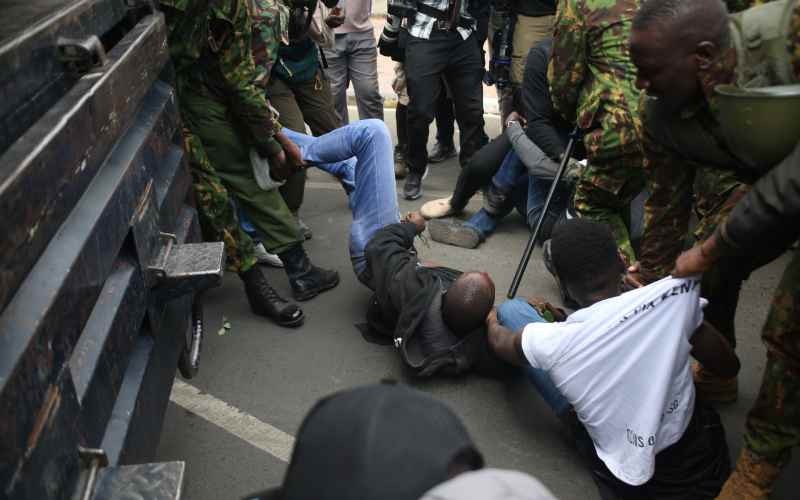
The rule of law in Kenya faces renewed scrutiny following the alarming disappearance and subsequent discovery of human rights activist Davis Lichuma in a critical state. Lichuma, a member of the Social Justice Centres Working Group (SJCWG), was reportedly abducted on June 25, 2026, during demonstrations commemorating the second anniversary of the 2024 Gen Z protests outside Parliament in Nairobi. His reappearance days later, allegedly bearing signs of severe torture and unable to speak, has triggered outrage and urgent calls for accountability from civil society organizations.
This incident is not isolated, occurring amidst a broader context of increasing repression against civil society and human rights defenders in Kenya. The SJCWG's demand for the National Police Service (NPS) and the Inspector General of Police (IGP) to account for Lichuma's detention within 24 hours, and their assertion of personal and institutional accountability for any harm, brings to the fore fundamental constitutional guarantees. This article examines the legal framework governing arrest and detention in Kenya, the constitutional rights implicated, and the critical role of legal remedies such as *habeas corpus* in safeguarding individual liberties against state overreach, particularly for legal practitioners navigating such volatile situations.
Background
Kenya's legal landscape is anchored by the Constitution of Kenya, 2010, which enshrines a robust Bill of Rights. Central to this discussion are Article 29, guaranteeing every person the right to freedom and security of the person, including the right not to be deprived of freedom arbitrarily or without just cause, and not to be subjected to torture in any manner. Article 49 outlines the rights of arrested persons, stipulating that an arrested person has the right to be informed promptly of the reason for arrest, to remain silent, to communicate with an advocate, and to be brought before a court as soon as reasonably practicable, but not later than twenty-four hours after being arrested.
The National Police Service (NPS), established under Article 243 of the Constitution, operates under the overall and independent command of the Inspector General of Police (IGP), as mandated by Article 245(2)(b) and Section 8 of the National Police Service Act, 2011. The IGP is tasked with ensuring the Service maintains internal security, prevents and detects crime, protects life and property, and enforces the law while upholding human rights and fundamental freedoms. The Criminal Procedure Code (Cap 75) further details procedures for arrest, detention, and the presentation of arrested persons before a magistrate, emphasizing that detention without warrant is subject to strict timelines for court appearance.
Analysis
The alleged abduction and subsequent discovery of Davis Lichuma in a tortured state represent a grave violation of multiple constitutional rights. Firstly, the right to freedom and security of the person under Article 29 is directly contravened by arbitrary deprivation of liberty and subjection to torture. The Constitution explicitly prohibits detention without trial, except during a state of emergency, which was not declared. Furthermore, the failure to disclose Lichuma's whereabouts to his family and legal representatives, and the delay in presenting him before a court, are clear breaches of the rights of arrested persons under Article 49.
In such circumstances, the primary legal recourse available to challenge unlawful detention is the writ of *habeas corpus*. Article 25(d) of the Constitution explicitly lists the right to an order of *habeas corpus* as a fundamental freedom that may not be limited. Article 51(2) further affirms that a person who is detained or held in custody is entitled to petition for an order of *habeas corpus*. This prerogative writ, typically sought in the High Court, compels the detaining authority to produce the detained person before the court and provide a lawful justification for their confinement. The burden of proof lies with the detaining official to demonstrate the legality of the detention.
The actions alleged in Lichuma's case, particularly the reported torture, also raise serious questions about the accountability of police officers and their commanders. The National Police Service Act, 2011, and the Constitution itself, mandate adherence to human rights standards. Commanders and senior officers can be held criminally liable for unlawful actions by officers under their command, and the use of excessive force or torture is strictly prohibited. The call by the SJCWG for the Inspector General to be held personally and institutionally accountable highlights the principle of command responsibility within the NPS.
Moreover, the pattern of alleged enforced disappearances and arbitrary arrests of human rights defenders during protests, as documented by various human rights organizations, points to a systemic challenge in upholding constitutional safeguards. The failure to trace individuals in gazetted police stations, as initially happened with Lichuma and other activists, undermines the transparency and accountability mechanisms intended to prevent unlawful detention. This necessitates robust intervention from oversight bodies such as the Independent Policing Oversight Authority (IPOA) and the Kenya National Commission on Human Rights (KNCHR), as well as the active engagement of the Law Society of Kenya (LSK) and the Office of the Director of Public Prosecutions (ODPP).
Conclusion
The case of Davis Lichuma serves as a stark reminder of the persistent challenges in upholding human rights and due process within Kenya's security apparatus. For legal practitioners, this incident underscores the critical importance of vigilance and prompt action in cases of alleged arbitrary detention and enforced disappearances. Attorneys must be prepared to swiftly invoke constitutional remedies, particularly the writ of *habeas corpus*, to secure the liberty and safety of their clients. The constitutional provisions, including Articles 29, 49, and 51, provide a strong legal basis for challenging unlawful state actions, and the judiciary has a vital role in enforcing these protections.
Practitioners should closely monitor ongoing investigations into Lichuma's alleged abduction and torture, advocating for transparent and independent inquiries. The demand for accountability, extending to the Inspector General of Police, sets a precedent for holding senior officials responsible for the conduct of their subordinates. The legal community must continue to collaborate with human rights organizations to document abuses, provide legal aid, and push for comprehensive police reforms that ensure strict adherence to constitutional principles and international human rights standards. The integrity of Kenya's justice system hinges on its ability to protect all individuals, especially those who bravely advocate for social justice, from arbitrary state action.
Citations
- 1.Constitution of Kenya, 2010, Article 25
- 2.Constitution of Kenya, 2010, Article 29
- 3.Constitution of Kenya, 2010, Article 49
- 4.Constitution of Kenya, 2010, Article 51(2)
- 5.Constitution of Kenya, 2010, Article 243
- 6.Constitution of Kenya, 2010, Article 245(2)(b)
- 7.National Police Service Act, 2011, Section 8
- 8.Criminal Procedure Code (Cap 75) of the Laws of Kenya
- 9.Front Line Defenders, 'Kenya: Arbitrary detention of human rights defenders and violent attack on women human rights defenders amid severe repression of civil society' (June 27, 2025)
- 10.Grokipedia, 'Inspector-general of police (Kenya)'
- 11.Amnesty International, 'Human rights in Kenya' (2025)
- 12.Rights & Security International, 'Statement on unlawful detention of activists in Kenya' (June 20, 2024)
- 13.allAfrica.com, 'Kenya: Rights Groups Warn of Resurgence of Abductions As Missing Activist Davis Lichuma Found Alive' (June 29, 2026)
- 14.The Eastleigh Voice, 'Missing activist Davis Lichuma found alive after disappearance during Gen Z protests commemoration, rights group says he was brutally tortured, abandoned' (June 29, 2026)
- 15.JamiiForums Tanzania, 'Davis Lichuma Found Alive After Alleged Abduction and Torture' (June 29, 2026)
- 16.Standard Media, 'Where is Lichuma? Rights group gives police 24 hours to produce detained activist' (June 27, 2026)
- 17.SJCWG – Social Justice Centers Working Group, 'Our Focus Areas' (June 27, 2026)
- 18.People Daily, 'Activists and survivors demand justice beyond compensation for victims of police brutality' (June 26, 2026)
- 19.APCOF, 'Common Standards for Policing in Eastern Africa: Kenya'
- 20.ICJ Kenya, 'Rights of Arrested Persons: Examining Police Conduct' (June 18, 2025)
- 21.The Eastleigh Voice, 'Activist Davis Lichuma found in critical condition at KNH after three-day disappearance' (June 29, 2026)
- 22.SheriaPlex LPMS, 'Article 25 of The Constitution of Kenya: Fundamental Rights and freedoms that may not be limited.'
- 23.SheriaPlex LPMS, 'Article 29 of The Constitution of Kenya: Freedom and security of the person.'
- 24.Kenya Law Reform Commission (KLRC), '29. Freedom and security of the person'
- 25.SheriaPlex LPMS, 'Section 36 of Criminal Procedure Code CAP 75: Detention of persons arrested without warrant'
- 26.SheriaPlex LPMS, 'Criminal Procedure Code Cap 75 in Kenya'
- 27.Wikipedia, 'Inspector-general of police (Kenya)'
- 28.UNHCR, 'The Constitution of Kenya' (May 16, 2025)
- 29.Scribd, 'Habeas Corpus Ruling in Kenya Case' (April 10, 2025)
- 30.Academia.edu, 'Kenya: Habeas Corpus'
- 31.Supreme Court of Kenya, 'Ooko v. Republic HCCC No. 1159 of 1966'
- 32.Katiba Institute, 'Public Safety Advisory for the National Police Service During the Exercise of the Right to Assembly and Public Protest'
- 33.Wikipedia, 'Habeas corpus'
- 34.KenyaMOJA.com, 'The Bold Standard : Habeas corpus' (June 30, 2026)
- 35.Legal Provisions on the Office of the Inspector General (December 16, 2014)
How does this affect your business?
Get an AI analysis of this article grounded in your jurisdictions, practice areas, and any policy documents you've uploaded to Wansom.