
Kenya High Court Strikes Out Vocal Africa Petition Against Wetang'ula Kingi
Summary
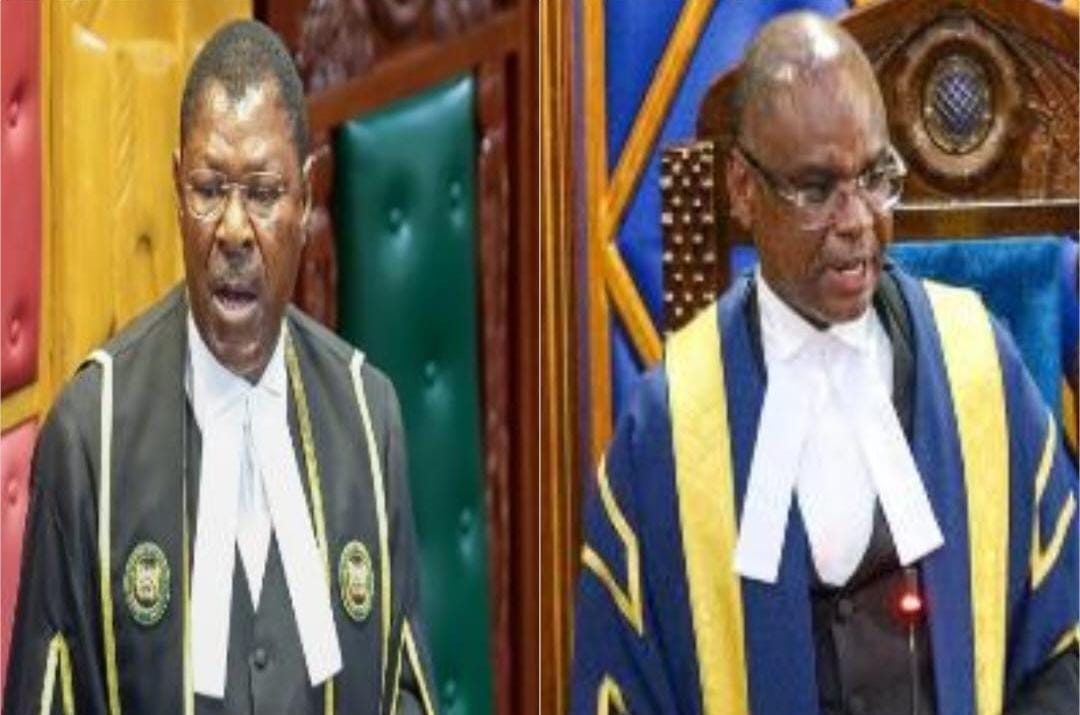
- The High Court struck out a petition seeking to bar National Assembly Speaker Moses Wetang'ula and Senate Speaker Amason Kingi from participating in partisan political campaigns.
- The court ruled that it lacked jurisdiction due to Vocal Africa's failure to exhaust statutory mechanisms, specifically lodging a formal complaint with the EACC or IEBC.
- This decision sets a precedent for the exhaustion of statutory mechanisms before seeking court intervention, potentially limiting lawyers' ability to block officials from participating in partisan campaigns.
What Happened
"On the basis of the doctrine of exhaustion, this court lacks jurisdiction to deal with the matters raised in the petition dated 6th July 2026 with regard enforcement of Chapter 6 of the Constitution and the Leadership and Integrity Act as such jurisdiction lies with the Ethics and Anti-Corruption Commission,"
The High Court has struck out a petition filed by Vocal Africa seeking to bar National Assembly Speaker Moses Wetang'ula and Senate Speaker Amason Kingi from participating in partisan political campaigns. The court, led by Justice David Mburu, ruled that it lacked jurisdiction to hear the matter due to the petitioner's failure to exhaust statutory mechanisms before moving to the High Court. Specifically, Vocal Africa did not lodge a formal complaint with the Ethics and Anti-Corruption Commission (EACC) or the Independent Electoral and Boundaries Commission (IEBC), which are mandated to handle leadership, integrity, and election-related disputes. This decision sets a precedent for the exhaustion of statutory mechanisms before seeking court intervention, potentially limiting the ability of lawyers advising clients on compliance with the Leadership and Integrity Act to block officials from participating in partisan campaigns.
Relevant Legal/Regulatory Context
The Leadership and Integrity Act provides a framework for resolving disputes related to leadership and integrity. Under this law, statutory mechanisms such as lodging a formal complaint with the EACC or IEBC are established to handle such matters before seeking court intervention. The High Court's ruling reinforces the importance of exhausting these mechanisms before moving to the courts. Furthermore, the Ethics and Anti-Corruption Commission has jurisdiction over leadership and integrity-related disputes, which includes matters related to participation in partisan political campaigns. This decision highlights the need for parties to follow the prescribed procedures under the Leadership and Integrity Act when seeking court intervention.
Why It Matters
The High Court's ruling has significant implications for lawyers advising clients on compliance with the Leadership and Integrity Act. The precedent set by this decision may limit their ability to block officials from participating in partisan campaigns, potentially undermining efforts to ensure accountability and integrity in public office. This development underscores the importance of understanding the statutory mechanisms established under the Leadership and Integrity Act and the need to exhaust these procedures before seeking court intervention.
Practical Implications
Lawyers advising clients on compliance with the Leadership and Integrity Act should note that the High Court's ruling sets a precedent for the exhaustion of statutory mechanisms before seeking court intervention, potentially limiting their ability to block officials from participating in partisan campaigns.
Source
Source: Original reporting via [Source]
How does this affect your business?
Get an AI analysis of this article grounded in your jurisdictions, practice areas, and any policy documents you've uploaded to Wansom.