
KAMP protests license suspension by copyright board
Abstract
The Kenya Copyright Board (KECOBO) has suspended the operating license of Kamp Copyright & Related Rights Ltd (KAMP) for 90 days, effective July 1, 2026. This administrative action follows a comprehensive regulatory review that revealed persistent breaches of the Copyright Act and its accompanying regulations, including financial mismanagement, governance failures, and non-compliance with regulatory directives. KECOBO cited the diversion of KSh 5.5 million in distributable royalties to non-core activities, failure to adhere to the mandatory 70:30 royalty distribution principle, and issues with corporate governance as key reasons. KAMP has protested the suspension, deeming it unfair and ill-timed, denying embezzlement allegations, and claiming a lack of fair hearing, while affirming its commitment to transparency and dialogue.
Introduction
The landscape of copyright collective management in Kenya has been significantly impacted by the recent decision of the Kenya Copyright Board (KECOBO) to suspend the operating license of Kamp Copyright & Related Rights Ltd (KAMP). This 90-day suspension, which took effect on July 1, 2026, has ignited a fresh dispute within the creative industry, raising critical questions about regulatory oversight, financial accountability, and the rights of artists and audiovisual producers. KAMP, a prominent Collective Management Organisation (CMO) responsible for collecting and distributing royalties, now faces a period of enforced inactivity, with its mandate temporarily transferred to another entity.
KECOBO's action stems from a detailed regulatory review that allegedly uncovered serious and persistent breaches of statutory obligations and licensing conditions. These purported infractions range from financial impropriety, such as the diversion of royalty funds, to systemic governance deficiencies and a lack of transparency in royalty distribution. The suspension underscores KECOBO's commitment to enforcing compliance within the collective management sector, a move that, while intended to safeguard rights holders' interests, has been met with strong opposition from KAMP, which contests the allegations and the process leading to the suspension.
This article will delve into the legal and regulatory framework governing CMOs in Kenya, examine the specific grounds cited by KECOBO for KAMP's suspension, and explore KAMP's rebuttal. It will further consider the implications of this development for practitioners, rights holders, and the broader creative economy in Kenya, highlighting the ongoing challenges in ensuring transparent and efficient royalty administration.
Background
The legal framework for copyright and related rights in Kenya is primarily enshrined in the Copyright Act, 2001 (Revised 2022), which establishes the Kenya Copyright Board (KECOBO) as the principal body responsible for the overall administration and enforcement of copyright and related rights. KECOBO's mandate includes public awareness, enforcement, copyright registration, and crucially, the licensing and supervision of Collective Management Organisations (CMOs). Section 46 of the Copyright Act, read with the Copyright (Collective Management) Regulations, 2007, mandates that no entity can operate as a CMO without a valid license from KECOBO.
CMOs in Kenya are typically structured as companies limited by guarantee, tasked with negotiating, collecting, and distributing royalties on behalf of their members, who are copyright owners such as artists, producers, and performers. KECOBO exercises a supervisory role over these organisations, including the power to inspect their books of accounts and records, and to take action in cases of non-compliance. Key regulatory principles include the transparent and efficient administration of royalties, adherence to approved tariff scales, and compliance with corporate governance standards. The regulations also stipulate a mandatory 70:30 royalty distribution principle, ensuring that a significant portion of collected royalties reaches the rights holders.
Historically, the collective management sector in Kenya has been marked by disputes and regulatory interventions, often revolving around licensing, royalty distribution, and governance. There have been instances where KECOBO has sought to streamline the sector, including attempts to license a single CMO, which have faced legal challenges from various stakeholders, including KAMP. These ongoing tensions highlight the complexities of balancing regulatory oversight with the operational autonomy of CMOs and the diverse interests of rights holders.
Analysis
KECOBO's decision to suspend KAMP's license for 90 days is predicated on a litany of alleged infractions identified during a comprehensive regulatory review. Central to KECOBO's findings are claims of financial mismanagement, specifically the diversion of KSh 5.51 million in distributable royalties to non-core activities, which directly contravenes the statutory obligations of a licensed CMO. Furthermore, KECOBO asserts that KAMP failed to comply with the mandatory 70:30 royalty distribution principle, leading to the unjustifiable retention and expenditure of funds that should have been disbursed to rights holders.
Beyond financial irregularities, KECOBO highlighted significant governance failures, including directors remaining in office beyond their allowed terms and the absence of timely elections, indicating a breach of corporate governance requirements. The regulator also accused KAMP of lacking transparency in its royalty distribution system, citing the absence of verifiable usage data and incomplete records. Other alleged breaches include issuing licenses below gazetted tariffs, which led to under-collection of royalties and created unfair competition, and excessive litigation that depleted funds meant for artists. Crucially, KECOBO noted KAMP's failure to comply with obligations arising from a consent agreement signed in June 2025 with the Performing and Audio-Visual Rights Society of Kenya (PAVRISK), which aimed to harmonise licensing operations.
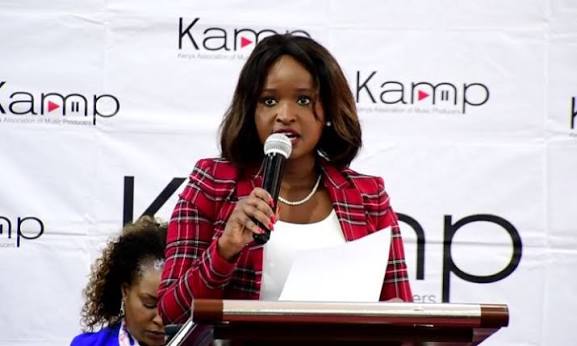
KAMP, in its defence, has vehemently rejected the allegations, particularly those concerning embezzlement, stating that it was never asked to account for any allegedly misappropriated funds and only became aware of such claims through KECOBO's public notice. KAMP argues that the suspension is unfair, ill-timed, and undermines ongoing efforts to foster collaboration within the sector. They contend that their license was suspended without being granted a fair hearing, despite their prompt responses to KECOBO's earlier concerns and the submission of their royalty distribution schedule. KAMP also pointed to its recent Service Level Agreement with the eCitizen platform for royalty collection as evidence of its commitment to transparency and accountability. During the suspension period, KECOBO has directed PAVRISK to collect royalties under KAMP's mandate, with all collected funds to be held in a separate trust account pending further notice.
The dispute highlights the inherent tension between regulatory oversight and the operational realities of CMOs. While KECOBO's mandate under the Copyright Act and the Copyright (Collective Management) Regulations empowers it to ensure accountability and transparency, KAMP's arguments raise concerns about due process and fair administrative action. The legal battle may hinge on whether KECOBO followed the prescribed procedures for suspension, including affording KAMP a reasonable opportunity to be heard, and the sufficiency of the evidence supporting the alleged breaches. The outcome will undoubtedly set a precedent for the enforcement of regulatory compliance within Kenya's creative industries.
Conclusion
The 90-day suspension of KAMP's operating license by KECOBO marks a significant moment for copyright collective management in Kenya, underscoring the regulator's resolve to enforce accountability and transparency within the sector. For legal practitioners, this development highlights the critical importance of robust corporate governance, stringent financial management, and strict adherence to statutory and regulatory obligations for all CMOs. The specific breaches cited by KECOBO, particularly concerning royalty distribution and non-core expenditures, serve as a stark reminder of the fiduciary duties owed by CMOs to their rights holders.
Practitioners advising CMOs should conduct thorough internal compliance audits, review their governance structures, and ensure that royalty distribution mechanisms are transparent, verifiable, and strictly adhere to the 70:30 principle. Furthermore, the emphasis on compliance with consent agreements and lawful directives from KECOBO necessitates proactive engagement with the regulator to avoid similar punitive actions. The ongoing legal challenge by KAMP, particularly regarding the fairness of the process, will be crucial to watch, as it may clarify the procedural requirements for administrative actions against CMOs. This episode reinforces the need for a well-regulated and transparent collective management system to foster a thriving and equitable creative economy in Kenya.
Citations
- 1.Copyright Act, 2001 (Revised 2022)
- 2.Copyright (Collective Management) Regulations, 2007