
ICC probes police brutality
Abstract
The International Criminal Court (ICC) has initiated a preliminary examination into allegations of police brutality in Malawi, a development that underscores the growing international scrutiny of law enforcement conduct in the country. This probe, triggered by reports of severe human rights abuses, including torture and arbitrary detention, raises critical questions about the effectiveness of Malawi's domestic justice mechanisms and its adherence to international human rights obligations. For legal professionals, this signals a potential shift towards greater accountability for state actors and highlights the complex interplay between national sovereignty and international criminal jurisdiction, particularly under the Rome Statute's principle of complementarity.
Introduction
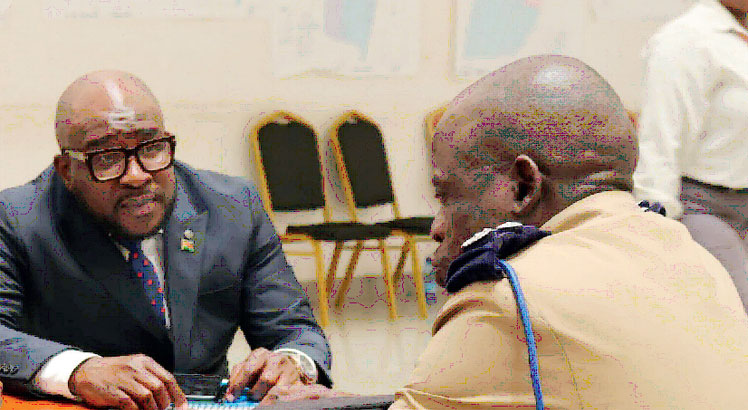
Reports indicating that the International Criminal Court (ICC) is probing allegations of police brutality in Malawi mark a significant moment for human rights and accountability within the Southern African nation. The excerpt detailing the severe injuries sustained by Patrick Mwale, allegedly during police custody, serves as a stark reminder of the persistent challenges in ensuring law enforcement adheres to constitutional and international human rights standards. This development is not merely a domestic concern but elevates the issue to the international stage, potentially leading to formal investigations and prosecutions by the Hague-based court.
The ICC's involvement signals a critical juncture, as it implies concerns regarding Malawi's capacity or willingness to genuinely address such grave abuses through its own legal system. As a State Party to the Rome Statute, Malawi has a primary responsibility to investigate and prosecute international crimes. The article will explore the legal framework underpinning the ICC's jurisdiction, the principle of complementarity, and the implications of this preliminary examination for Malawi's justice system and legal practitioners.
Background
The International Criminal Court (ICC) operates under the Rome Statute, a foundational treaty that grants it jurisdiction over the most serious crimes of international concern: genocide, crimes against humanity, war crimes, and the crime of aggression. Central to the ICC's mandate is the principle of complementarity, enshrined in Articles 17 and 53 of the Rome Statute. This principle dictates that the ICC is a court of last resort, exercising jurisdiction only when national legal systems are genuinely unwilling or unable to investigate or prosecute these crimes.
Malawi ratified the Rome Statute on September 19, 2009, thereby accepting the ICC's jurisdiction over crimes committed on its territory or by its nationals from December 1, 2009, onwards. Domestically, Malawi's 1994 Constitution provides robust protections for fundamental human rights, including the right to life (Section 16) and freedom from torture or cruel, inhuman, or degrading treatment or punishment (Section 19(3)). The Malawi Police Service Act (Chapter 13:01) outlines the organization, powers, and duties of the police, and importantly, provides for the establishment of an Independent Complaints Commission (ICC, distinct from the International Criminal Court) to investigate public complaints against police officers. Despite these domestic provisions, reports from human rights organizations and the Malawi Human Rights Commission (MHRC) have consistently highlighted issues of police brutality, excessive force, torture to extract confessions, and a pervasive problem of impunity within the security forces.
Analysis
The ICC's preliminary examination will assess whether the alleged police brutality in Malawi meets the stringent criteria for crimes against humanity under Article 7 of the Rome Statute. For acts like torture, severe deprivation of physical liberty, or other inhumane acts to constitute crimes against humanity, they must be committed as part of a widespread or systematic attack directed against any civilian population, with knowledge of the attack. The sheer scale and reported frequency of police abuses in Malawi, as documented by various human rights bodies, could potentially satisfy the 'widespread or systematic' element, suggesting a pattern rather than isolated incidents.
The principle of complementarity will be a central focus of the ICC Prosecutor's assessment. The ICC will only proceed if it determines that Malawi's national authorities are unwilling or unable to genuinely carry out investigations or prosecutions. While Malawi has an Independent Complaints Commission (ICC) established under the Police Act to address police misconduct, its effectiveness has been questioned, with reports of delayed, abandoned, or inconclusive investigations contributing to a culture of impunity. This perceived inability or unwillingness of the domestic system to hold perpetrators accountable is precisely what triggers the International Criminal Court's secondary jurisdiction.
Comparative analysis with other situations where the ICC has initiated preliminary examinations concerning state-sponsored violence or police brutality, such as the #EndSARS protests in Nigeria or the 'war on drugs' in the Philippines, provides insight into the Office of the Prosecutor's approach. In these instances, the ICC scrutinizes whether domestic investigations are merely 'sham' proceedings designed to shield individuals from responsibility. The Malawian authorities will need to demonstrate tangible, concrete, and progressive investigative steps that genuinely mirror the scope of the ICC's concerns to potentially render a case inadmissible before the international court.
Challenges for the ICC in this preliminary phase include evidence collection, especially given the potential for state resistance or lack of cooperation, and navigating the political sensitivities inherent in scrutinizing a sovereign nation's law enforcement. However, the ICC's mandate is to ensure justice for victims of the gravest crimes, and a preliminary examination serves as a crucial mechanism to encourage states to fulfill their primary responsibility to prosecute such crimes domestically.
Conclusion
The ICC's preliminary examination into police brutality in Malawi represents a significant step towards potentially ensuring accountability for severe human rights violations. For Malawian legal practitioners, this development carries profound implications. It necessitates a heightened awareness of international criminal law, particularly the Rome Statute, and its interplay with domestic legal frameworks. Attorneys may find themselves advising victims on avenues for international redress, engaging with international human rights mechanisms, or participating in domestic efforts to strengthen accountability within the Malawi Police Service.
Moving forward, all eyes will be on the ICC's Office of the Prosecutor as it assesses the gravity and admissibility criteria. Should the preliminary examination lead to a formal investigation, it would underscore the international community's commitment to addressing impunity for police brutality, even in the face of domestic challenges. This process serves as a powerful impetus for Malawi to reinforce its commitment to human rights, strengthen its internal oversight mechanisms, and ensure that its justice system is both willing and able to genuinely investigate and prosecute those responsible for abuses, thereby upholding the rule of law and protecting the fundamental dignity of its citizens.
Citations
- 1.Rome Statute of the International Criminal Court, Article 7
- 2.Rome Statute of the International Criminal Court, Article 17
- 3.Rome Statute of the International Criminal Court, Article 53
- 4.Constitution of Malawi, 1994, Section 16
- 5.Constitution of Malawi, 1994, Section 19(3)
- 6.Malawi Police Service Act (Chapter 13:01)
- 7.2022 Country Reports on Human Rights Practices: Malawi - State Department
- 8.2020 Country Reports on Human Rights Practices: Malawi - State Department
- 9.2021 Country Report on Human Rights Practices: Malawi - ecoi.net
- 10.ICC responds to letter over Malawi post-election violence - Nyasa Times
- 11.ICC Demands Criminal Probe Into June 26 CfCE Demonstration Fracas - Malawi Freedom Network
- 12.ICC begins preliminary examination into Nigeria #EndSARS protests
- 13.Preliminary examination - ongoing - Coalition for the International Criminal Court