
Punjab & Haryana HC Rejects IBC Moratorium as Shield from Cheque Dishonour Liability
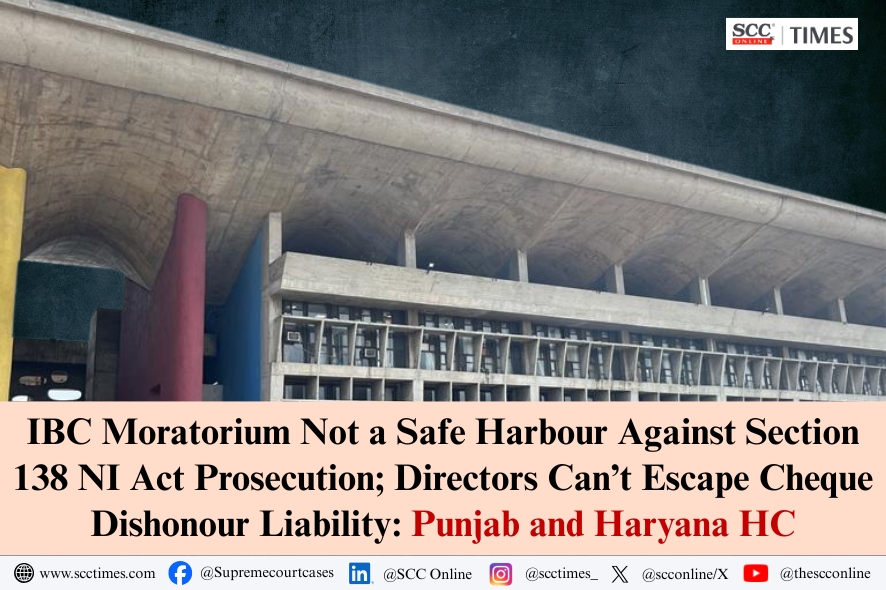
Summary
- The Punjab and Haryana High Court has ruled that the IBC moratorium does not provide a safe harbour against criminal liability for cheque dishonour.
- Directors of Indian companies must ensure compliance with Section 138 NI Act, even if the company is undergoing insolvency proceedings.
- The court's decision highlights the importance of prioritizing responsibilities under the law and avoiding prosecution.
Cheque Dishonour Liability Under IBC
The post IBC Moratorium Not a Safe Harbour Against Section 138 NI Act Prosecution; Directors Can’t Escape Cheque Dishonour Liability: Punjab and Haryana HC
A recent ruling by the Punjab and Haryana High Court has clarified that the Insolvency and Bankruptcy Code (IBC) moratorium does not provide a safe harbour for directors of Indian companies against criminal liability for cheque dishonour. The court's decision is significant as it underscores the importance of compliance with Section 138 of the Negotiable Instruments Act, which deals with cheque dishonour cases.
The IBC moratorium was introduced to protect the assets of the company from creditors during the insolvency resolution process. However, the Punjab and Haryana High Court has made it clear that this protection does not extend to criminal liability for cheque dishonour. The court's ruling is a reminder that directors of Indian companies must ensure compliance with Section 138 NI Act even if the company is undergoing insolvency proceedings.
Section 138 NI Act Prosecution
The Punjab and Haryana High Court's decision has implications for directors of Indian companies who may have been under the impression that the IBC moratorium would shield them from criminal liability for cheque dishonour. The court's ruling is a wake-up call for these individuals, who must now ensure that they comply with Section 138 NI Act to avoid prosecution. The court's decision is based on the clear language of the law, which states that the IBC moratorium does not protect an accused from criminal accountability arising out of dishonour of cheques.
The Punjab and Haryana High Court's ruling has sent a strong message to directors of Indian companies: compliance with Section 138 NI Act is essential, even if the company is undergoing insolvency proceedings. The court's decision is a reminder that directors must prioritize their responsibilities under the law and ensure that they are not putting themselves at risk of prosecution.
Why It Matters
The Punjab and Haryana High Court's ruling has significant implications for Indian company law, particularly with regard to cheque dishonour liability. The court's decision highlights the importance of compliance with Section 138 NI Act, even if the company is undergoing insolvency proceedings. Directors of Indian companies must now be aware that the IBC moratorium does not provide a safe harbour against criminal liability for cheque dishonour.
The court's ruling has sent a strong message to directors of Indian companies: they must prioritize their responsibilities under the law and ensure that they are not putting themselves at risk of prosecution. The decision is a reminder that compliance with Section 138 NI Act is essential, and directors who fail to comply may face serious consequences.
Practical Implications
Directors of Indian companies should be aware that the Insolvency and Bankruptcy Code (IBC) moratorium does not protect them from criminal liability for cheque dishonour, and must ensure compliance with Section 138 of the Negotiable Instruments Act.
Source
Source: Original reporting via SCC Times
How does this affect your business?
Get an AI analysis of this article grounded in your jurisdictions, practice areas, and any policy documents you've uploaded to Wansom.