
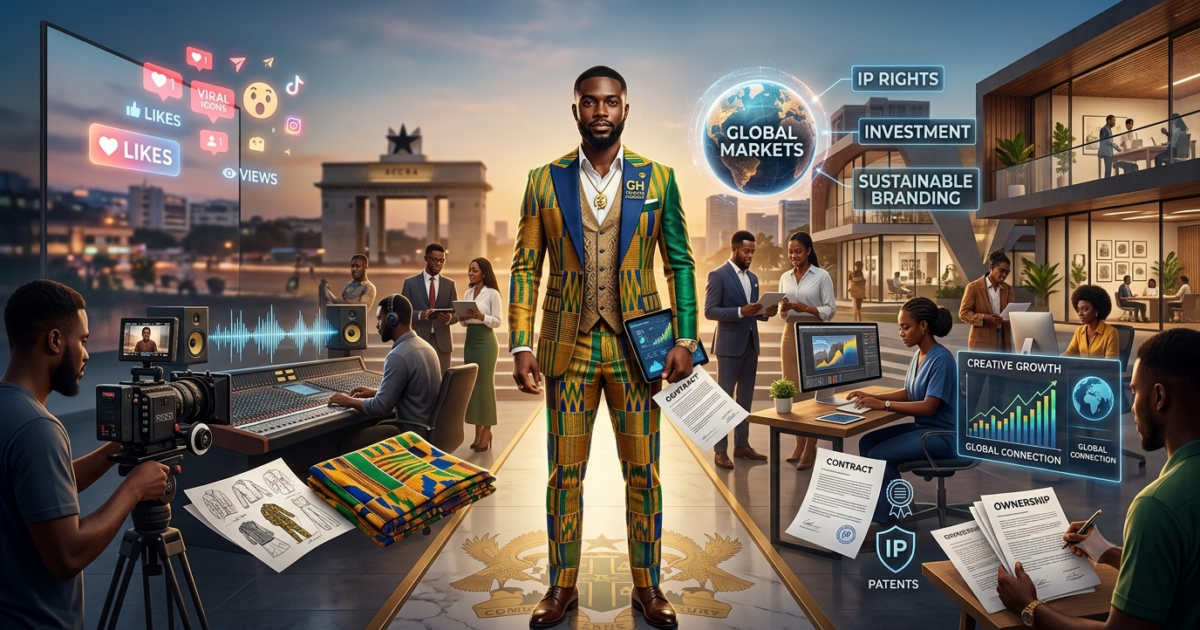
Accra High Court: Building Wealth for Ghana's Creative Industry
Summary
- Ghana's creative industry has gained global recognition, but attention alone does not guarantee financial security for creatives.
- Ownership of intellectual property remains uncertain in the industry, with creators often losing control over revenue and long-term value.
- To succeed, Ghanaian creatives must think like owners, building business ecosystems around their work through licensing, partnerships, and ownership structures.
- The challenge is no longer proving creativity; it's ensuring that creators turn their ideas into sustainable businesses.
What Happened
Applause is temporary. Ownership creates lasting value.
Ghana's creative industry has been experiencing a surge in visibility, with music, films, fashion, and digital creators gaining global recognition. However, this attention alone does not translate to financial security for the creatives themselves. A creator can become famous while remaining financially vulnerable, and ownership of intellectual property remains uncertain. The challenge is no longer proving that Ghana's creatives are talented, but ensuring they capture the economic value their talent produces.
The digital economy has transformed creativity, making it possible for anyone to reach audiences worldwide with a smartphone and an idea. However, this has also created the illusion that attention automatically equals success. A viral moment can fade quickly, and popularity can grow while ownership remains uncertain.
Relevant Legal/Regulatory Context
In Ghana, creative works are considered intellectual property, which is more than just entertainment or a story. A song, film, or fashion design has value as a catalogue of assets that can generate long-term revenue. However, the current business mindset in Ghana's creative industry focuses on artistic ability rather than strategic thinking and entrepreneurship. Global creative leaders understand the importance of building ecosystems around their work through licensing, partnerships, investments, merchandise, and ownership structures.
Ghanaian creatives must begin asking deeper questions about ownership, control over revenue, and long-term income generation. They should think like owners, not just artists, to capture economic value from their talent.
Why It Matters
The success of Ghana's creative industry is not solely dependent on the number of people who view or engage with a piece of content. Rather, it depends on who benefits from that attention and whether creators can capture the economic value their talent produces. By building a business mindset and focusing on ownership, creatives in Ghana can create lasting wealth and financial security.
The challenge is no longer proving creativity; it's ensuring that creators turn their ideas into sustainable businesses. Global creative leaders have shown that this approach is possible, and Ghanaian creatives must follow suit to build a thriving creative economy.
Practical Implications
Ghanaian creatives should consider building a brand and managing intellectual property to capture economic value from their talent, rather than solely focusing on artistic ability.
Source
How does this affect your business?
Get an AI analysis of this article grounded in your jurisdictions, practice areas, and any policy documents you've uploaded to Wansom.
Wansom is AI and can make mistakes.