
Dr Samia instructs TPBA to observe patriotism in safeguarding Tanzania’s sovereignty
Abstract
President Samia Suluhu Hassan has issued a significant directive to the Tanzania Public Bar Association (TPBA), urging its members to uphold patriotism and vigilance in safeguarding Tanzania's national sovereignty. The President emphasized the critical role of government lawyers in protecting the country's independence, natural resources, and constitutional order against external interests. This directive underscores the government's commitment to strengthening legal institutions and professional ethics within the public service, particularly in navigating complex international legal landscapes and ensuring that national interests are paramount in all legal and policy considerations. The call highlights the evolving responsibilities of public legal professionals in a globalized environment, requiring proactive engagement and sound legal advice to prevent potential compromises to national integrity.
Introduction
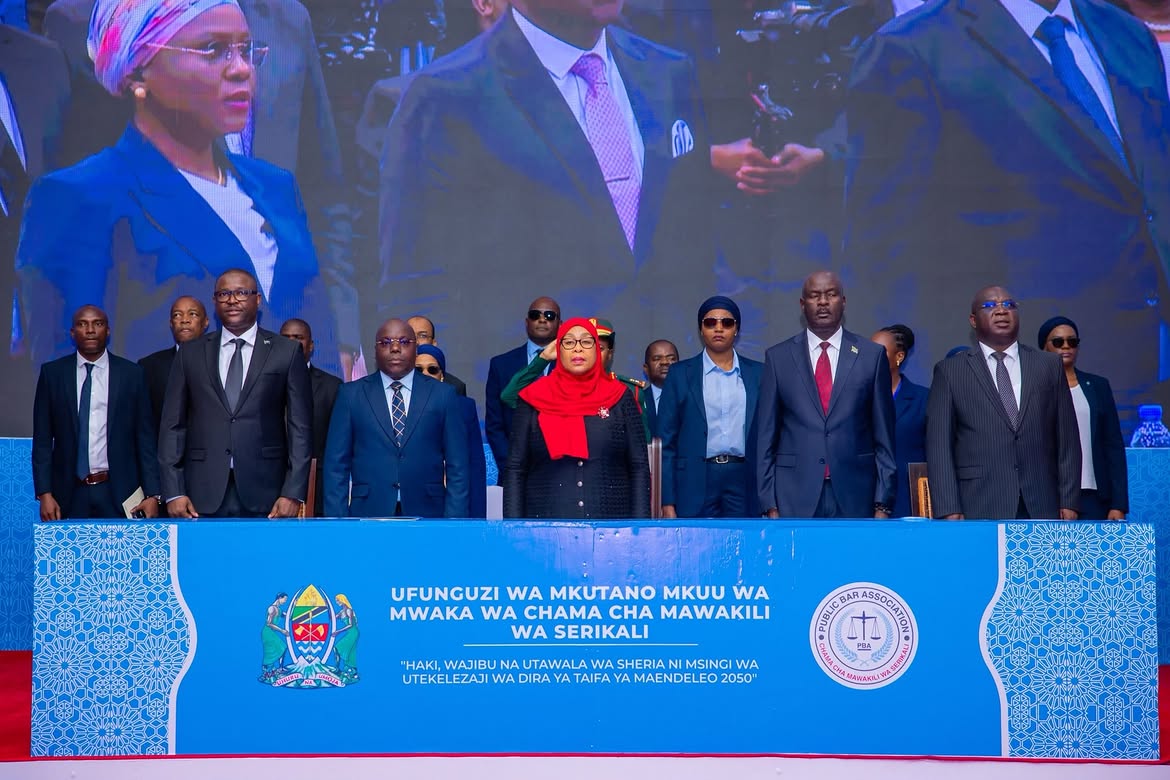
In a pivotal address, President Samia Suluhu Hassan recently directed the Tanzania Public Bar Association (TPBA) to intensify its commitment to patriotism and vigilance in protecting Tanzania's sovereignty. Speaking at the Annual General Meeting of the TPBA, President Hassan underscored the imperative for government lawyers to leverage their legal expertise to shield the nation's independence, natural resources, and constitutional order from potentially undermining external influences. This presidential directive signals a heightened focus on national security and economic self-determination, placing public legal professionals at the forefront of Tanzania's defense against global pressures.
The President's remarks are particularly pertinent in an era marked by complex international relations and cross-border economic activities, where legal frameworks often serve as battlegrounds for national interests. The directive challenges the TPBA to not only react to legal issues but to proactively identify and mitigate risks that could compromise the nation's integrity. For legal practitioners, this translates into a reinforced mandate to interpret international legal developments through a national lens, ensuring that all engagements align with Tanzania's strategic objectives and the welfare of its citizens.
This article will delve into the legal and constitutional underpinnings of President Samia's directive, examining the statutory framework governing the TPBA and the broader legal profession in Tanzania. It will analyze the implications of this call for patriotism and vigilance on the practice of public law, particularly concerning the safeguarding of natural resources and constitutional order. Ultimately, the article aims to provide practitioners with insights into their evolving responsibilities in upholding national sovereignty in the face of global challenges.
Background
The legal profession in Tanzania Mainland is primarily governed by two key statutes: the Tanganyika Law Society Act, Cap 307 R.E. 2002, which establishes the Tanganyika Law Society (TLS) as the statutory bar association for advocates in private practice, and the Advocates Act, Cap 341 R.E. 2019, which regulates the admission, conduct, and discipline of advocates. While the TLS represents the broader legal profession, the Tanzania Public Bar Association (TPBA) is a distinct body, specifically established under Section 16A(4) of The Office of the Attorney General (Discharge of Duties) Act, Cap 268, and officially gazetted in 2019 through Government Notice No. 589. Its mandate is to serve as a professional association for lawyers in public service, fostering discussions on legal issues to enhance the efficiency of the legal system, with its membership comprising State Attorneys registered in the Office of the Attorney General Management Information System.
Tanzania's commitment to national sovereignty, the protection of its natural resources, and the maintenance of constitutional order is deeply entrenched in its foundational legal documents. The Constitution of the United Republic of Tanzania, 1977, explicitly states in Article 27(1) the duty of every person to protect the natural resources of the United Republic. Furthermore, Article 8(1)(c) reinforces the principle that the government is accountable to the people, emphasizing internal determination of the nation's political, economic, and social direction. This constitutional framework forms the bedrock upon which the President's directive is built, providing a legal and ethical imperative for public lawyers to act as custodians of national interests.
In recent years, Tanzania has proactively legislated to reaffirm its permanent sovereignty over natural resources (PSNR), notably through acts like the Natural Wealth and Resources (Permanent Sovereignty) Act. These legislative reforms aim to ensure that the exploitation of natural resources primarily benefits Tanzanian citizens, requiring parliamentary approval for major agreements and mandating domestic dispute resolution mechanisms. This context highlights a deliberate national strategy to assert greater control over strategic sectors and mitigate external influences, making the President's call to the TPBA a reinforcement of existing legal and policy directions.
Analysis
President Samia's directive to the TPBA to observe patriotism in safeguarding Tanzania’s sovereignty is a significant articulation of the expected role of government lawyers. The President explicitly tasked these legal professionals with remaining vigilant against external interests that could undermine the nation's independence, natural resources, and constitutional order. This aligns with the TPBA's stated vision to be an effective, professional, and reliable institution in providing quality legal services to the Government of the United Republic of Tanzania, guided by principles of professionalism, integrity, teamwork, confidentiality, creativity, and innovation.
The directive emphasizes the proactive role government lawyers must play in monitoring international legal developments, interpreting them within the Tanzanian context, and providing timely legal guidance to protect national sovereignty. This goes beyond mere legal compliance, urging a strategic and nationalistic approach to legal advice. The President highlighted that government lawyers are among the country's foremost defenders, entrusted with ensuring that laws, policies, and international commitments do not compromise Tanzania's independence, citizens' rights, or national resources.
This emphasis on patriotism and national interest finds resonance in Tanzania's broader legal reforms, particularly those concerning natural resources. The Natural Wealth and Resources (Permanent Sovereignty) Act, for instance, makes it unlawful to enter into natural resource agreements without parliamentary approval and requires that such activities secure the interests of the Tanzanian people. Furthermore, disputes related to resource extraction are now mandated to be adjudicated by tribunals or organs in Tanzania and in accordance with Tanzanian law, a significant departure from previous practices that often favored international arbitration. The President's call reinforces the spirit of these legislative enactments, urging legal professionals to be the frontline implementers of this nationalistic legal posture.
The directive also implicitly addresses the ethical obligations of public lawyers. While the Tanganyika Law Society (TLS) has its own Advocates (Professional Conduct and Etiquette) Regulations and Tanganyika Law Society (Ethics) Regulations, the President's message to the TPBA underscores a specific dimension of public service ethics: loyalty to the nation and its foundational principles. The call for professionalism and integrity, coupled with patriotism, suggests that legal advice from government lawyers must not only be technically sound but also strategically aligned with the long-term interests of the state, preventing costly mistakes and strengthening government decision-making.
However, the directive also brings to light potential areas of tension, particularly concerning the balance between national directives and the independence of legal professionals. While the TPBA is a body for public lawyers, the broader legal profession, represented by the TLS, has historically advocated for the independence of the bar from government interference. The President's strong emphasis on patriotism, while understandable in the context of national sovereignty, could be perceived as a subtle pressure on legal professionals to prioritize government interests above other considerations, potentially impacting their ability to provide impartial advice or to challenge government actions where necessary for the rule of law. This delicate balance requires careful navigation by both the executive and the legal fraternity to ensure that the pursuit of national interests does not inadvertently compromise the fundamental principles of justice and the independence of the legal profession.
Conclusion
President Samia Suluhu Hassan's directive to the Tanzania Public Bar Association marks a significant moment for public legal professionals in Tanzania, clearly articulating their enhanced role as guardians of national sovereignty. The emphasis on patriotism, vigilance, and proactive legal counsel in safeguarding national independence, natural resources, and constitutional order underscores a strategic shift towards a more assertive and nationally focused legal practice within the government. This directive is a call to action for State Attorneys to be not just legal advisors, but active defenders of the nation's interests in an increasingly complex global environment.
For practising attorneys, particularly those in public service, the implications are clear: a heightened expectation of ethical conduct intertwined with a deep commitment to national welfare. This necessitates a continuous engagement with evolving international law, a robust understanding of national policy objectives, and the courage to provide advice that prioritizes long-term national interests. Practitioners should anticipate increased scrutiny on legal opinions concerning foreign investments, international agreements, and resource management. The directive also serves as a reminder of the ongoing need for capacity building within the legal profession to effectively address these multifaceted challenges, ensuring that Tanzania's legal expertise remains a formidable tool in protecting its sovereignty and promoting its development vision.
Citations
- 1.The Office of the Attorney General (Discharge of Duties) Act, Cap 268
- 2.Government Notice No. 589 (2019)
- 3.Tanganyika Law Society Act, Cap 307 R.E. 2002
- 4.Advocates Act, Cap 341 R.E. 2019
- 5.Constitution of the United Republic of Tanzania, 1977
- 6.Natural Wealth and Resources (Permanent Sovereignty) Act
- 7.Daily News Tanzania, "Dr Samia instructs TPBA to observe patriotism in safeguarding Tanzania’s sovereignty" (July 13, 2026)
- 8.The Citizen Tanzania, "Samia: No one is above the law" (July 13, 2026)
- 9.Daily News Tanzania, "Government lawyers urged to strengthen defence of public interest and national resources" (May 21, 2026)
How does this affect your business?
Get an AI analysis of this article grounded in your jurisdictions, practice areas, and any policy documents you've uploaded to Wansom.