
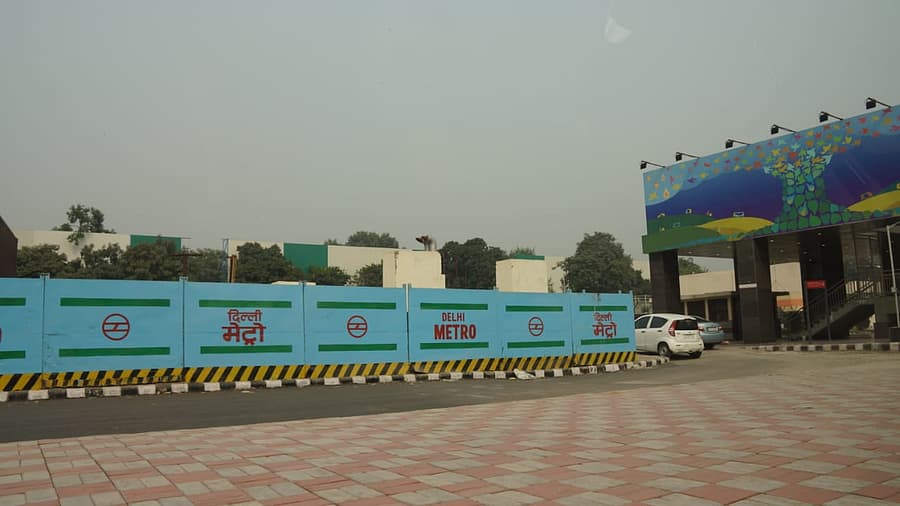
DMRC: Supreme Court Metro Closure Apology for October 10 Actions
Summary
- DMRC informed the Supreme Court that only 45 of its 303 stations were closed on October 10, not a complete metro ban.
- The closures followed a Supreme Court order on October 9, which prohibited an "outright prohibition" on metro services for Jantar Mantar protests.
- DMRC Chairperson D Thara issued an "unconditional apology" in response to a contempt notice issued on October 11.
- The Supreme Court, led by CJI Surya Kant, had deemed Delhi Police's earlier request for widespread closures as "overreaching."
- A special Sunday hearing on October 11 found a prima facie case of contempt due to continued station closures despite the court's directive.
The Metro Closures and Judicial Intervention
This incident underscores the critical importance of immediate and demonstrable adherence to judicial directives, particularly when they concern essential public services and fundamental rights.
The Delhi Metro Rail Corporation (DMRC) recently clarified to the Supreme Court that it did not impose a complete ban on metro services on October 10, the day designated for proposed protests at Jantar Mantar. Instead, the corporation stated that only 45 of its 303 stations were temporarily closed for entry and exit. This action followed a directive issued by the Supreme Court on October 9, which explicitly mandated that there should be no outright prohibition on the movement of metro trains.
The judicial intervention began when a Bench, led by Chief Justice of India Surya Kant, addressed an oral mentioning concerning communications from the Delhi Police. These communications had instructed DMRC to shut down entry and exit gates at 57 stations and to reduce train frequency, a move the Court found to be "overreaching" and effectively imposing a "complete ban" on essential public transportation. The Court had unequivocally stated that any regulated arrangement for metro services must be "widely publicised" and directed DMRC, the Railways, and Delhi Police (Traffic) to submit compliance reports within four days.
Alleged Non-Compliance and Contempt Proceedings
Despite the Supreme Court's clear directive on October 9, a special Sunday hearing on October 11 revealed that metro stations were reportedly still closed. During this session, the Court was informed that the earlier orders had not been fully complied with. Consequently, the judiciary determined that a prima facie case of contempt of court had been established against DMRC, citing an alleged violation of its October 9 direction.
In response to this serious development, DMRC Chairperson D Thara subsequently tendered an "unconditional apology" in an affidavit. This DMRC D Thara contempt apology was submitted as part of the corporation's formal reply to the contempt notice, which had been issued on October 11.
DMRC's Defense and Chairperson's Apology
In its submission to the Supreme Court, the DMRC maintained that there was no comprehensive metro ban implemented on October 10. The corporation emphasized that the Delhi Metro October 10 closures were limited to only 45 stations out of its total of 303, specifically for entry and exit purposes. This partial closure, according to DMRC, was an attempt to comply with the Supreme Court's October 9 order while managing the situation around the Jantar Mantar protest metro service.
Within her affidavit, DMRC Chairperson D Thara not only offered an "unconditional apology" but also asserted that the Supreme Court's October 9 order had been adhered to "in letter and spirit." Her statement aimed to clarify the corporation's actions and address the Court's concerns regarding the perceived non-compliance.
Significance for Legal Compliance
This incident underscores the critical importance of immediate and demonstrable adherence to judicial directives, particularly when they concern essential public services and fundamental rights. The Supreme Court's swift action, culminating in a contempt notice and the DMRC D Thara contempt apology, serves as a stark reminder to public entities and their leadership about the gravity of non-compliance. Lawyers and compliance officers should note that courts expect not just technical adherence but also the spirit of their orders to be upheld, including transparent communication of any regulated arrangements.
The finding of a prima facie case of contempt, even after DMRC's explanation, highlights the judiciary's resolve to ensure its orders are respected without equivocation, emphasizing that logistical challenges do not excuse a failure to comply with a Supreme Court metro ban order compliance. This case sets a precedent for how seriously the judiciary views disruptions to public services, especially when they impact citizens' ability to exercise their rights, making the DMRC Supreme Court metro closure apology a significant event.
Practical Implications
Lawyers and compliance officers should note the Supreme Court's swift action on perceived non-compliance with its directives, particularly concerning public services and fundamental rights. This case highlights the critical importance of immediate and demonstrable adherence to court orders to avoid contempt proceedings, even when logistical challenges exist, and the necessity of publicizing any regulated arrangements as directed by the court.
Source
How does this affect you?
Get an AI analysis of this article grounded in your jurisdictions, practice areas, and any policy documents you've uploaded to Wansom.
Finish Reading the Full Story and the Expert Analysis.
Get the latest legal & regulatory intelligence in India
Wansom is AI and can make mistakes.