
Delhi HC Defends Surveillance of CJP Protests at Jantar Mantar
Abstract
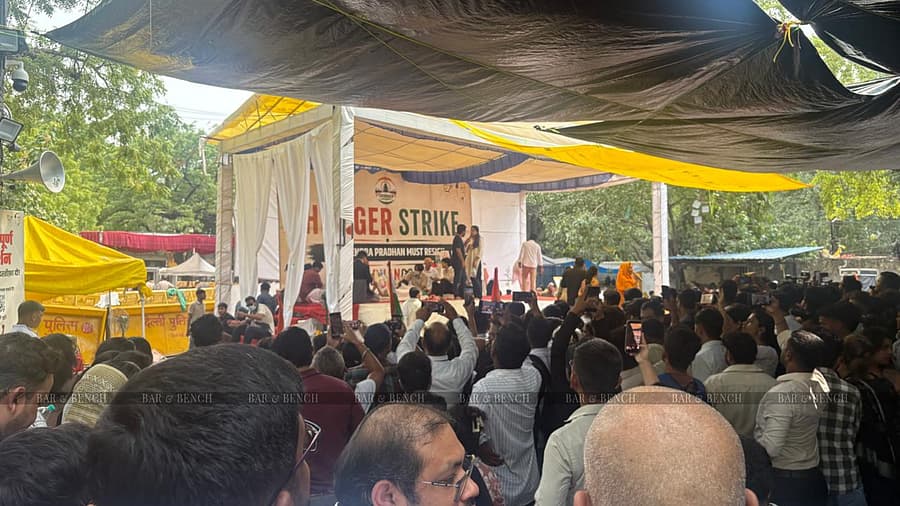
The Central government has defended the videography of protests at Jantar Mantar in Delhi, arguing that it is a routine measure to maintain law and order. Solicitor General Tushar Mehta appeared before the Delhi High Court, opposing a public interest litigation (PIL) petition filed by former Jawaharlal Nehru University Students Union President Aishe Ghosh, alleging continuous police surveillance of protesters. The government contends that videography is necessary to maintain law and order and is in the legitimate state interest.
Introduction
The Central government has taken a stance against a public interest litigation (PIL) petition filed by former Jawaharlal Nehru University Students Union President Aishe Ghosh before the Delhi High Court. Solicitor General Tushar Mehta appeared on behalf of the Central government, opposing the issuance of notice on the PIL. The matter pertains to the alleged continuous and intrusive police surveillance of Cockroach Janta Party (CJP) protesters at Jantar Mantar.
Background
The PIL petition was filed by Aishe Ghosh, alleging that the police were conducting continuous and intrusive surveillance of CJP protesters at Jantar Mantar. The government's stance on videography is based on a standing order issued by the authorities and judicial orders. The videography is done as a routine measure to maintain law and order.
Analysis
The Central government's defense of videography raises questions about the balance between individual privacy rights and the need for public safety. While the government argues that videography is necessary, the petitioners claim that it is an infringement on their right to privacy. The court will have to consider these competing interests and determine whether the government's actions are justified.
Conclusion
The outcome of this matter has not yet been reported. However, the Central government's stance on videography highlights the complexities of balancing individual rights with public safety concerns. Practitioners should be aware of the ongoing debate and its implications for future cases involving surveillance and privacy rights.
How does this affect your business?
Get an AI analysis of this article grounded in your jurisdictions, practice areas, and any policy documents you've uploaded to Wansom.