
Crackdown On Protesters
Abstract
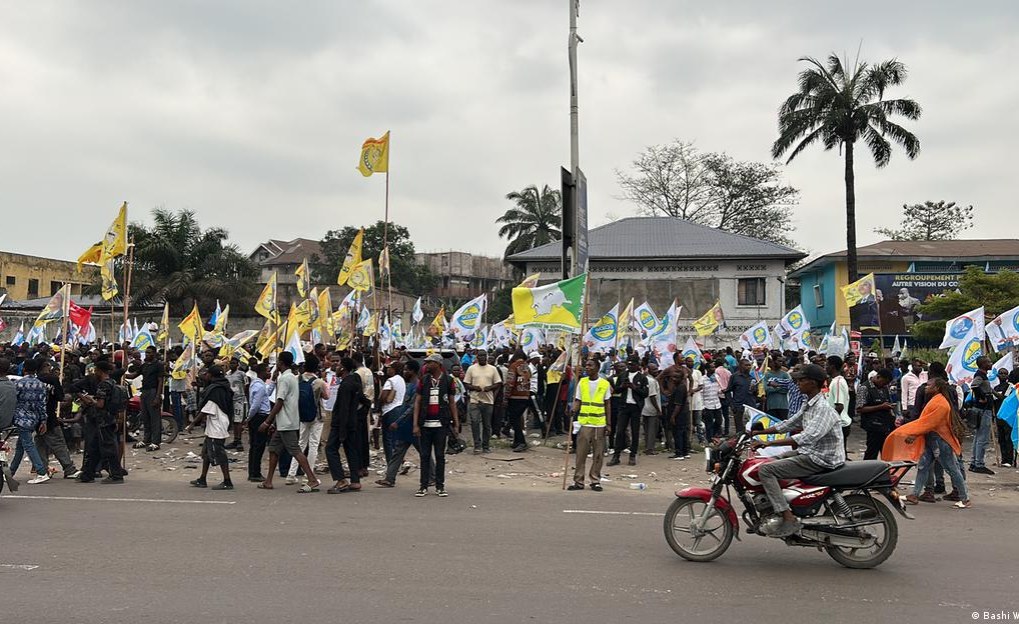
A recent Human Rights Watch report has highlighted the alarming use of excessive force by security forces in the Democratic Republic of Congo (DRC) against protesters in Kinshasa on June 12, 2026. Demonstrators, who were protesting a proposed law potentially extending President Félix Tshisekedi's term, faced tear gas, batons, and a critical failure by security forces to protect them from assaults by a pro-ruling party group. This incident underscores a persistent pattern of human rights violations, including arbitrary arrests and killings, by state agents in the DRC, contravening both national constitutional guarantees and international human rights obligations. The ongoing investigation by the Prosecutor General's Office offers a potential, though often elusive, pathway to accountability for these abuses.
Introduction
The Democratic Republic of Congo (DRC) is once again under international scrutiny following a Human Rights Watch report detailing the violent suppression of a peaceful protest in Kinshasa on June 12, 2026. Demonstrators, organized by the Article 64 Coalition for the defense of the constitutional order (C64), were met with excessive force from security forces while protesting a proposed law that could extend President Félix Tshisekedi's term. Beyond the direct use of tear gas and batons, a particularly egregious aspect of the crackdown was the failure of state security agents to protect protesters from assaults by a group linked to the main ruling party, the Union for Democracy and Social Progress (UDPS).
This incident is not an isolated event but rather a stark illustration of a recurring pattern of human rights abuses by security forces in the DRC. It raises serious concerns about the government's commitment to upholding fundamental freedoms, including the rights to peaceful assembly and expression, which are enshrined in the country's Constitution and international treaties. This article will examine the legal framework governing protests in the DRC, analyze the recent crackdown in light of these provisions and international standards, and discuss the broader implications for the rule of law and human rights in the country.
Background
The right to peaceful assembly and demonstration is a cornerstone of democratic governance, explicitly guaranteed under the Constitution of the Democratic Republic of Congo. Article 25 of the 2006 Constitution affirms the freedom of peaceful gatherings without arms, subject to respect for law, public order, and good morals. Article 26 further guarantees the freedom to demonstrate, stipulating that organizers must notify the competent administrative authority in writing. This constitutional provision for notification, however, often clashes with Legislative Decree 196 of 29 January 1999, which regulates public assemblies and demonstrations and has been interpreted by authorities as requiring authorization, a practice frequently used to restrict protests.
Beyond domestic law, the DRC is a state party to key international and regional human rights instruments. These include the International Covenant on Civil and Political Rights (ICCPR), which protects the rights to peaceful assembly (Article 21), freedom of expression (Article 19), and freedom of association (Article 22). Similarly, Article 11 of the African Charter on Human and Peoples' Rights guarantees every individual the right to assemble freely with others, subject only to necessary restrictions provided by law. The use of force by law enforcement is governed by Organic Law 11/013 of 11 August 2011 on the organization and functioning of the Congolese National Police, which mandates that force be used only in cases of absolute necessity, proportionally, and progressively. Legislative Decree 196 of 1999 also specifies that law enforcement officials may only intervene to disperse demonstrators where serious violence is occurring.
Analysis
The events of June 12, 2026, in Kinshasa, as documented by Human Rights Watch, represent a clear departure from these established legal principles. Protesters from the C64 coalition, attempting to hold a sit-in against a proposed constitutional amendment, were met with tear gas and batons by security forces, despite their stated intention for a peaceful march. Crucially, the report highlights that security forces not only used excessive force but also failed to protect demonstrators from a group linked to the ruling party, the Force of Progress, who reportedly attacked protesters with stones and bottles, some filled with urine. This failure to protect, and in some instances, apparent complicity, directly violates the state's duty to ensure the safety and security of all individuals, including those exercising their right to protest.
The actions of the security forces on June 12, 2026, contradict the principles of necessity and proportionality enshrined in Organic Law 11/013 and Legislative Decree 196 of 1999. International standards, such as the UN Basic Principles on the Use of Force and Firearms by Law Enforcement Officials, emphasize that non-violent means should be exhausted before resorting to force, and any force used must be restricted to the minimum extent necessary. The indiscriminate use of tear gas and batons against a largely peaceful assembly, coupled with the failure to intervene against assailants, indicates a disregard for these principles.
This incident is part of a broader, well-documented pattern of repression in the DRC. Reports from the UN Joint Human Rights Office (UNJHRO) and other human rights organizations consistently detail instances where Congolese security forces have used excessive, and often lethal, force against protesters, leading to numerous deaths, injuries, and arbitrary arrests over the years. These abuses have occurred in various contexts, including protests against election delays, political repression, and insecurity in eastern provinces. The systematic nature of these violations, coupled with a pervasive culture of impunity for perpetrators within the security forces, undermines public trust in state institutions and the judiciary.
While the Prosecutor General's Office at the Court of Cassation has announced an investigation into the June 12, 2026 incident, the effectiveness of such probes in the DRC has historically been limited. For accountability to be meaningful, investigations must be independent, impartial, and lead to the prosecution of all those responsible, regardless of their position. The consistent targeting of opposition members, civil society activists, and journalists further highlights the shrinking civic space and the government's efforts to suppress dissenting voices, despite constitutional guarantees of freedom of expression and assembly.
Conclusion
The crackdown on protesters in Kinshasa on June 12, 2026, serves as a critical reminder of the ongoing challenges to human rights and democratic freedoms in the Democratic Republic of Congo. The documented use of excessive force by security forces and their failure to protect citizens from politically motivated assaults are direct violations of the DRC's constitutional and international legal obligations. These actions not only undermine the fundamental rights to peaceful assembly and expression but also erode the rule of law and public confidence in state institutions.
For legal practitioners, it is imperative to closely monitor the progress and independence of the investigation initiated by the Prosecutor General's Office. Advocacy for accountability, adherence to due process, and the protection of victims and witnesses remains crucial. Furthermore, practitioners should continue to highlight the discrepancies between the constitutional right to notify for protests and the administrative practice of requiring authorization, pushing for legislative reforms that align with international best practices. Upholding these rights is essential for fostering a truly democratic and stable society in the DRC, and the international community must continue to press for genuine reforms and accountability for all human rights abuses.
Citations
- 1.Constitution of the Democratic Republic of the Congo, 2006
- 2.Loi n° 11/013 du 11 août 2011 portant organisation et fonctionnement de la Police Nationale Congolaise
- 3.Décret-loi n° 196 du 29 janvier 1999 portant réglementation des manifestations et réunions publiques
- 4.African Charter on Human and Peoples' Rights, 1981
- 5.International Covenant on Civil and Political Rights, 1966
- 6.Human Rights Watch, "DR Congo: Crackdown on Protesters," July 9, 2026
- 7.UN Human Rights Office, "DR Congo security forces used 'excessive force' against protesters, UN probe finds," October 21, 2016
- 8.UN Human Rights Office, "UN rights office warns DR Congo authorities against use of excessive force when policing protests," January 5, 2018
- 9.Amnesty International, "RDC : Analyse juridique de la législation de la République Démocratique du Congo sur le droit à la liberté de manifestation pacifique," October 12, 2018
- 10.ICNL, "Democratic Republic of the Congo Civic Freedom Monitor," March 13, 2026
- 11.United States Department of State, "2022 Country Reports on Human Rights Practices: Democratic Republic of the Congo"
- 12.United States Department of State, "2024 Country Reports on Human Rights Practices: Democratic Republic of the Congo"
- 13.Human Rights Watch, "DR Congo: Increasing Repression of Critical Expression," May 12, 2026
- 14.Freedom House, "Democratic Republic of the Congo: Freedom in the World 2024 Country Report"
- 15.UN Human Rights Office, "UN report finds unlawful, unjustified use of force against DRC protestors"
- 16.The Advocates for Human Rights, "THE DEMOCRATIC REPUBLIC OF CONGO," August 28, 2018
- 17.UN Human Rights Office, "Human rights: Widespread attacks in DR Congo may amount to crimes against humanity," February 2, 2021
- 18.Global Centre for the Responsibility to Protect, "Democratic Republic of the Congo," March 16, 2026
- 19.Leganet.cd, "DROIT DES MANIFESTATIONS ET DES RÉUNIONS PUBLIQUES: Étude de la législation congolaise," November 15, 2020
- 20.La liberté de manifestation et le régime d'information dans la Constitution congolaise - droit de la république démocratique du congo
- 21.Human Rights Watch, "Democratic Republic of Congo in Crisis"
How does this affect your business?
Get an AI analysis of this article grounded in your jurisdictions, practice areas, and any policy documents you've uploaded to Wansom.