
Cameroun-RCA-HCR : un document opérationnel adopté pour la reprise du rapatriement volontaire des réfugiés centrafricains
Abstract
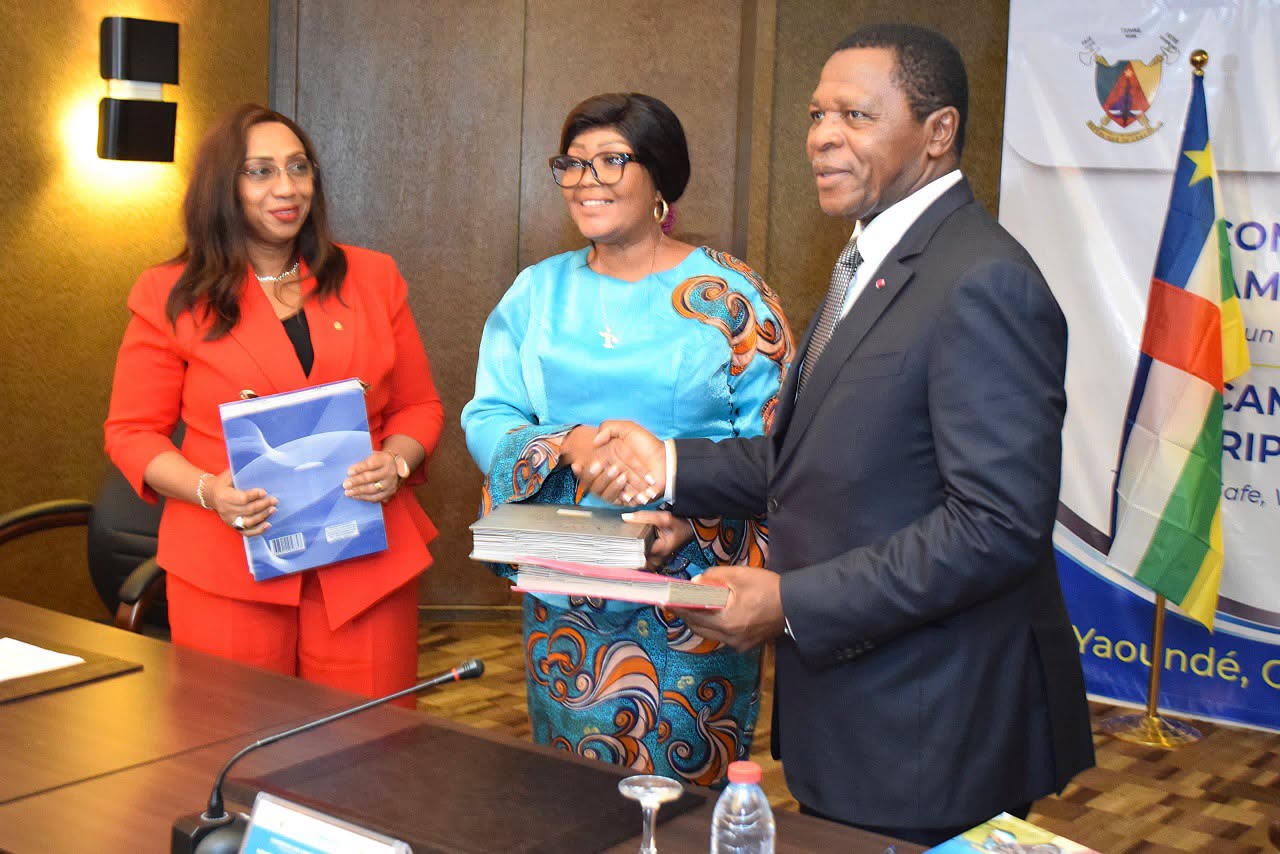
Cameroon, the Central African Republic (CAR), and the United Nations High Commissioner for Refugees (UNHCR) have adopted a new operational document to resume the voluntary repatriation of Central African refugees residing in Cameroon. This development, stemming from a tripartite commission meeting on July 14, 2026, finalizes the practical modalities and a timeline for the returns. It builds upon a foundational tripartite agreement signed in 2019, which had seen partial implementation and a temporary suspension in late 2025. The renewed commitment aims to facilitate the safe, voluntary, and dignified return of thousands of refugees, underscoring the ongoing international and regional efforts to find durable solutions for those displaced by the protracted crisis in the Central African Republic.
Introduction
The protracted humanitarian crisis in the Central African Republic (CAR) has led to the displacement of hundreds of thousands of its citizens, with a significant number seeking refuge in neighboring Cameroon. In a crucial step towards finding durable solutions, Cameroon, the Central African Republic, and the United Nations High Commissioner for Refugees (UNHCR) recently convened to adopt an operational document outlining the practical modalities for the resumption of voluntary repatriations. This tripartite agreement, signed on July 14, 2026, marks a renewed commitment to facilitate the safe and dignified return of Central African refugees from Cameroon.
This development is particularly significant for legal professionals engaged in international humanitarian law, refugee law, and human rights, as it operationalizes the principle of voluntary repatriation, a cornerstone of international refugee protection. The agreement aims to address the complexities of returning refugees to a country still grappling with sporadic violence and instability, ensuring that returns are genuinely voluntary and sustainable. The adoption of this document signals a critical phase in managing one of Africa's most enduring displacement crises, emphasizing cooperation between host and origin countries, supported by international bodies.
The current initiative builds upon a previous tripartite agreement established in 2019, which had already facilitated the return of over 19,000 refugees, including 5,126 in 2025, before a temporary halt in late 2025. The renewed efforts underscore the persistent challenges and the imperative for a structured, legally sound framework to manage large-scale returns, ensuring adherence to international standards of protection and the fundamental rights of refugees.
Background
The legal framework governing refugee protection and voluntary repatriation is primarily rooted in international and regional instruments. Globally, the 1951 Convention Relating to the Status of Refugees and its 1967 Protocol form the bedrock of international refugee law, defining who is a refugee and outlining states' obligations. While the 1951 Convention does not explicitly detail voluntary repatriation, it implicitly supports it through the principle of non-refoulement, which prohibits returning individuals to territories where their life or freedom would be threatened.
In Africa, the 1969 OAU Convention Governing the Specific Aspects of Refugee Problems in Africa complements the 1951 Convention, offering an expanded definition of a refugee and explicitly emphasizing voluntary repatriation as a preferred durable solution. Article V(1) of the OAU Convention unequivocally states that "The essentially voluntary character of repatriation shall be respected in all cases and no refugee shall be repatriated against his will." It further mandates that the country of asylum, in collaboration with the country of origin, make adequate arrangements for safe return, and the country of origin facilitate resettlement and grant returnees full rights as nationals. UNHCR's Statute also entrusts the High Commissioner with assisting governments in facilitating voluntary repatriation.
The Central African Republic has experienced prolonged periods of instability and armed conflict, particularly since 2013, leading to massive internal displacement and refugee outflows into neighboring countries like Cameroon, Chad, and the Democratic Republic of Congo. Cameroon currently hosts a significant population of Central African refugees, estimated at around 288,000. The ongoing humanitarian needs and security concerns in CAR necessitate a carefully managed and protection-driven approach to any return process, ensuring that the conditions for safe and dignified return are genuinely met.
Analysis
The recently adopted operational document by Cameroon, CAR, and UNHCR serves as a critical implementation tool for the broader 2019 Tripartite Agreement on voluntary repatriation. This document outlines the practical modalities and a chronogram of activities, aiming to streamline the return process which was temporarily suspended in late 2025. The emphasis on 'voluntary' repatriation is paramount, requiring that refugees' decisions to return are made freely and are well-informed, without any direct or indirect coercion. This principle is reinforced by the non-refoulement obligation, ensuring that no refugee is returned to a place where they face a well-founded fear of persecution.
Ensuring true voluntariness in repatriation efforts, especially in contexts of protracted displacement, presents significant challenges. Refugees may face 'push factors' in asylum countries, such as reduced assistance or deteriorating living conditions, which could compromise the voluntariness of their decision. Conversely, conditions in the country of origin, such as persistent insecurity, lack of basic services, and limited reintegration opportunities, can undermine the sustainability and safety of returns. While the CAR government has made efforts to increase its presence in regions outside Bangui and signed peace agreements, security conditions remain fragile in many areas, posing challenges for the full reintegration of returnees.
The role of UNHCR is crucial in monitoring the voluntariness of returns and the protection of returnees in their country of origin. This includes ensuring free and unhindered access to returnees, monitoring their treatment, and verifying the fulfillment of any guarantees or assurances provided by the country of origin. The collaboration between the host country (Cameroon), the country of origin (CAR), and UNHCR, as stipulated in the tripartite agreement and consistent with the OAU Convention, is essential for the success and legitimacy of the repatriation process.
Regional initiatives, such as the Yaoundé Declaration and the CAR Platform, further underscore the commitment to finding durable solutions for Central African refugees. These platforms aim to strengthen protection, integration, and empowerment efforts, recognizing that successful repatriation requires a comprehensive approach that extends beyond mere physical return to include sustainable reintegration and access to rights. The current operational document, therefore, is not merely a logistical plan but a testament to the complex interplay of international law, humanitarian principles, and political will in addressing forced displacement.
Conclusion
For legal practitioners, the resumption of voluntary repatriation of Central African refugees from Cameroon highlights several critical areas of focus. Firstly, it underscores the enduring relevance of international and regional refugee law, particularly the 1951 Refugee Convention and the 1969 OAU Convention, in guiding state practice. Attorneys advising on refugee matters must ensure that the principle of voluntariness is rigorously upheld, requiring thorough and independent assessments of refugees' decisions to return, free from any undue pressure or coercion.
Secondly, practitioners should closely monitor the conditions in the Central African Republic to ensure that returns are conducted in safety and dignity, with adequate arrangements for reintegration and access to fundamental rights. This includes scrutinizing the implementation of the operational document's chronogram and modalities, advocating for robust monitoring by UNHCR, and holding states accountable to their international obligations. The success of this initiative will not only be measured by the number of returnees but, more importantly, by their sustainable reintegration and the restoration of national protection upon their return. This process serves as a crucial case study in the ongoing global challenge of managing forced displacement and achieving durable solutions.
Citations
- 1.Convention Governing the Specific Aspects of Refugee Problems in Africa, OAU Doc. CAB/LEG/24.3 (1969).
- 2.Convention Relating to the Status of Refugees, 189 U.N.T.S. 137 (1951).
- 3.Protocol Relating to the Status of Refugees, 606 U.N.T.S. 267 (1967).
- 4.UN High Commissioner for Refugees (UNHCR); Government of Cameroon; Government of Central African Republic, Tripartite Agreement for the Voluntary Repatriation of Central African Refugees Living in Cameroon between the Government of the Republic of Cameroon, the Governments of the Central African Republic and UNHCR, 29 June 2019, https://www.refworld.org/legal/agreements/unhcr/2019/96356
- 5.UNHCR Handbook on Voluntary Repatriation: International Protection (1996).
How does this affect your business?
Get an AI analysis of this article grounded in your jurisdictions, practice areas, and any policy documents you've uploaded to Wansom.