
Bank merger won't override landlord's right to evict: Supreme Court orders PNB's eviction from CP
Abstract
The Supreme Court of India recently delivered a significant ruling, holding that a government-sanctioned merger of banks under the Banking Regulation Act, 1949, does not override a landlord's statutory right to evict a tenant for unauthorized subletting or parting with possession under rent control laws. The Court clarified that rent control provisions, specifically Section 14(1)(b) of the Delhi Rent Control Act, 1958, do not distinguish between "voluntary" and "involuntary" transfers of possession. Once an original tenant ceases to exist and a new entity occupies the premises without the landlord's written consent, the ground for eviction is complete, irrespective of the reasons for the transfer. This decision underscores the paramountcy of landlord protections under rent control legislation, even against actions mandated by banking regulations.
Introduction
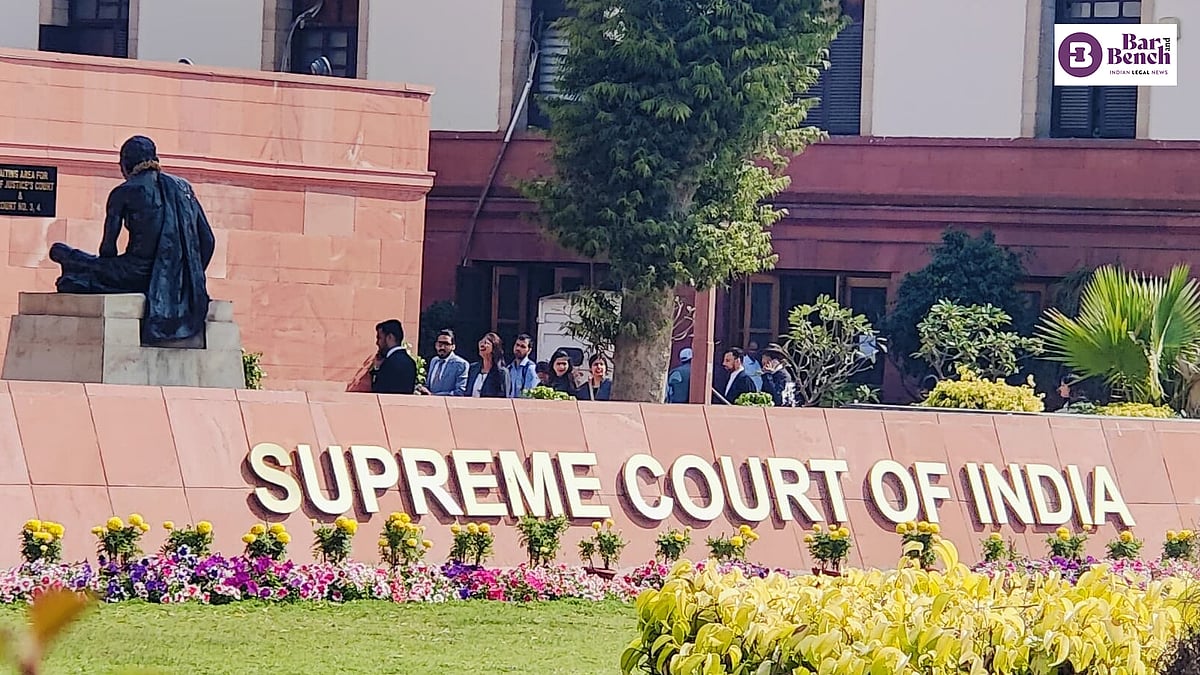
In a landmark decision with far-reaching implications for corporate mergers and property law, the Supreme Court of India has affirmed the primacy of landlord protections under rent control legislation, even in the face of government-mandated bank amalgamations. The Court recently ordered the eviction of Punjab National Bank (PNB) from a prime commercial property in Connaught Place, New Delhi, concluding a protracted legal battle spanning nearly four decades.
This ruling clarifies a critical intersection between the Banking Regulation Act, 1949, which governs bank mergers, and the Delhi Rent Control Act, 1958, which provides statutory safeguards for landlords against unauthorized transfers of tenancy. The Supreme Court unequivocally held that an amalgamation scheme, even if framed by the Reserve Bank of India (RBI) in the public interest, cannot be accorded the status of a statutory enactment capable of overriding the mandatory written-consent requirements for landlords under rent control laws.
The essence of the Court's decision is that the factual situation of a tenant parting with possession without the landlord's written consent is sufficient to trigger eviction proceedings, rendering the voluntariness or involuntariness of such a transfer irrelevant. This article delves into the background, analysis, and implications of this pivotal judgment for legal practitioners navigating the complexities of corporate restructuring and property rights in India.
Background
The dispute originated in 1947 when British Motor Car Company Limited (the landlord) leased a commercial space in Pratap Building, Connaught Circus, New Delhi, to Hindustan Commercial Bank (HCB) at a monthly rent of ₹585. Decades later, in December 1986, the Government of India issued a gazette notification amalgamating HCB with the public sector giant, Punjab National Bank (PNB). This amalgamation was carried out under a scheme prepared by the Reserve Bank of India (RBI) in the public interest, pursuant to Section 45 of the Banking Regulation Act, 1949. Under this scheme, all assets, liabilities, and physical possession of HCB's branches, including the tenanted premises, vested in PNB.
Promptly after the merger, British Motor Car Company initiated eviction proceedings against PNB under Section 14(1)(b) of the Delhi Rent Control Act, 1958 (DRC Act). This section allows a landlord to seek eviction if the tenant has "sub-let, assigned or otherwise parted with the possession of the whole or any part of the premises without obtaining the consent in writing of the landlord." PNB contended that its occupation was a result of a statutory administrative scheme under the Banking Regulation Act, 1949, and therefore, it should not be subject to eviction under the DRC Act, arguing that the transfer was involuntary and mandated by law. The case saw conflicting judicial opinions over the years, with the Additional Rent Controller initially dismissing the eviction plea, viewing the merger as a statutory 'law' binding on the landlord, a decision later reversed by the Rent Control Tribunal.
Analysis
The Supreme Court, comprising Justices Sanjay Karol and N. Kotiswar Singh, meticulously examined the interplay between Section 45 of the Banking Regulation Act, 1949, and Section 14(1)(b) of the Delhi Rent Control Act, 1958. The Court emphasized that the applicability of Section 14(1)(b) hinges on the occurrence of a factual situation: whether the tenant has sub-let, assigned, or otherwise parted with possession. The Court explicitly rejected the argument that the reasons for such a transfer, including whether it was voluntary or involuntary, are relevant to the landlord's right to seek eviction.
Crucially, the Bench relied on its earlier decision in *K.I. Shephard v. Union of India* to reiterate that a scheme framed by the Reserve Bank of India under Section 45(4) of the Banking Regulation Act, 1949, is an administrative function, not a legislative enactment. Consequently, such an administrative scheme does not possess the authority to override the mandatory written-consent protections afforded to landlords under the Delhi Rent Control Act, 1958. The Court clarified that while the amalgamation scheme results in the vesting of assets and liabilities of the transferor bank (HCB) in the transferee bank (PNB), this vesting does not automatically create a new tenancy relationship that bypasses the landlord's statutory rights under rent control laws.
The Court observed that once the original tenant, HCB, ceased to exist as a corporate entity and PNB acquired the tenancy rights and possession of the premises without obtaining the landlord's written consent, the conditions for eviction under Section 14(1)(b) of the DRC Act were fully satisfied. The judgment distinguished this scenario from cases where tenancy rights might vest under a specific legislative enactment, such as the *Esso (Acquisition of Undertakings in India) Act*, which were deemed inapplicable to amalgamations under the Banking Regulation Act. This distinction reinforces the Court's position that the general provisions of a banking regulation act, even for mergers, cannot supersede specific protections under rent control legislation without explicit legislative intent.
Conclusion
This Supreme Court judgment serves as a vital clarification on the interplay between banking regulations and rent control laws, particularly concerning the transfer of tenancy rights during corporate amalgamations. For practising attorneys, the decision underscores the critical importance of conducting thorough due diligence on leased properties during mergers and acquisitions. Banks and other entities involved in statutory transfers of undertakings must now be acutely aware that such transfers, even if government-sanctioned, do not automatically extinguish a landlord's right to seek eviction if prior written consent for the transfer of possession was not obtained.
Practitioners advising landlords should note that their clients retain robust statutory protections under rent control laws against unauthorized occupation, regardless of the 'involuntary' nature of the transfer from the tenant's perspective. Conversely, legal counsel for merging entities must proactively address tenancy issues, including securing landlord consents, to mitigate the risk of protracted litigation and potential eviction. The grace period granted to PNB until January 31, 2027, to vacate the premises, subject to an undertaking and continued rent payment, highlights the Court's equitable approach while firmly upholding the landlord's legal rights. This ruling reinforces the principle that administrative schemes, however significant, cannot override specific legislative protections without explicit statutory backing, providing much-needed certainty in this complex area of law.
Citations
- 1.British Motor Car Company (1939) Ltd. v. M/S Hindustan Commercial Bank Ltd. (Since Merged into Punjab National Bank) & Anr.
- 2.Banking Regulation Act, 1949, Section 45
- 3.Delhi Rent Control Act, 1958, Section 14(1)(b)
- 4.K.I. Shephard v. Union of India
How does this affect your business?
Get an AI analysis of this article grounded in your jurisdictions, practice areas, and any policy documents you've uploaded to Wansom.