
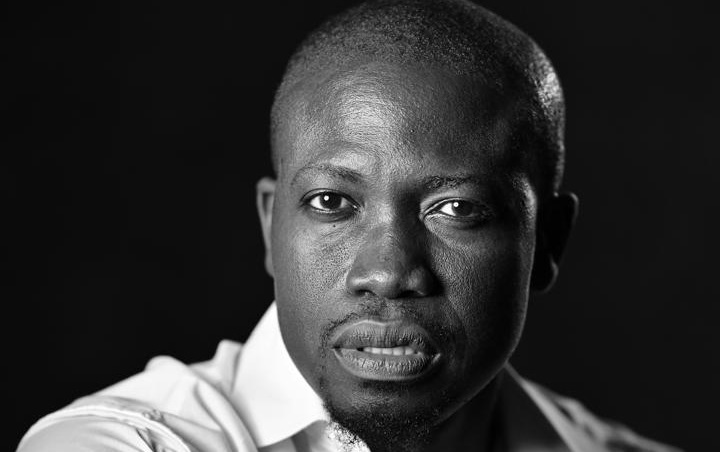
Andrew Tandoh Adote calls for stronger copyright laws to protect voice-over artistes
Abstract
Ghanaian actor and voice-over artiste Andrew Tandoh Adote has advocated for enhanced legislative protection and a robust royalty framework for voice-over artistes in Ghana. His call highlights critical gaps in the current intellectual property landscape, particularly concerning the economic and moral rights of performers in the burgeoning creative industry. While Ghana's Copyright Act, 2005 (Act 690), and its ratification of international treaties like the WIPO Performances and Phonograms Treaty (WPPT) provide a foundational legal framework, practical challenges persist in ensuring fair compensation and effective enforcement for voice-over professionals. This article examines the existing legal provisions and the imperative for collective action and legislative clarity to safeguard the rights of these artistes.
Introduction
The burgeoning creative industry in Ghana, a significant engine of cultural and economic growth, faces persistent challenges in adequately protecting the intellectual property rights of its practitioners. A recent call by renowned Ghanaian actor and voice-over artiste Andrew Tandoh Adote has brought to the fore the urgent need for stronger legislation and a more effective royalty collection system for voice-over artistes. Speaking on Joy FM's Showbiz A-Z, Adote underscored that despite individual efforts to advance the industry, a lack of robust legal backing and collective industry action threatens to undermine the livelihoods and creative contributions of these professionals.
Adote's appeal resonates deeply within the broader Ghanaian entertainment sector, where issues of copyright infringement, inadequate remuneration, and difficulties in enforcing rights are common. His concerns extend to the potential impact of emerging technologies like Artificial Intelligence on the industry, questioning the existence of local mechanisms to ensure fair compensation for Ghanaian artistes. This article will delve into the existing legal framework governing copyright and related rights in Ghana, analyze its applicability to voice-over artistes, identify current limitations, and propose pathways for strengthening protection and ensuring equitable remuneration.
Background
Intellectual property protection in Ghana is primarily governed by the Copyright Act, 2005 (Act 690), which replaced the Copyright Law, 1985 (PNDCL 110). This Act provides a comprehensive framework for safeguarding original literary, dramatic, musical, and artistic works, including sound recordings and audio-visual works. Crucially, copyright protection in Ghana arises automatically once a work is created and fixed in a tangible form, aligning with international treaties such as the Berne Convention for the Protection of Literary and Artistic Works and the WIPO Copyright Treaty, to which Ghana is a party.
Beyond copyright, the Act also addresses "related rights" or "neighbouring rights," which are vital for performers. These rights protect the interests of performers, producers of phonograms (sound recordings), and broadcasting organizations. Ghana's commitment to protecting performers' rights was further solidified by its ratification of the WIPO Performances and Phonograms Treaty (WPPT) on November 16, 2012, which entered into force for Ghana on February 16, 2013. The WPPT specifically deals with the rights of performers and producers of phonograms, particularly in the digital environment, granting performers economic rights over their unfixed performances and the reproduction, broadcasting, and communication to the public of their fixed performances. The Copyright Act, 2005, explicitly grants performers economic rights, including the exclusive right to authorize or prohibit the fixation of their unfixed performances, the reproduction of fixations, and the broadcasting and communication of their performances to the public. Performers also possess moral rights, such as the right to be identified with their performances and to object to any distortion or modification prejudicial to their reputation.
Analysis
While the Copyright Act, 2005 (Act 690), and Ghana's adherence to international treaties like the WPPT lay a strong legal foundation, the practical application and enforcement of these rights for voice-over artistes present significant challenges. Voice-over work, often integral to audio-visual productions, advertisements, and digital content, falls under the broader category of 'performances' and 'sound recordings' or 'audio-visual works' as defined by the Act. Section 37 of the Act, for instance, stipulates that where a sound recording or audio-visual work is used in a public place, the authorized performer and producer are entitled to royalties. However, the effective collection and distribution of these royalties remain a contentious issue.
One primary challenge highlighted by Andrew Tandoh Adote is the lack of a unified front or specific collective management organization (CMO) dedicated to voice-over artistes. While Ghana has CMOs like the Ghana Music Rights Organisation (GHAMRO) for music rights holders and the Audiovisual Rights Society of Ghana (ARSOG) for audio-visual rights holders, the specific needs and unique exploitation patterns of voice-over artistes may not be adequately addressed by existing structures. The absence of a specialized body makes it difficult to standardize contracts, track usage across various platforms, and enforce royalty payments, leading to situations where artistes are not fairly compensated for the extensive use of their work.
Furthermore, the digital landscape exacerbates these enforcement difficulties. The ease with which voice-over content can be reproduced, distributed, and adapted online, often without proper authorization or attribution, makes tracking and monetizing usage a complex task. This issue is not unique to voice-over artistes; the National Film Authority (NFA) recently acknowledged that copyright infringement, particularly the unauthorized broadcasting of content, remains a significant challenge in Ghana. The current reliance on individual efforts and informal community groups, as noted by Adote, is insufficient without legislative weight and institutional support.
Another critical aspect is the contractual arrangements between voice-over artistes and producers. Often, artistes may sign contracts that do not adequately protect their long-term economic rights, particularly concerning residual payments or royalties for repeated use. The Act allows for the transfer of economic rights through assignment or licensing, but the terms and conditions of such transfers are crucial. Without strong industry standards and legal guidance, artistes may inadvertently relinquish rights that could provide ongoing income. The moral rights of performers, which include the right to attribution and to object to derogatory treatment, exist in perpetuity and are inalienable, yet their enforcement in practice can be challenging without clear mechanisms and collective advocacy.
The call for stronger legislation, therefore, points to the need for either specific amendments to the Copyright Act, 2005, to explicitly address the unique circumstances of voice-over artistes, or the establishment of clear regulatory guidelines and the empowerment of a dedicated collective management body. Such measures would facilitate clearer contractual terms, more efficient royalty collection, and stronger enforcement against unauthorized use, thereby ensuring that voice-over artistes receive equitable remuneration for their creative contributions.
Conclusion
Andrew Tandoh Adote's call for stronger copyright laws to protect voice-over artistes in Ghana is a timely and critical intervention that highlights the need for a more robust and responsive intellectual property framework within the creative industry. While the Copyright Act, 2005 (Act 690), and Ghana's ratification of the WPPT provide a foundational legal basis for performers' rights, practical challenges in enforcement, royalty collection, and contractual clarity persist. The current landscape often leaves individual artistes vulnerable to exploitation, particularly in the rapidly evolving digital environment.
For legal practitioners advising clients in the creative sector, particularly voice-over artistes, the imperative is clear: prioritize comprehensive contractual agreements that explicitly define the scope of work, duration of use, territories, and, crucially, a clear royalty structure for all forms of exploitation, including digital and future uses. Furthermore, there is a pressing need for industry associations to coalesce and advocate for either legislative amendments or the establishment of a dedicated collective management organization that can effectively track usage, collect royalties, and enforce the rights of voice-over artistes. Without such concerted efforts from both legal and industry stakeholders, the valuable contributions of voice-over professionals risk being undervalued and unprotected, hindering the sustainable growth of Ghana's vibrant creative economy.
Citations
- 1.Copyright Act, 2005 (Act 690)
- 2.WIPO Performances and Phonograms Treaty (WPPT)
- 3.MyJoyOnline Ghana, "Andrew Tandoh Adote calls for stronger copyright laws to protect voice-over artistes," July 11, 2026
- 4.Laws Ghana, "Section 31 - Moral Rights Of A Performer"
- 5.Laws Ghana, "Section 37 - Public Performance And Use Of Copyright Work"
- 6.WIPO Lex, "Copyright Act, 2005, Ghana, WIPO Lex"
- 7.WIPO, "TREATY/WPPT/83: [WPPT معاهدة] Ratification by the Republic of Ghana"
- 8.Afro-IP, "Ghana opts for the WPPT," November 23, 2012
- 9.Legal Ink, "Protecting Creativity - law firm in Accra & Kumasi Ghana," May 23, 2025
- 10.Scribd, "Copyright Law in Ghana," PDF document
- 11.MUSIGA, "Intellectual Property & Copyright"
- 12.Legit.ng, "Ghana Takes Major Step after Allegations Involving Nollywood Movies Surface," July 15, 2026
- 13.Robert Smith Law Group, "KIRANI AYAT v THE REPUBLIC – A NEW DAWN FOR COPYRIGHT PROTECTION IN GHANA," June 21, 2024
- 14.GWO SEVO, "Navigating Copyright & IP Issues for Ghanaian Creators," June 27, 2024
How does this affect your business?
Get an AI analysis of this article grounded in your jurisdictions, practice areas, and any policy documents you've uploaded to Wansom.