
Allahabad High Court Rejects Deemed Approval for Concrete Sleeper Plants in Indian Railway Policy
Summary
- The Allahabad High Court has clarified that technical approval for concrete sleeper plants cannot be judicially presumed.
- Deemed approval is not recognized under Indian railway policy, according to the court's ruling.
- Companies must comply with explicit requirements of the Indian Railway Act and obtain direct approval from relevant authorities.
- The decision may impact clients' compliance with railway regulations, making it essential for lawyers and compliance officers to review existing arrangements.
What Happened
The court observed that deemed approval is not recognized under Indian railway policy.
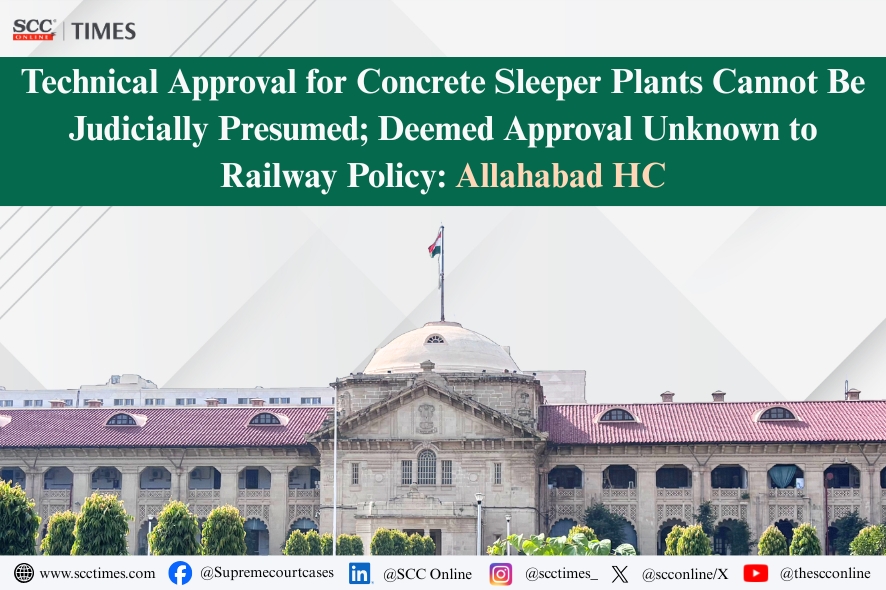
The Allahabad High Court has clarified that technical approval for concrete sleeper plants cannot be judicially presumed. In a recent ruling, the court observed that deemed approval is not recognized under Indian railway policy. This decision may have significant implications for companies operating in the railway sector, as it challenges the common practice of seeking judicial presumption of technical approval. The court's judgment suggests that companies must comply with the explicit requirements of the Indian Railway Act and obtain direct approval from the relevant authorities.
Legal Context
The case highlights the importance of understanding the nuances of Indian railway policy and the limitations of judicial presumption in obtaining technical approvals. Under the Indian Railway Act, companies must comply with specific requirements for setting up concrete sleeper plants. The court's ruling emphasizes that deemed approval is not a recognized concept under the act, and companies cannot rely on judicial presumption to circumvent these requirements. This decision may have far-reaching implications for the railway sector, as it sets a precedent for future cases involving technical approvals.
Why It Matters
The Allahabad High Court's ruling has significant practical and legal implications for lawyers and compliance officers working in the railway sector. Companies must now ensure that they comply with the explicit requirements of the Indian Railway Act, rather than relying on judicial presumption to obtain technical approvals. This decision may impact their clients' compliance with railway regulations, making it essential for them to review their existing arrangements and seek direct approval from the relevant authorities. The court's judgment underscores the importance of understanding the intricacies of Indian railway policy and the need for companies to navigate these complexities carefully.
Practical Implications
Lawyers and compliance officers should be aware that the Allahabad HC has clarified that deemed approval for concrete sleeper plants is not recognized under Indian railway policy, which may impact their clients' compliance with railway regulations.
Source
Source: Original reporting via SCC Times
How does this affect your business?
Get an AI analysis of this article grounded in your jurisdictions, practice areas, and any policy documents you've uploaded to Wansom.