
Activists Push for Parliamentary Probe Into Alleged Rights Violations by Security Agencies
Abstract
Activists in Kenya are intensifying their efforts to compel Parliament to launch a comprehensive inquiry into widespread allegations of human rights violations by security agencies. These alleged abuses, including extrajudicial killings, enforced disappearances, torture, and excessive use of force, are reported to have occurred during recent protests. The petition, which was initially intended for delivery during demonstrations, underscores Parliament's constitutional mandate to oversee state institutions and ensure accountability. This push highlights the persistent challenges in upholding the Bill of Rights and ensuring civilian oversight of security organs, despite the robust legal framework established by the 2010 Constitution. The proposed parliamentary probe aims to gather evidence, review existing laws, and recommend measures to strengthen accountability and restore public confidence in the justice system.
Introduction
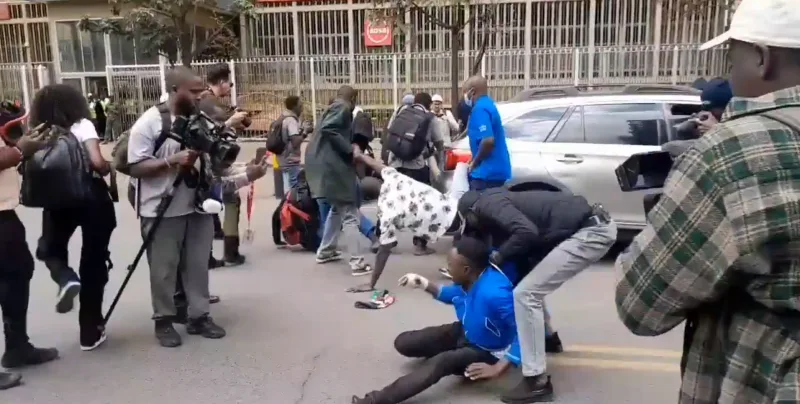
Human rights campaigners in Kenya are advocating for a joint parliamentary committee to investigate serious allegations of human rights violations by the nation's security agencies. These alleged abuses, which include extrajudicial killings, enforced disappearances, torture, abductions, and the excessive use of force, reportedly occurred during recent public protests. The activists had planned to present a petition to Parliament during the 'Saba Saba' demonstrations, but security concerns prevented its direct delivery.
This development underscores a critical and ongoing struggle in Kenya: the pursuit of accountability for state security organs and the effective implementation of the constitutional guarantees of human rights. Despite significant constitutional reforms in 2010, concerns persist regarding the conduct of security forces, particularly in the context of public order management. The call for a parliamentary probe highlights the perceived shortcomings of existing oversight mechanisms and seeks to leverage Parliament's constitutional authority to ensure justice and prevent future abuses.
This article will delve into the legal framework governing security agencies and human rights in Kenya, analyze the mechanisms for accountability, and discuss the implications of this renewed push for parliamentary oversight. It will examine the constitutional provisions, statutory bodies, and judicial precedents that are meant to safeguard citizens' rights against state excesses, while also considering the practical challenges that impede effective accountability.
Background
Kenya's legal framework for human rights and security sector governance is primarily enshrined in the Constitution of Kenya, 2010. Chapter Four, the Bill of Rights, guarantees fundamental freedoms, including the right to life, freedom and security of the person, freedom from torture, cruel, inhuman or degrading treatment, and the right to freedom of assembly, demonstration, picketing, and presentation of petitions. These rights are not absolute and may be limited, but such limitations must be reasonable and justifiable in an open and democratic society.
Chapter Fourteen of the Constitution specifically addresses National Security, establishing the Kenya Defence Forces, the National Intelligence Service, and the National Police Service (NPS) as national security organs. Crucially, Article 238(2) mandates that national security shall be pursued in compliance with the law and with the utmost respect for the rule of law, democracy, human rights, and fundamental freedoms. Furthermore, Article 239(5) explicitly states that national security organs are subordinate to civilian authority, and Parliament is tasked with enacting legislation for their functions, organisation, and administration.
In furtherance of these constitutional principles, Parliament enacted key legislation such as the National Police Service Act, 2011 (Cap. 84) and the Independent Policing Oversight Authority Act, 2011 (No. 35 of 2011). The National Police Service Act outlines the functions and powers of the NPS, emphasizing professionalism, accountability, and respect for human rights. The Independent Policing Oversight Authority (IPOA) was established as a civilian oversight body with the mandate to investigate deaths and serious injuries caused by police action, monitor police conduct, and hold officers accountable for abuses. The Kenya National Commission on Human Rights (KNCHR), established by the Kenya National Commission on Human Rights Act, 2011, also plays a vital role in investigating human rights violations and advising the government on human rights matters.
Analysis
Despite the robust constitutional and statutory framework, the implementation of accountability mechanisms for security agencies in Kenya has faced significant challenges. Reports from human rights organisations, including Human Rights Watch and Amnesty International, consistently document allegations of excessive force, unlawful killings, enforced disappearances, and torture by police, particularly during protests and in low-income areas. The petition by activists specifically cites Articles 244 and 245 of the Constitution, which require the National Police Service to uphold professionalism, accountability, and respect for human rights.
The role of Parliament in oversight is critical. Articles 94, 95, and 96 of the Constitution vest legislative authority in Parliament and assign oversight functions to both the National Assembly and the Senate. Parliamentary committees are a primary tool for this oversight, enabling lawmakers to seek information, scrutinize government activities, and conduct investigations. The current petition calls for a Joint Parliamentary Select Committee to conduct a comprehensive inquiry, collecting testimony from victims, families, constitutional commissions, oversight bodies, and security agencies. This approach aims to provide a broad and inclusive platform for addressing the systemic issues.
However, the effectiveness of parliamentary oversight in Kenya has often been questioned, with concerns about political influence and a disconnect between legal power and real-world impact. While IPOA has a clear mandate to investigate police abuses, reports indicate a persistent problem of impunity, with a mere fraction of cases leading to convictions. For instance, a 2019 inquest found five police commanders liable for the death of six-month-old Samantha Pendo during the 2017 election crackdown, yet they reportedly never served time in prison. More recently, the High Court has awarded compensation to survivors and families affected by police violence during 2023 protests, finding the National Police Service liable for excessive force. This judicial intervention, while positive, underscores the need for proactive accountability from other state organs.
The Public Order Act (Cap. 56), which governs public gatherings, has also been a point of contention. While Article 37 of the Constitution guarantees the right to assemble, demonstrate, and picket peacefully, the Public Order Act requires prior notification to authorities, a provision that critics argue is often exploited by police to restrict legitimate protests. Proposed amendments to the Public Order Act have sought to introduce civil and criminal liability for protest organisers, which human rights groups argue could further stifle freedom of expression and assembly. A parliamentary probe could critically examine how such laws are applied and whether they align with constitutional guarantees and international human rights standards. The National Police Service Standing Orders (2017) also provide guidance to police officers, emphasizing professionalism and human rights, but their adherence remains a challenge.
Conclusion
The activists' push for a parliamentary probe into alleged human rights violations by Kenyan security agencies represents a crucial moment for accountability and the rule of law. For legal practitioners, this initiative highlights the ongoing need to advocate for victims of state-sponsored violence, leveraging both judicial and parliamentary avenues for redress. Attorneys should be prepared to assist clients in presenting evidence to such a committee, understanding the procedural nuances of parliamentary inquiries, and advocating for legislative reforms that strengthen civilian oversight and accountability mechanisms. The High Court's recent decision to award compensation for police violence during protests sets a significant precedent, reinforcing the judiciary's role in upholding human rights.
Moving forward, practitioners should closely monitor the progress of any parliamentary inquiry, its findings, and the implementation of its recommendations. This includes watching for potential amendments to the National Police Service Act, the Independent Policing Oversight Authority Act, and the Public Order Act, which could significantly impact the landscape of human rights protection and public order management. The outcome of this push will be a critical indicator of Kenya's commitment to democratic governance, respect for human rights, and the principle that all state organs, including security agencies, are subordinate to the Constitution and the will of the people.
Citations
- 1.Constitution of Kenya, 2010, Article 238(2)
- 2.Constitution of Kenya, 2010, Article 239(5)
- 3.Constitution of Kenya, 2010, Chapter Four
- 4.Constitution of Kenya, 2010, Chapter Fourteen
- 5.Independent Policing Oversight Authority Act, 2011 (No. 35 of 2011)
- 6.Kenya National Commission on Human Rights Act, 2011
- 7.National Police Service Act, 2011 (Cap. 84)
- 8.National Police Service Standing Orders (2017)
- 9.Public Order Act (Cap. 56)
- 10.Capital FM Kenya, "Activists Push for Parliamentary Probe Into Alleged Rights Violations by Security Agencies" (July 8, 2026)
- 11.The Star, "Activists now petition Parliament over protest deaths" (July 7, 2026)
- 12.The Eastleigh Voice, "Rights groups petition Parliament for bipartisan inquiry into alleged security agencies' abuses" (July 7, 2026)
- 13.Human Rights Watch, "Kenya: No Letup in Killings by Nairobi Police" (February 20, 2020)
- 14.International Justice Mission, "Police abuse of power in Kenya"
- 15.The Guardian, "Kenyan police charged with crimes against humanity over 2017 crackdown" (October 28, 2022)
- 16.International Justice Mission UK, "High Court Decision Compensates Survivors" (Undated, referencing 2023 protests)
- 17.ARTICLE 19, "Blog: Bad laws in Kenya undermine the right to protest" (March 1, 2021)
- 18.Citizen Digital, "Government makes efforts to silence public protests through Bills" (July 2, 2025)
- 19.Dawan Africa, "Nairobi Police Hail Peaceful Saba Saba Protests as Only 10 Arrested" (July 7, 2026)
- 20.Human Rights Watch, "World Report 2026: Kenya" (February 4, 2026)